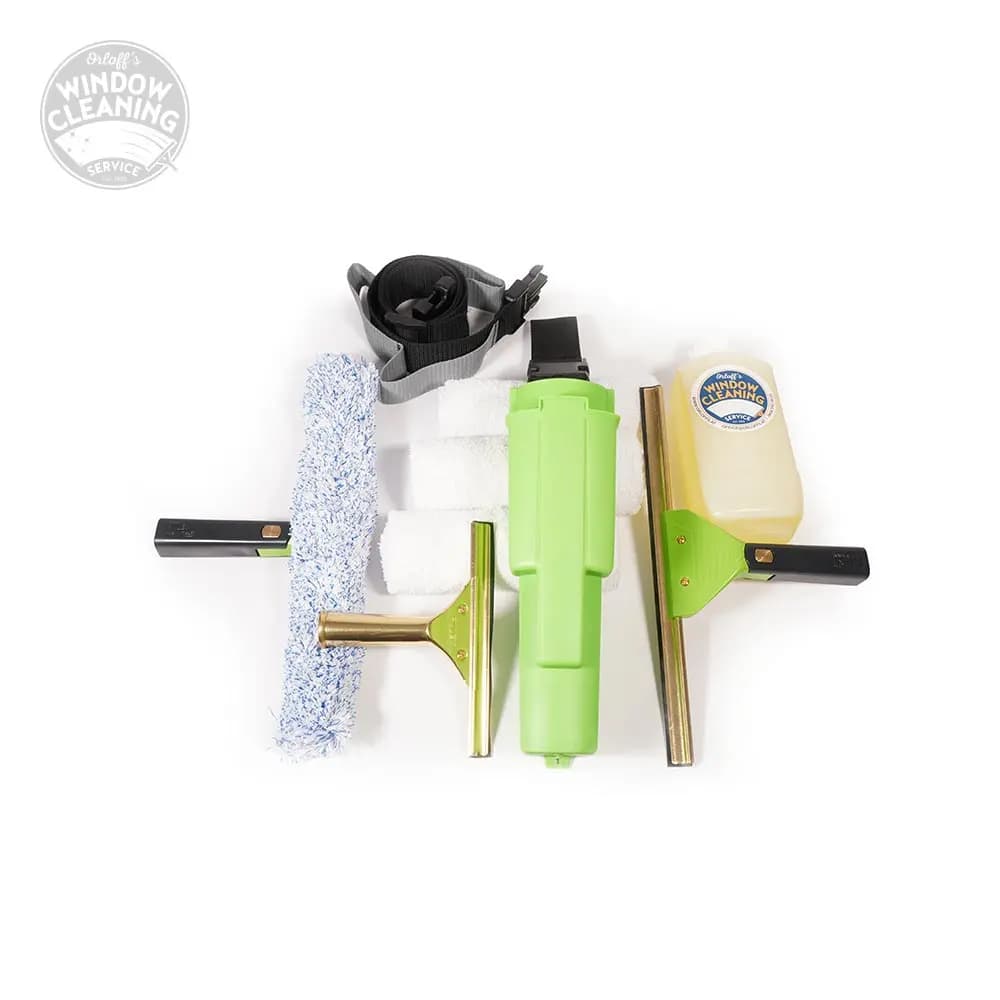
Professional Window Cleaning Tools: What's Worth Buying
The difference between professional-grade equipment and cheap alternatives is enormous. Here's what's worth buying, what to skip, and why the investment pays for itself.
When I cleaned my first window in Melbourne in 1999, I had about $150 worth of tools. A squeegee, a scrubber, a bucket, some soap, and a cloth. Twenty-five years later, the tools I use daily haven't fundamentally changed.
That tells you something important: window cleaning tools are a solved problem. The industry figured out what works decades ago.
But within that simple system, the difference between professional-grade equipment and cheap alternatives is enormous. The right tools, combined with proper technique, produce results that cheap tools physically cannot achieve.
The Essential Three: What Every Window Cleaner Needs
The Squeegee: Your Primary Tool
The channel should be metal, brass or stainless steel, not plastic. Metal channels maintain their shape under pressure.
The rubber blade is the most important component. It needs to be sharp, smooth, and made from quality rubber.
Size matters. Most professionals use 12-18 inch channels for residential work.
Replace blades regularly. A new rubber blade costs $8-$12 and lasts weeks to months.
Cost: $25-$40 for a quality squeegee handle and channel.
The Scrubber: Where the Real Cleaning Happens
A professional scrubber is a microfiber or cotton sleeve that fits over a T-bar applicator. The sleeve holds cleaning solution and provides gentle abrasion.
Cost: $15-$20 for a quality T-bar and sleeve.
The Detail Cloth: The Finishing Touch
A lint-free microfiber cloth for edges and corners. One smooth pass along each edge after squeegeeing. That 10% creates 90% of the visible quality.
Cost: $10-$15 for a pack that lasts months.
Beyond the Basics: What to Add as You Grow
Extension Poles ($40-$80)
An adjustable pole that extends to 12-18 feet lets you reach second-story windows from the ground. No ladders.
Water-Fed Pole Systems ($500-$2,000+)
Telescoping poles with pure water (deionised water that dries without spots). These systems reach 4-6 stories from the ground.
Buckets and Solution
A professional bucket with a sieve and a few drops of dish soap. That's your cleaning solution.
What to Skip
Spray bottles with commercial cleaner. Designed for consumers, not professionals.
Paper towels. They leave fibres. Every brand, every time.
"Streak-free" cleaning products. Most cause more streaks than they prevent.
Robotic window cleaners. Not there yet for professional use.
The cheapest tools available. A $3 plastic squeegee will create more problems than it solves.
Maintaining Your Equipment
Squeegee blades: Flip or replace when you start seeing streaks.
Scrubber sleeves: Machine wash regularly.
Detail cloths: Machine wash separately. No fabric softener.
The Investment Perspective
One residential job pays $150-$400. After your first job, the equipment has paid for itself.
The real investment isn't the tools. It's the training. The Skill teaches you to make those tools perform.
About the author
Justin Orloff is a professional window cleaner with over 25 years of experience, based in Vienna, Austria. He created the world's first AR-powered window cleaning training program at orloffs.com.