High-Rise Window Cleaning: Safety, Equipment & Training
High-rise window cleaning is dangerous if you're not trained. The equipment, the safety, and the training that separates professionals from statistics.
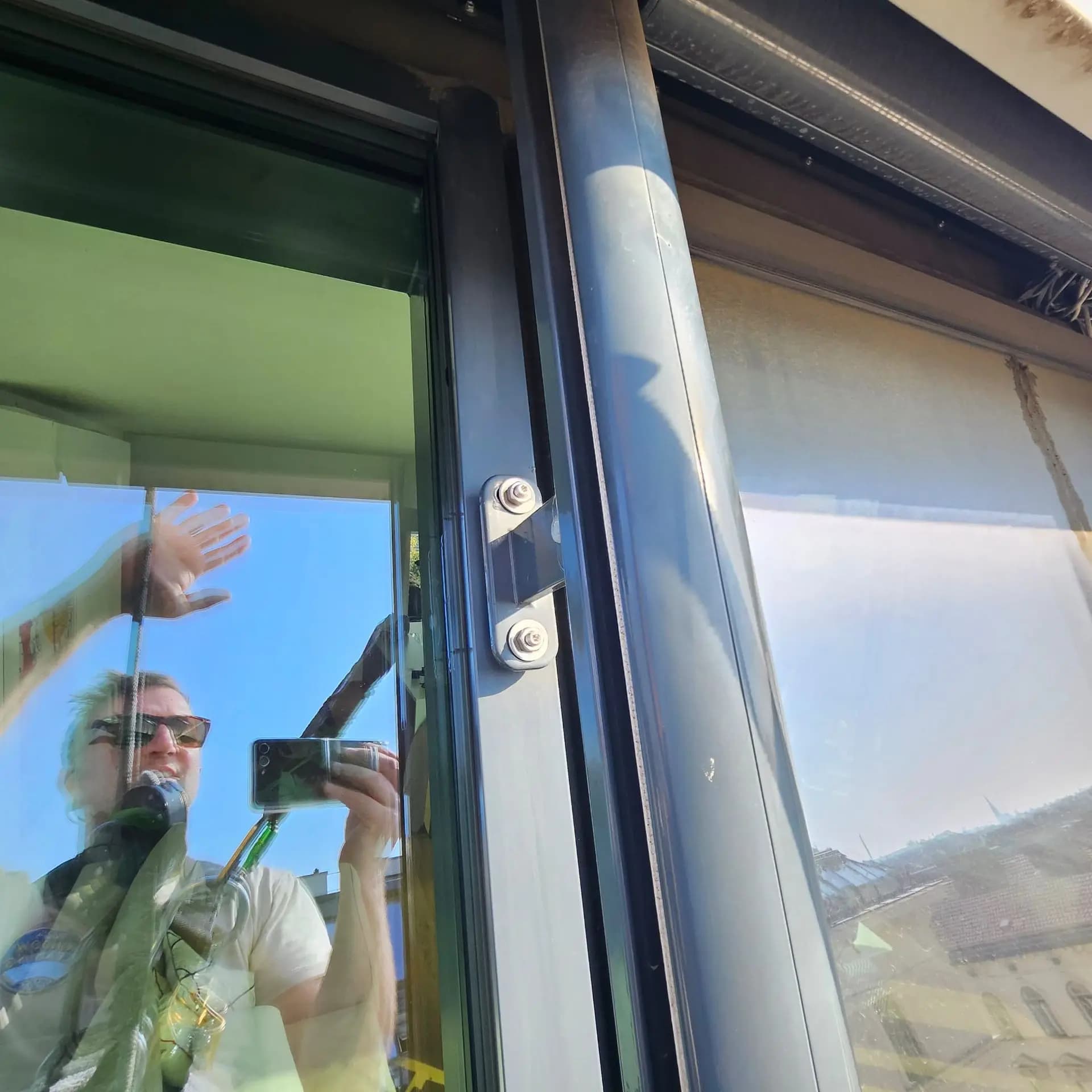
I've cleaned windows on buildings where a gust of wind makes the ropes sway and the glass vibrates against my squeegee. I've hung off the side of Melbourne skyscrapers watching the city shrink below me.
It felt calm. Controlled. Professional. That's because I was trained. Properly.
The Honest Truth About High-Rise Work
High-rise window cleaning is dangerous if you're not trained. Falls from height are the leading cause of death in the cleaning industry.
But properly trained professionals with correct equipment work safely every day, all over the world.
Two Layers of Training: Technique + Safety
Layer 1: Window cleaning technique. The 45-degree squeegee angle, consistent pressure, the three fundamental turns. These are the same whether you're on the ground floor or the 40th floor.
Layer 2: Working at height safety. Rope access systems, harness fitting, anchor assessment, rescue procedures. This is life-and-death knowledge.
Both layers are essential. Master window cleaning skills first, then pursue safety certification.
Access Methods
Water-Fed Poles (Up to 4-6 Stories)
Stay on the ground and use a telescoping pole with pure water. The safest option for mid-rise buildings.
Rope Access (High-Rise)
Descending the building face on ropes using specialised descent devices. Requires IRATA or SPRAT certification.
Bosun Chairs and Cradle Systems
Mechanical platforms, typically used on buildings with permanent davit systems.
Essential Equipment
Safety Equipment
- Full-body harness
- Static and semi-static ropes
- Descent devices and ascenders
- Backup safety devices
- Helmets (mandatory)
- Anchor systems
Cleaning Equipment (Adapted for Height)
- Squeegees with tool lanyards (a dropped squeegee from 30 stories is a lethal projectile)
- Belt-mounted solution systems
- Secured scrubbers and detail cloths
Safety Certifications: IRATA vs SPRAT
IRATA
The international standard. Three progressive levels from basic rope access to full site supervision. Cost: Typically $1,500-$2,000 per level.
SPRAT
Recognised primarily in the US and Canada. Similar three-level structure.
Is High-Rise Work Right for You?
Consider high-rise if:
- Physical fitness is a strength
- Heights don't bother you
- You're willing to invest in safety certification
- You want higher-paying commercial contracts
Stay ground-level if:
- Heights cause significant anxiety
- You prefer residential work
- You want lower equipment overhead
Both paths lead to successful careers. The technique foundation is identical.
About the author
Justin Orloff is a professional window cleaner with over 25 years of experience, based in Vienna, Austria. He created the world's first AR-powered window cleaning training program at orloffs.com.