
Asia-Pacific · Window Manufacturer
YKK AP
🇯🇵 Japan · Last reviewed by Justin Orloff
Quick Facts
founded
1957
hq
Tokyo, Japan
primaryMaterials
Aluminium, aluminium-resin composite, resin (PVC) profiles
glazingPartner
System supplier - AGC, NSG and others specified per project
marketTier
Premium Residential and Commercial
Brand at a Glance
- Country: Japan
- Founded: 1957
- Parent group: YKK Group
- Primary materials: Aluminium, aluminium-resin composite, resin
- Product lines: APW series (residential), commercial curtain wall and facade
- Markets: Japan residential and commercial; international commercial
- Climate context: Japan - humid summers, typhoon exposure, cold winters, UV loading
- Website: ykk-ap.co.jp
Product Range
- APW 330 / APW 430
- APW 501
- Framo series
- Store front systems
Why This System
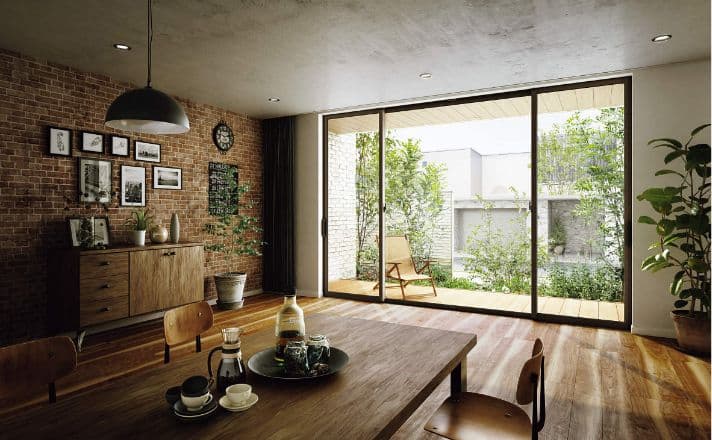
YKK AP's APW composite systems use a two-material profile - aluminium on the exterior, resin on the interior. These two materials require different cleaning approaches. The aluminium outer face is powder-coated; the resin inner face is sensitive to solvents. A cleaner who treats the whole frame as aluminium will damage the inner profile. Japan's climate varies dramatically by region. APW systems installed in Hokkaido face snow, ice, and road salt. The same system installed in Okinawa faces typhoon-driven salt air and UV levels far higher than most of Europe. Cleaning frequency and product selection must reflect the local exposure. The APW glazing units use Low-E coatings as standard. These coatings are applied to the inner surfaces of the insulated unit and are not accessible for cleaning, but understanding they exist matters - it confirms that the glass requires pH-neutral care on the outer surface to avoid accelerating seal degradation at the unit edge.
Step 1 of 2: Manufacturer Recommendations
Official Care Guidance
Step 2 of 2: The Orloffs Protocol
The Orloffs Protocol
This is how I clean YKK AP windows. The tools and technique below come from 25 years of daily professional work on the glass. Every step has been tested on real installations and adapted specifically for YKK AP systems.
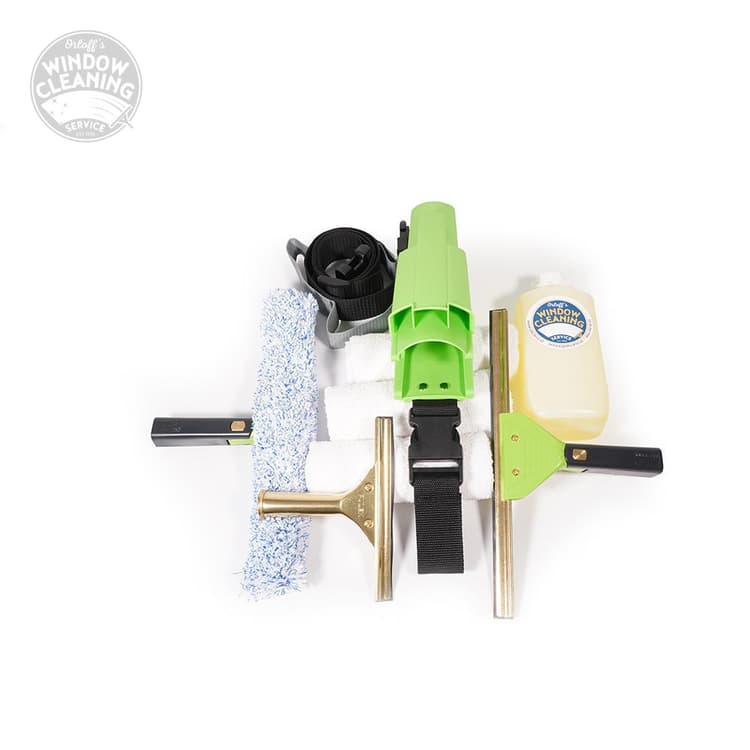
Pro Tools
My daily tool list. This is what I carry to every job.
Pro Tips
- On composite APW systems, start with the interior resin face using a solvent-free cloth before moving to the exterior aluminium - this way any cross-contamination risk runs from resin-safe product to aluminium, not the reverse
- After typhoon events, run a clean water flush along all lower sill channels before cleaning - typhoon rain deposits organic matter in drainage channels that turns to paste when mixed with cleaning solution
- Schedule cleans for early morning in summer months - Japan's summer sun heats glass surfaces fast and solution flashes off before you can squeegee it
What NOT To Do
- Do not use abrasive pads, steel wool, or scouring compounds on powder-coated aluminium profiles
- Do not use solvent-based cleaners on resin or composite profiles - solvents permanently damage resin surfaces
- Do not use acidic glass cleaners near the glass-to-frame junction - acid runoff attacks silicone seals
- Do not pressure wash directly into frame joints or weep holes
- Do not leave cleaning product residue on frames in direct sun - it bakes onto the surface
- Do not use the same cloth on resin interior profiles and exterior aluminium without rinsing - aluminium cleaning residue can affect resin surfaces
Bundle Kits and Tool Recommendations
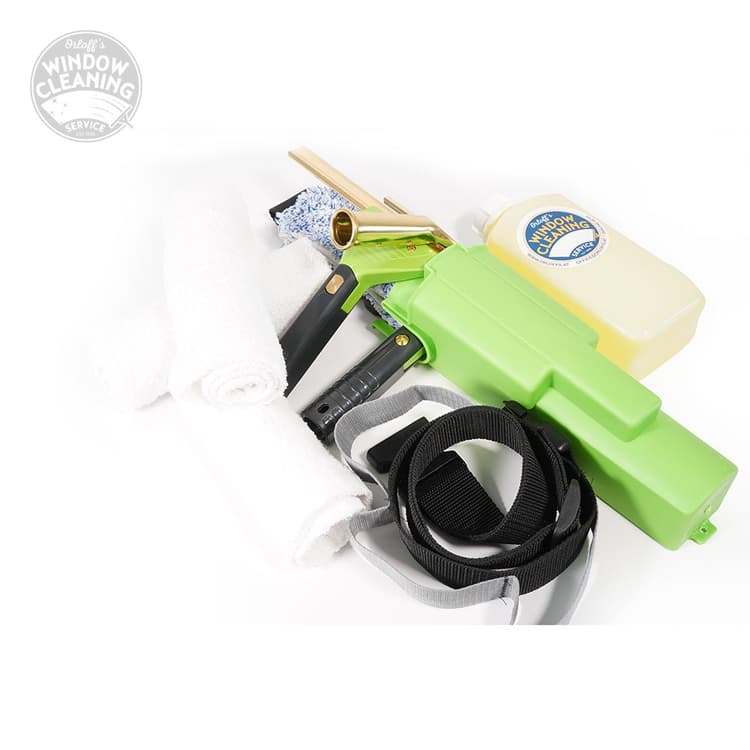
Bundle Kit
Tool Recommendations
pH-neutral glass cleaning concentrate (safe on Low-E coated glass)
View on Amazon [coming soon]Microfibre T-bar applicator - clean and rinsed regularly
View on Amazon [coming soon]Professional squeegee with fresh rubber, 35 cm or 45 cm channel
View on Amazon [coming soon]Cleaning Frequency
Clean every 4–8 weeks depending on environment.
Frequently Asked Questions
Field Notes
“Composite APW systems are a two-material job. Brief your crew on which face is aluminium and which is resin before starting - the interior resin profile is easily damaged by the wrong product. Typhoon season runs June to October. After a major storm event, inspect all frame seals and weep holes. Typhoon-driven rain forces water into every gap that normal rain never reaches. In Hokkaido and northern prefectures, road salt and de-icing chemical residue on lower frame surfaces is a corrosion risk on aluminium profiles. Include a clean water flush of lower frame sections in every winter and spring clean. Japan's UV loading is significant, particularly in southern prefectures. Resin profiles here chalk faster than in European conditions. Chalking on resin is not removable by cleaning - flag it to the property manager as a coating condition issue.”
Justin Orloff
What's next for you?
The Skill
New to window cleaning?
Start with the core techniques before tackling premium systems.
Start Learning →The Standard
Upskill your team
Covers every system, product type, and tricky scenario.
View The Standard →Manufacturer
Partner with Orloffs
Are you YKK AP or a similar manufacturer? Let's create official cleaning guidance together.
Get in Touch →