
Europe · Window Manufacturer
Viking Window
🇪🇪 Estonia · Last reviewed by Justin Orloff
Quick Facts
founded
1996 (became 100% Estonian-owned 2001)
hq
Mäo, Järvamaa, Estonia
primaryMaterials
Pine glulam, powder-coated aluminium-clad pine
glazingPartner
In-house
marketTier
Premium - Passive House certified range
Brand at a Glance
- Founded: 1996 (became 100% Estonian-owned 2001)
- HQ: Mäo, Järvamaa, Estonia
- Market position: Estonian manufacturer of premium wood and aluminium-clad wood windows for Northern and Western European climates
- Frame materials: Pine glulam (glue-laminated timber), aluminium-clad pine
- Key ranges: SW17 (modern slim-profile aluclad), SW14 (Passive House aluclad and timber), DK22 (inward-opening tilt-and-turn), Viking21 (outward-opening Scandinavian casement), Vertical Sliding Sash
- Glazing options: Double and triple glazed. Argon gas fill. Low-E coated glass standard on triple-glazed units. Warm-edge spacers. Uw values from 0.63 to 1.24 W/m2K.
- Best U-value: Uw 0.63 W/m2K on SW14 Passive - Passive House Institute certified
- Where they sell: Estonia, UK, Ireland, Norway, Sweden, Netherlands, USA, Canada, Japan, Latvia, Iceland, France, Finland
- Contact: viking@viking.ee / +372 384 8900
- Official care documentation: viking.ee/en/info/installation-and-maintenance
Product Range
- SW17
- SW14 / SW14 Passive
- DK22
- Viking21
- Vertical Sliding Sash
Why This System
Every Viking Window product uses pine glulam as its structural base - a different timber engineering approach from solid heartwood used by some competitors. Aluclad ranges have powder-coated aluminium exteriors and pine interiors - two completely different materials requiring two completely different cleaning approaches. Solvents permanently damage powder-coated aluminium - there is no repair, only replacement. Viking Window's official maintenance documentation specifically prohibits silicone-based glass cleaning products - silicone leaves a film that attracts dirt and is very difficult to remove. The SW14 Passive is Passive House Institute certified - one of the few aluclad timber windows to achieve this accreditation.
Step 1 of 2: Manufacturer Recommendations
Official Care Guidance
Source: VIKING WINDOW AS USER AND MAINTENANCE MANUAL
Glass
- Use a proper window washing kit and a suitable glass cleaning product.
- Use non-aggressive glass cleaning products only.
- Do not use glass maintenance products containing silicone - silicone leaves a film that attracts dirt and is very difficult to remove.
- Do not use glass maintenance products containing abrasive particles.
- Clean the glass with a soft cloth or squeegee.
Timber (Pine Interior) Frames
- Clean with a soft damp cloth and mild soapy water.
- Do not saturate the timber surface - use a damp cloth, not a wet one.
- Do not use solvents, alcohol-based products, or aggressive chemical cleaners on timber surfaces.
- Do not use abrasive products or scouring pads on the timber finish.
- Contact Viking Window directly for recommendations on re-treatment of exposed pine interior surfaces.
Aluminium-Clad Exterior Frames
- Clean with a soft cloth and mild soapy water.
- Rinse thoroughly after cleaning.
- Do not use solvents on powder-coated aluminium surfaces - solvent damage to powder coating is permanent.
- Do not use acidic or bleach-based cleaners.
- Do not use abrasive products, steel wool, or scouring pads.
Hardware
- Clean locking points and locks at least twice per year.
- Lubricate locking points with Ruko lock oil, preferably twice per year.
- Do not use WD-40 or general-purpose oil on locking mechanisms - these attract dust and gum up over time.
- Contact Viking Window or your installer for hardware adjustment and hinge maintenance.
Gaskets and Seals
- Do not use solvents to clean gaskets - solvents cause permanent damage to rubber seals.
- Clean gaskets with a soft damp cloth and mild soapy water only.
- Inspect gaskets annually for cracking, shrinkage, or gaps.
- Contact your installer if gaskets show signs of deterioration.
Drainage
- Keep drainage channels and slots clear of debris, leaves, and dirt.
- Check drainage points at least twice per year - blocked drainage causes water pooling inside the frame system.
- Clear blocked drainage with a soft brush or damp cloth. Do not use sharp tools.
Step 2 of 2: The Orloffs Protocol
The Orloffs Protocol
This is how I clean Viking Window windows. The tools and technique below come from 25 years of daily professional work on the glass. Every step has been tested on real installations and adapted specifically for Viking Window systems.
Pro Tools
My daily tool list. This is what I carry to every job.
Follow these steps in order. Each one builds on the last. This is the same sequence I use on every Viking Window installation.
- 1
Detail the frame first
Before touching the glass, wipe down the window frame edges with a damp microfibre cloth and mild soapy water. This removes the dust, pollen, and debris sitting on the frame surface.
When the squeegee runs across the glass, the rubber edge makes contact with the frame. If there is dirt on that frame, the squeegee picks it up and drags it across the clean glass as a streak. Clean the frame first. Every time.
On Viking Window aluclad models, use a different cloth for the aluminium exterior than you use for the timber interior. Products that are fine on powder-coated aluminium can still mark a pine surface if transferred.
- 2
Agitate the glass
Dip your T-bar applicator completely into the soapy water on both sides. Apply the solution across the whole glass area using overlapping strokes. The goal is to dissolve the dirt so the squeegee can shave it away cleanly.
If dirt is not fully dissolved and released from the glass before you squeegee, the remaining grit is dragged across the surface, leaving smears or micro-scratches. Take your time with this step on larger SW14 and SW17 panes.
Never clean in direct sunlight. The soap water dries before you can squeegee it off, baking residue onto the glass.
- 3
Detail the frame again before squeegeeing
Once the glass is agitated, run a dry corner of your cotton rag along the top edge and both side edges of the window. This removes the pooled soap water sitting on the frame lip.
When the squeegee reaches those edges, it will not pick up dirty residue and drag it back across the glass. This step takes ten seconds and prevents most streaks.
- 4
The three squeegee turns
Side to side: start at the top edge of the window with a dry rubber. Work across the glass in a straight horizontal line. Tilt the squeegee so the soap water spills from only one side of the channel. Wipe the rubber dry after each pass. Overlap slightly into the next line down.
Top to bottom: the same principle, but working down the glass in vertical lines. Start in the top corner with a dry rubber. Tilt to direct water to the lower side. Wipe the rubber dry after each line. Overlap into the next line across.
The J tune: the professional continuous motion. From the top of the window to the bottom in one smooth, unbroken movement. Your thumb guides the rotation - as you reach the end of a horizontal pass, rotate your wrist so the squeegee turns and continues down. On the larger format panes of the SW14 and SW17, this is the most efficient method once it is in your muscle memory.
- 5
Final edge detailing
After squeegeeing, there is always a thin line of water along the bottom edge and at the sides. Take a dry cotton rag, fold it to a clean corner, and detail these edges in one smooth pass.
Get your finger into the edge where the glass meets the frame seal. Remove any pooled soap water sitting there. If left to dry, it leaves a residue mark that shows up as soon as the sun hits the glass.
Rotate the rag so you are always touching the glass with a clean, dry section. Replace the rag with a fresh one every few windows.
- 6
Hardware and locks
Clean and lubricate locking points with Ruko lock oil at least twice per year. Wipe the hardware surfaces with a soft damp cloth. Do not use solvents or abrasive products on any hardware components.
If hinges feel stiff or the window is hard to close, contact your installer for hinge adjustment. Do not force a stiff window - this causes frame distortion and seal damage.
Pro Tips
- Separate cloths for aluminium exteriors and pine interiors - products that are safe on powder coating can still mark timber.
- No silicone in glass cleaning products. Viking Window bans silicone-based glass sprays specifically - silicone attracts dirt.
- No WD-40 on Viking Window hardware. Use Ruko lock oil only on locking mechanisms.
- Clean drainage channels twice per year - before winter and after. Blocked drainage causes water pooling in the frame.
- Powder-coat damage from solvents is permanent. There is no repair, only replacement. Keep solvents away from the aluminium exterior.
What NOT To Do
- No solvents to clean gaskets - this causes permanent damage to rubber seals.
- No glass maintenance products containing silicone - silicone attracts dirt and is very difficult to remove.
- No glass maintenance products containing abrasive particles.
- No solvents on powder-coated aluminium frames - solvent damage to powder coating is permanent.
- No acidic cleaners, bleach, or concentrated chemical products on aluminium cladding.
- No abrasive products, steel wool, or scouring pads on any frame, glass, or hardware surface.
- Do not saturate timber interior frames with water - use a damp cloth, not a wet one.
- No WD-40 or general-purpose machine oil on locking mechanisms.
- No sharp tools to clear drainage channels.
- Do not clean glass in direct sunlight.
- Do not force a stiff or misaligned window - contact your installer for hardware adjustment.
Bundle Kits and Tool Recommendations
Bundle Kit
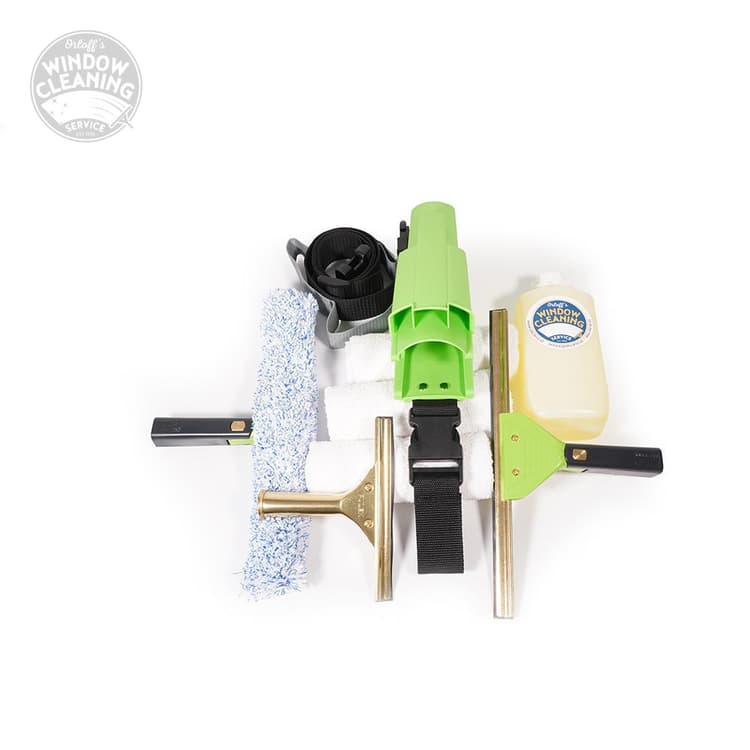
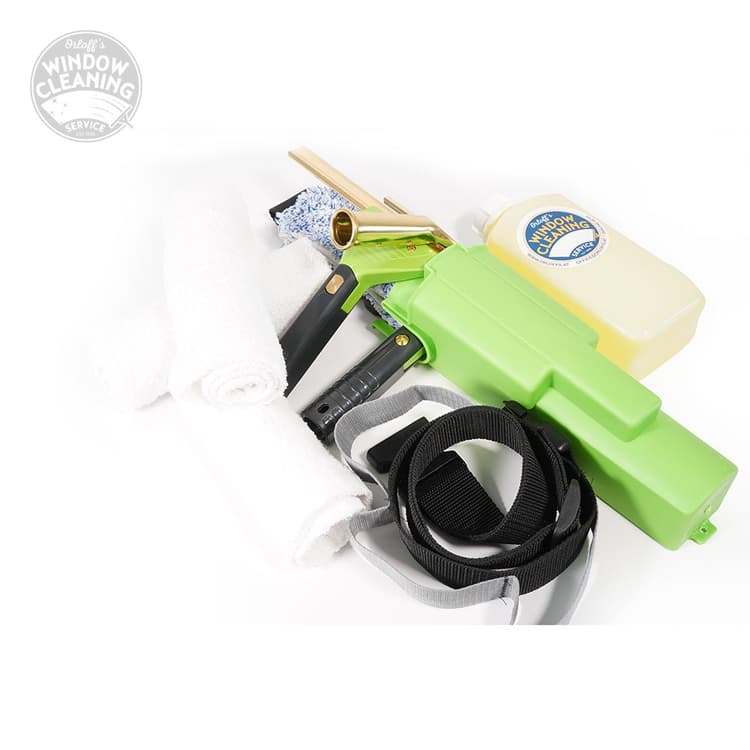
Tool Recommendations
T-bar applicator with a clean microfibre sleeve
View on Amazon [coming soon]Professional squeegee with a fresh rubber blade
View on Amazon [coming soon]Bucket with lukewarm water + 1 drop of mild pH-neutral dish soap per litre
View on Amazon [coming soon]Cleaning Frequency
Glass and frames: 2x per year minimum (Inside and out. Urban, coastal, or high-pollution environments: quarterly.). Hardware cleaning (locks, locking points): 2x per year minimum (Wipe clean before lubricating.). Hardware lubrication with Ruko lock oil: 2x per year minimum (Preferably more. Do not substitute WD-40 or general machine oil.). Gasket and seal inspection: 1x per year (Or after heavy storms. Contact installer if deterioration is visible.). Drainage channel check: 2x per year (Once before winter, once after. Clear debris with a soft brush - no sharp tools.)
Frequently Asked Questions
Field Notes
“Glass and frames: minimum twice per year inside and out. Hardware (locking points): clean and lubricate with Ruko lock oil twice per year minimum. Drainage channels: check twice per year - before and after winter. Gaskets: inspect annually - no solvents, ever. Powder-coated aluminium: no solvents, no abrasives, no acids. Damage is permanent.”
Justin Orloff
What's next for you?
The Skill
New to window cleaning?
Start with the core techniques before tackling premium systems.
Start Learning →The Standard
Upskill your team
Covers every system, product type, and tricky scenario.
View The Standard →Manufacturer
Partner with Orloffs
Are you Viking Window or a similar manufacturer? Let's create official cleaning guidance together.
Get in Touch →