
Europe · Window Manufacturer
Sokółka
🇵🇱 Poland · Last reviewed by Justin Orloff
Quick Facts
founded
1972
hq
Sokółka, Podlaskie, Poland
primaryMaterials
Solid timber, timber-aluminium composite
glazingPartner
Own glazing production
marketTier
Premium
Brand at a Glance
- Founded: 1972
- HQ: Sokółka, Podlaskie region, Poland
- Market position: Poland's leading timber and timber-aluminium window manufacturer, part of the Inwido Group
- Frame materials: Solid timber, timber-aluminium composite
- Key ranges: Style 68, Elite92, Optima (timber); Style 68 Alu, Elite92 Alu, Puro, ThermoHS Alu, Eco Line Alu, Optima Alu, Flush (timber-alu); Puro Passive (passive house certified)
- Glazing options: Double and triple glazed. Argon gas fill. Low-E glass standard. Triple glazing on Puro Passive (Uw 0.66 W/m2K). Acoustic upgrades to 44 dB available.
- Where they sell: 19 countries including Poland, wider Europe, USA, Canada, Middle East, Australia
- Warranty: 7 years standard (paint coatings 2-3 years; hardware 5 years). Extended 7+3 programme available with professional installation and three paid inspections.
- Official care documentation: sokolka.com.pl/do-pobrania/katalogi-techniczne/
- Service contact: serwis@sokolka.com.pl | 800 122 822 (toll-free Poland)
- Website: sokolka.com.pl
Product Range
- Style 68 / Elite92 / Optima
- Puro / Elite92 Alu / ThermoHS Alu / Eco Line Alu
- Puro Passive
- Flush
Why This System
Timber is the core material and the most vulnerable one - lacquer coatings protect the wood, and most commercial glass cleaners contain substances that degrade lacquer permanently. Timber-aluminium composites have two surfaces requiring different care - the aluminium exterior is durable, the timber interior is not. Both surfaces are present in every cleaning session. The Puro Passive range demands extra care around its seals and glazing system - its thermal performance depends on an airtight seal that aggressive products or pressure washing can compromise. The 7-year warranty and 7+3 extension programme are both conditional on adherence to care protocols and paid inspections at years 3, 5, and 7. Lacquer coatings carry only a 2-3 year paint warranty - once glass cleaner strips the lacquer, the wood underneath is exposed and the warranty is void.
Step 1 of 2: Manufacturer Recommendations
Official Care Guidance
Source: Sokółka official care documentation - sokolka.com.pl/do-pobrania/katalogi-techniczne/
Glass
- Clean with mild soapy water and a soft cloth or microfibre.
- Vinegar solution (1:9 vinegar to water ratio) is an acceptable alternative for glass surfaces.
- Do not use standard commercial glass sprays near timber frames - they may contain substances that damage lacquer coatings.
- Do not use abrasive pads, scouring cloths, or steel wool on glass.
- Do not use sharp tools or razor blades on glass surfaces.
- Do not clean in direct sunlight - water evaporates too quickly and leaves residue.
- Do not clean in freezing temperatures - detergent smears on the glass surface.
Timber Frames
- Clean with a soft cloth and mild detergent in water. Dish soap at low concentration is acceptable.
- Do not saturate timber frames with water - use a damp cloth, not a wet one.
- Do not use standard glass cleaning sprays on or near timber frames.
- Do not use solvents on lacquered timber surfaces.
- Do not use non-neutral pH products on timber.
- Apply care emulsion (specialist timber window care product) after cleaning.
- Inspect the lacquer coating at least twice per year - after winter and after autumn.
- For minor lacquer damage: sand lightly, clean away dust, and apply matching touch-up paint.
Timber-Aluminium Frames (Exterior Aluminium Cladding)
- Clean aluminium exterior with a soft cloth and mild soapy water.
- Do not use solvents or abrasive products on aluminium cladding.
- Rinse thoroughly after cleaning.
- Remove trapped dirt from joints and channels.
Hardware
- Lubricate all moving parts (hinges, locking points) with specialist grease.
- Hardware carries a 5-year warranty (3 years in coastal zones within 30km of the sea).
- Do not use general-purpose oils or WD-40 substitutes on precision hardware.
Gaskets and Seals
- Lubricate rubber seals with a silicone-based product to maintain flexibility and prevent cracking.
- For mold on seals: apply a vinegar-water solution (2:1 water to vinegar), leave for two hours, then rinse and dry thoroughly.
- Do not use bleach or aggressive disinfectants on rubber seals - these degrade the seal material.
- After mold removal, dry the seal area completely before closing the window.
Drainage Channels
- Clear drainage channels at least twice per year.
- Blocked drainage causes water to sit in the frame, accelerating wood damage.
- Use a soft brush to clear debris from channels - do not use metal tools.
Step 2 of 2: The Orloffs Protocol
The Orloffs Protocol
This is how I clean Sokółka windows. The tools and technique below come from 25 years of daily professional work on the glass. Every step has been tested on real installations and adapted specifically for Sokółka systems.
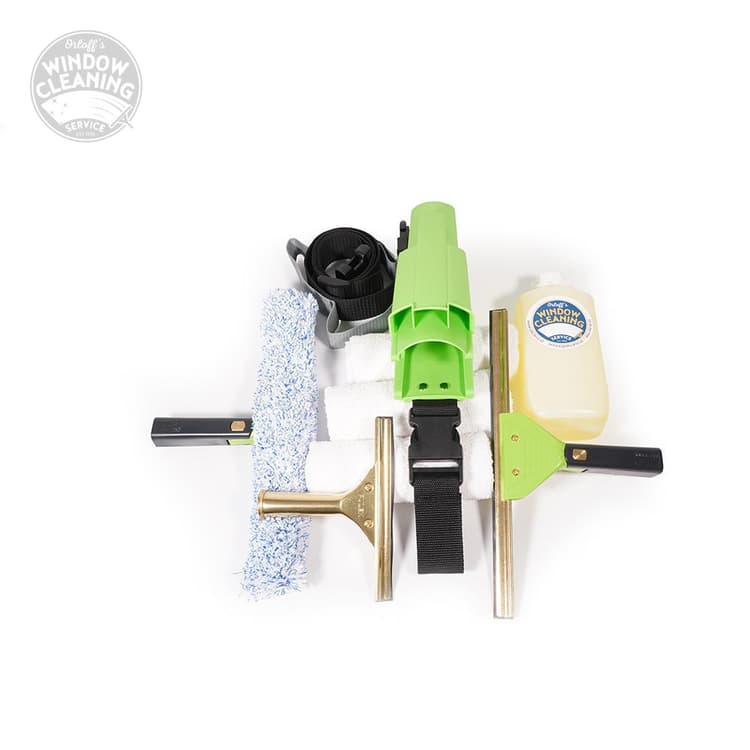
Pro Tools
My daily tool list. This is what I carry to every job.
Follow these steps in order. Each one builds on the last. This is the same sequence I use on every Sokółka installation.
- 1
Detail the Frame First
Before touching the glass, wipe down the frame edges with a damp microfibre cloth and mild soapy water. This removes pollen, dust, and grime from the surface before the squeegee makes contact with it.
On timber frames, keep the cloth damp, not wet. Do not saturate the wood. On the aluminium exterior of timber-alu models, you can be more generous with moisture. Use separate cloths for each surface.
When you run the squeegee across the glass, the rubber edge contacts the frame. If there is dirt on that frame, the squeegee drags it onto the clean glass as a streak. Always detail the frame before touching the glass.
- 2
Agitate the Glass
Dip the T-bar applicator fully into the soapy water and apply the solution across the whole glass surface in overlapping strokes. The goal is to dissolve the dirt from the glass so the squeegee can remove it cleanly.
Do not use a spray bottle. Spraying solution near timber frames risks getting glass cleaner onto the lacquered surface. A T-bar applicator gives you control over exactly where the water goes.
If the dirt is not dissolved before you squeegee, the remaining grit gets dragged across the glass by the rubber, leaving smears or micro-scratches.
- 3
Detail the Frame Edges Before Squeegeeing
Once the glass is agitated, run a dry corner of your cotton rag along the top and both side edges of the window. This removes pooled soap water sitting on the frame before the squeegee reaches it.
When the squeegee blade contacts those edges, it will not pick up dirty residue and carry it back across the clean glass. This step takes ten seconds and eliminates most streaks before they happen.
- 4
Side-to-Side Squeegee Turn
Start at the top edge with a dry rubber. Work in straight horizontal lines across the glass. Tilt the squeegee so soap water spills from one side of the channel only. Wipe the rubber dry after each pass. Overlap slightly into the next line down. Repeat to the bottom.
- 5
Top-to-Bottom and J tune Squeegee Turns
Top to bottom: same principle, vertical orientation. Start in the top corner with a dry rubber. Tilt to direct water downward. Wipe dry after each pass. Overlap into the next line across.
The J tune: the continuous professional motion - top to bottom in one smooth, unbroken movement. From the top of the glass, across and down in a single rotating arc driven by your thumb. At the bottom, rotate back and return. When this is in muscle memory it is the fastest consistent technique for any window format including the large-format ThermoHS Alu sliding panels.
- 6
Edge Detailing
After squeegeeing, there is always a thin line of water along the bottom edge and at the sides where the glass meets the frame seal. Take a dry cotton rag, fold it to a clean corner, and detail these edges in one smooth pass.
Work your finger into the edge where glass meets frame. Remove any pooled soap water sitting in that junction. Left to dry, it leaves a residue line that appears immediately when light hits the glass.
Rotate the rag to a fresh section for each window. On timber Sokółka frames, make sure the rag is wrung out and not overly wet when working into the glass-to-frame edge.
- 7
Hardware and Seal Maintenance
After cleaning, apply a light coating of silicone-based lubricant to the rubber seals with a soft cloth. Lubricate all hinges and locking points with specialist hardware grease once per year.
Do not clean in direct sunlight. The soap solution dries on the glass surface before you can squeegee it off, baking residue that is harder to remove than the original dirt.
Pro Tips
- Never use a spray bottle near timber frames - a T-bar applicator gives you controlled application that keeps glass cleaner off the lacquered wood.
- Use separate microfibre cloths for the timber interior and aluminium exterior on timber-alu models - never cross-contaminate.
- Keep the timber frame cloth damp, not wet - saturating the wood risks the lacquer bond and the warranty.
- Inspect the lacquer twice a year - after winter and after autumn. Minor damage caught early can be repaired with touch-up paint. Significant damage needs Sokółka service before the next warranty inspection.
- The Puro Passive seal system is especially sensitive - never use aggressive products near those gaskets, and keep pressure washers away from the window entirely.
What NOT To Do
- Do not use standard commercial glass sprays near or on timber frames - they contain substances that damage lacquer coatings.
- Do not use solvents on any timber or aluminium surface.
- Do not use products with non-neutral pH on timber frames.
- Do not use abrasive pads, scouring cloths, or steel wool on glass or frames.
- Do not use sharp tools or razor blades on glass surfaces.
- Do not saturate timber frames with water - use a damp cloth, not a wet one.
- Do not direct high-pressure water at any Sokółka window.
- Do not use bleach or aggressive disinfectants on rubber seals - these degrade the seal material.
- Do not use non-specialist oils or lubricants on hardware.
- Do not skip the lacquer inspection schedule - undetected coating damage exposes the timber to weather.
- Do not clean in direct sunlight - the solution dries before you can squeegee it off.
- Do not clean in freezing temperatures - detergent smears on cold glass.
- Do not leave pooled water in drainage channels or at the base of frames.
Bundle Kits and Tool Recommendations
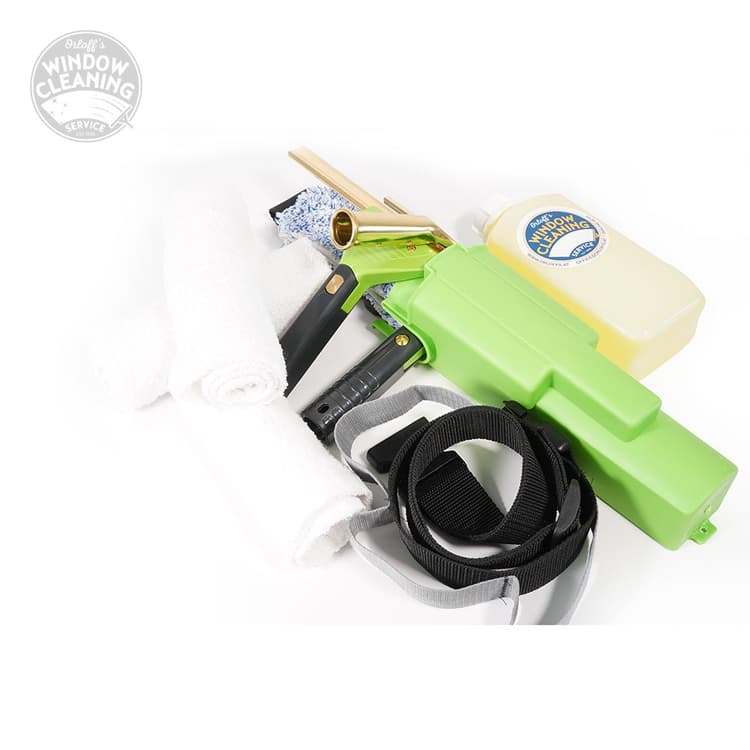
Bundle Kit
Tool Recommendations
T-bar applicator with microfibre cover
View on Amazon [coming soon]Professional squeegee with fresh rubber blade
View on Amazon [coming soon]Bucket with lukewarm water and one drop of pH-neutral dish soap per litre
View on Amazon [coming soon]Cleaning Frequency
Glass and frames: Twice per year minimum (Inside and out - after winter and after autumn per Sokółka guidance.). Urban and high-pollution areas: Quarterly. Lacquer coating inspection: Twice per year (Check for cracks, peeling, or discolouration. Repair minor damage promptly.). Hardware lubrication: Once per year minimum (Specialist grease only. No WD-40 substitutes.). Seal lubrication: Once per year (Silicone-based product only.). Drainage channel clearing: Twice per year minimum. Extended 7+3 warranty inspections: Years 3, 5, and 7 post-installation (Professional service inspections required to maintain the extended warranty.)
Frequently Asked Questions
Field Notes
“Glass and frames: minimum twice per year inside and out - after winter and after autumn. Urban and high-pollution environments: quarterly recommended. Lacquer inspection: twice per year - look for cracks, peeling, or discolouration and repair minor damage promptly. Hardware lubrication: once per year minimum with specialist grease. Drainage channels: clear twice per year minimum. Extended 7+3 warranty: professional inspections required at years 3, 5, and 7 post-installation.”
Justin Orloff
What's next for you?
The Skill
New to window cleaning?
Start with the core techniques before tackling premium systems.
Start Learning →The Standard
Upskill your team
Covers every system, product type, and tricky scenario.
View The Standard →Manufacturer
Partner with Orloffs
Are you Sokółka or a similar manufacturer? Let's create official cleaning guidance together.
Get in Touch →