Europe · Glass Manufacturer
Saint-Gobain Glass
🇫🇷 France · Last reviewed by Justin Orloff
Quick Facts
founded
1665
hq
Courbevoie (La Defense), France
primaryMaterials
N/A - Saint-Gobain is a glass manufacturer, not a window fabricator
glazingPartner
Saint-Gobain IS the glazing partner
marketTier
Premium
Brand at a Glance
- Founded: 1665
- HQ: Courbevoie (La Defense), France
- Market position: World's oldest glass manufacturer - major supplier of architectural and performance glass
- Frame materials: N/A - Saint-Gobain is a glass manufacturer, not a window fabricator. Their glass is used by window manufacturers worldwide.
- Glazing: Double and triple glazed units. Low-E coatings (PLANITHERM), solar control coatings (COOL-LITE), self-cleaning coating (BIOCLEAN), acoustic laminated glass (STADIP SILENCE). Ug values depend on configuration.
- Key ranges: SGG BIOCLEAN (self-cleaning), SGG PLANITHERM (Low-E), SGG COOL-LITE (solar control), SGG DIAMANT (extra-clear low-iron), SGG STADIP (laminated safety), SGG SECURIT (toughened safety)
- Where they sell: Worldwide - present in 76 countries
- Official care page: saint-gobain-glass.com/BIOCLEAN-II
- Technical resources: SGG BIOCLEAN maintenance guide, Calumen glass performance calculator (calumen.com)
Product Range
- SGG BIOCLEAN
- SGG PLANITHERM
- SGG COOL-LITE
- SGG DIAMANT
- SGG STADIP and SECURIT
Why This System
Their glass is everywhere but often unidentified - most homeowners do not know they have Saint-Gobain glass. The window brand on the frame gets the attention, but the glass inside has specific coatings that require specific care. SGG BIOCLEAN self-cleaning glass has a photocatalytic and hydrophilic coating on the exterior surface that can be permanently destroyed by silicone contact, abrasive products, or incorrect cleaning technique. Low-E and solar control coatings (PLANITHERM, COOL-LITE) are microscopically thin metallic oxide layers - invisible but essential for thermal and solar performance, and vulnerable to abrasive cleaners or harsh chemicals. A single building can contain BIOCLEAN on exterior surfaces, PLANITHERM inside the sealed unit, and COOL-LITE for solar control - all from Saint-Gobain, all with different care requirements. Saint-Gobain explicitly prohibits soda, bleach, washing powder, white spirit, razor blades, Stanley knives, and all abrasive materials on their glass products.
Step 1 of 2: Manufacturer Recommendations
Official Care Guidance
Source: SAINT-GOBAIN SGG BIOCLEAN END-USER GUIDELINES AND MAINTENANCE DOCUMENTATION
SGG BIOCLEAN Self-Cleaning Glass
- BIOCLEAN should never be considered as glass that requires no maintenance - it reduces cleaning frequency but does not eliminate it.
- During dry spells or in shaded areas, rinse with clean soft or demineralised water to assist the self-cleaning action.
- For stubborn stains, use hot sudsy water with a clean, soft cloth.
- Never attempt to clean a specific mark without applying water to the surface first.
- The BIOCLEAN coating must not come into direct contact with silicone in any form - sprays, suction pads, gloves, sealants, adhesives, or lubricants.
- Handle BIOCLEAN glass only with soft, clean, silicone-free gloves.
Standard Saint-Gobain Glass (Non-BIOCLEAN)
- Clean with a soft, lint-free cloth or chamois leather and a mild glass cleaner.
- Rinse thoroughly with clean water after cleaning.
- Dry with a clean, lint-free cloth to prevent water marks.
What to Avoid on All Saint-Gobain Glass
- No abrasive cleaners or abrasive particles.
- No scouring pads, steel wool, or sandpaper.
- No razor blades, Stanley knives, or metal scrapers.
- No chemical products including soda, bleach, washing powder, or white spirit.
- No contact with sharp or abrasive objects including jewellery, buckles, and tape measures.
- No commercial cleaning products intended for surfaces other than glass.
Step 2 of 2: The Orloffs Protocol
The Orloffs Protocol
This is how I clean Saint-Gobain Glass windows. The tools and technique below come from 25 years of daily professional work on the glass. Every step has been tested on real installations and adapted specifically for Saint-Gobain Glass systems.
Pro Tools
My daily tool list. This is what I carry to every job.
Follow these steps in order. Each one builds on the last. This is the same sequence I use on every Saint-Gobain Glass installation.
- 1
Identify the coating before you start
Before touching the glass, determine whether BIOCLEAN self-cleaning coating is present. Check the glass spacer bar at the edge of the sealed unit for markings. If BIOCLEAN is present, every tool and product must be silicone-free. If you are unsure, treat the glass as if it has BIOCLEAN - the silicone-free approach works safely on all Saint-Gobain glass.
- 2
Frame and edge detailing first
Detail the frame edges and perimeter before the squeegee touches the glass. Use your 100% cotton towelling rag to clean where the glass meets the frame, removing accumulated dust and grime from the junction. This prevents dirty water from running onto clean glass during squeegeeing.
- 3
Agitate the glass
Dip the T-bar applicator fully into the soap water. Apply across the entire glass surface with overlapping passes. The purpose of agitation is to dissolve and lift every deposit from the glass so the squeegee removes clean solution - not smeared dirt.
On BIOCLEAN glass, never dry-scrub a mark. Wet the area first, allow it to soak, then agitate gently. The coating cannot tolerate abrasive force. Use more soap water and more time, not more pressure.
Rinse the T-bar cover regularly throughout the job. Grit trapped in the microfibre scratches coated glass.
- 4
The three squeegee turns
Side to side: horizontal passes across the glass. Start with the rubber blade on a dry edge. Wipe the rubber dry after every pass.
Top to bottom: vertical passes down the glass. Same principle - dry start, wipe after each pass.
The J tune: one continuous motion, wrist rotating at each end to reverse direction without lifting the rubber. The most efficient method on large panes but requires practised technique.
Tilt the squeegee at a slight angle so soap water flows off one side of the channel only. Never clean in direct sunlight - solution that dries on BIOCLEAN coating leaves mineral deposits that interfere with the self-cleaning action.
- 5
Final edge detailing
After squeegeeing, detail all edges with a dry cotton rag folded to a clean corner. Work the bottom edge first where water collects, then the sides. Rotate the rag to a clean section after every pass.
On BIOCLEAN glass, a final rinse with soft or demineralised water after squeegeeing helps maintain the hydrophilic surface. Allow this rinse to sheet off naturally rather than wiping it dry.
Pro Tips
- Identify the coating before you clean - BIOCLEAN requires silicone-free tools and products throughout.
- On BIOCLEAN glass, never dry-scrub a mark. Wet the surface first, always.
- Rinse the T-bar cover regularly - grit trapped in the microfibre scratches coated glass permanently.
- Never allow silicone in any form to contact BIOCLEAN glass - sprays, suction pads, gloves, sealants, or lubricants.
- Never clean in direct sunlight - dried solution on BIOCLEAN coating leaves mineral deposits that interfere with the self-cleaning action.
What NOT To Do
- Never use abrasive cleaners or products containing abrasive particles on any Saint-Gobain glass.
- Never use scouring pads, steel wool, sandpaper, or any abrasive material.
- Never use razor blades, Stanley knives, metal scrapers, or sharp objects on the glass.
- Never allow silicone in any form to contact BIOCLEAN self-cleaning glass - sprays, suction pads, gloves, sealants, adhesives, or lubricants.
- Never dry-scrub a mark on BIOCLEAN glass without wetting the surface first.
- Never use soda, bleach, washing powder, or white spirit on any Saint-Gobain glass.
- Never use cleaning products intended for surfaces other than glass.
- Never clean in direct sunlight - solution dries on the coating and leaves mineral deposits.
- Never use a pressure washer - the force can damage coatings and sealed unit edge seals.
- Never allow jewellery, buckles, belt hardware, or tape measures to contact coated glass surfaces.
Bundle Kits and Tool Recommendations
Bundle Kit
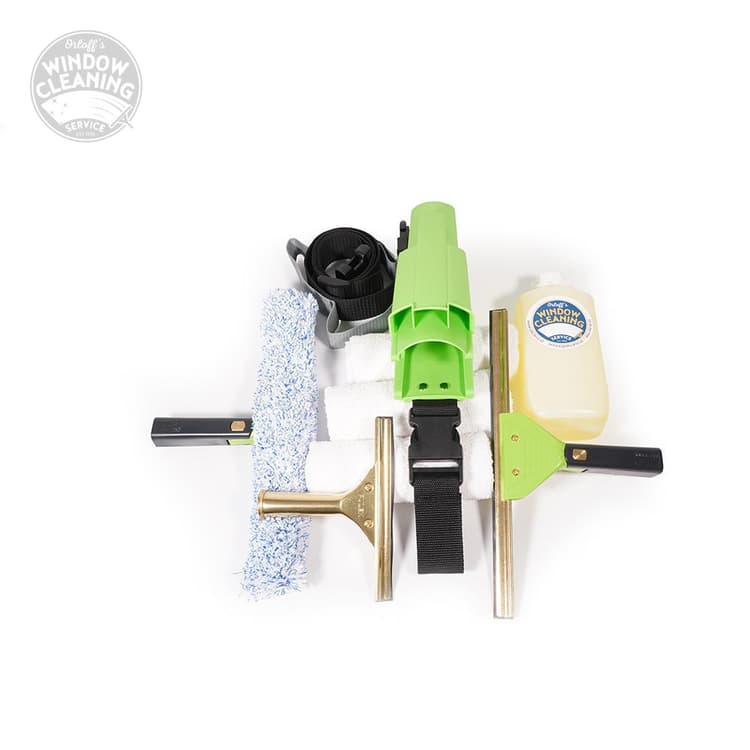
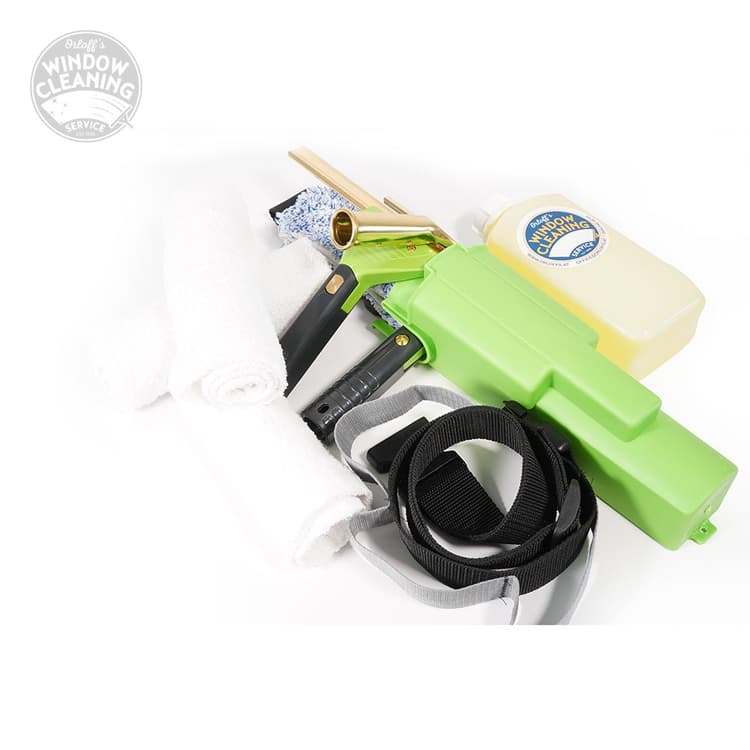
Tool Recommendations
T-bar applicator with microfibre cover (silicone-free for BIOCLEAN surfaces)
View on Amazon [coming soon]Professional squeegee with fresh rubber blade
View on Amazon [coming soon]Bucket with clean soap water - no silicone-based additives
View on Amazon [coming soon]Cleaning Frequency
Standard glass (non-BIOCLEAN): 2x per year minimum (Spring and autumn.). BIOCLEAN self-cleaning glass: Rinse during dry spells (The coating needs rain or water contact to function. Rinse with soft or demineralised water when rain does not reach the glass.). Urban, coastal, or high-pollution locations: 4x per year (All glass types need more frequent attention in these environments.). After nearby construction: Immediately (Cement dust, plaster, and paint bond to coated glass rapidly and become extremely difficult to remove.). Hardware and seals: Per window manufacturer's schedule (Saint-Gobain supplies glass only - follow the frame manufacturer's instructions.)
Frequently Asked Questions
Field Notes
“Standard glass: 2x per year minimum, 4x per year in urban, coastal, or high-pollution locations. BIOCLEAN self-cleaning glass: rinse with soft water during dry spells - the coating needs water contact to function. After construction: clean immediately - cement dust and plaster bond rapidly to coated glass. Hardware and seals: follow the window manufacturer's schedule - Saint-Gobain supplies glass only. BIOCLEAN silicone checks: inspect gasket-glass junctions at every cleaning for signs of silicone migration.”
Justin Orloff
What's next for you?
The Skill
New to window cleaning?
Start with the core techniques before tackling premium systems.
Start Learning →The Standard
Upskill your team
Covers every system, product type, and tricky scenario.
View The Standard →Manufacturer
Partner with Orloffs
Are you Saint-Gobain Glass or a similar manufacturer? Let's create official cleaning guidance together.
Get in Touch →