Europe · Profile System
REHAU
🇩🇪 Germany · Last reviewed by Justin Orloff
Quick Facts
founded
1948
hq
Rehau, Bavaria, Germany (group HQ: Muri bei Bern, Switzerland)
primaryMaterials
uPVC, RAU-FIPRO fibre composite (GENEO range)
glazingPartner
Fabricator-specified (Pilkington, Saint-Gobain, Guardian typical)
marketTier
Premium
Brand at a Glance
- Founded: 1948
- HQ: Rehau, Bavaria, Germany (group HQ: Muri bei Bern, Switzerland)
- Market position: One of Europe's largest uPVC profile manufacturers - profiles supplied to fabricators who build the finished windows
- Frame materials: uPVC, RAU-FIPRO fibre composite (GENEO range)
- Glazing: Double and triple glazed. Argon gas fill. Low-E coated as standard. Passive House certified configurations available (GENEO, ARTEVO max). Uw values down to 0.61 W/m2K.
- Key ranges: TOTAL70, GENEO (RAU-FIPRO), ARTEVO, SYNEGO, EURO-DESIGN 70
- Warranty: Profile warranty through REHAU; finished window warranty through the fabricator and installer
- Where they sell: Global - profiles fabricated locally in over 50 countries
- Official care page: window.rehau.com - Operation and Maintenance Guide (PDF) and FAQ
- Find a specialist partner: rehau.com
Product Range
- TOTAL70
- GENEO
- ARTEVO
- SYNEGO
Why This System
REHAU supplies profiles, not finished windows - the fabricator chooses the glass, hardware, and assembly quality. The GENEO range uses RAU-FIPRO fibre composite with no steel reinforcement - different surface properties to standard uPVC. uPVC surfaces stain permanently if cleaned with solvents, abrasive pads, or harsh chemicals - the damage cannot be reversed. Triple-glazed units in REHAU profiles are heavier and flex differently under squeegee pressure. The warranty chain runs through the fabricator and installer, not directly through REHAU.
Step 1 of 2: Manufacturer Recommendations
Official Care Guidance
Source: REHAU OFFICIAL OPERATION AND MAINTENANCE GUIDE
Glass
- Clean with warm, soapy water and a soft cloth or sponge.
- Rinse thoroughly with clean water to remove any soap residue.
- Wipe down with a clean, dry, soft cloth to prevent water spots or streaks.
uPVC Frames
- Use a soft brush or dry cloth to gently remove any loose dust and debris from the surface.
- Dip a soft cloth or sponge into warm, soapy water and gently scrub the uPVC surfaces.
- Rinse the surfaces thoroughly with clean water to remove any soap residue.
- No sanding, painting, or varnishing needed - uPVC profiles are maintenance-free in that regard.
- No solvents, abrasive pads, or harsh chemicals - they permanently discolour or scratch uPVC.
Hardware
- Oil all hardware once per year.
- Check that locking mechanisms operate smoothly.
Gaskets and Seals
- Inspect seals during regular cleaning.
- Keep gasket surfaces free of dirt and debris that could prevent a proper seal.
Drainage Channels
- Check that drainage slots in the frame are clear of debris.
- Blocked drainage can cause water to pool inside the frame and damage the sealed unit over time.
Step 2 of 2: The Orloffs Protocol
The Orloffs Protocol
This is how I clean REHAU windows. The tools and technique below come from 25 years of daily professional work on the glass. Every step has been tested on real installations and adapted specifically for REHAU systems.
Pro Tools
My daily tool list. This is what I carry to every job.
Follow these steps in order. Each one builds on the last. This is the same sequence I use on every REHAU installation.
- 1
Detail the frame before touching the glass
Before touching the glass, wipe down the uPVC frame edges with a microfibre cloth dampened in mild soap water. This removes the dust, pollen, and grime sitting on the frame surface. When you run the squeegee across the glass, the rubber edge makes contact with the frame. If there is dirt on that frame, the squeegee picks it up and drags it across the clean glass as a streak.
Clean the frame first. Every time. On REHAU uPVC frames, mild soap water is all you need.
- 2
Agitation
Dip your T-bar applicator completely into the soap water on both sides. Apply the solution across the whole glass area using up-and-down or side-to-side motions. The goal is to dissolve the dirt, ready for the squeegee to shave away.
If the dirt is not fully dissolved in the soap water and released from the glass, the remaining dirt still stuck will be transported over the squeegee, leaving smudges or smears. Take your time with this step. Never clean in direct sunlight - the soap water dries before you can squeegee it off, leaving residue that is harder to remove than the dirt you started with.
- 3
Detail the frame edge again before squeegeeing
Once the glass is agitated, run a dry corner of your cotton rag along the top edge and both side edges of the window. This removes the pooled soap water sitting on the frame. When the squeegee reaches those edges, it will not pick up dirty residue and drag it back across the glass.
- 4
The three squeegee turns
Side to side: start at the very top edge of the window with a dry rubber. Work across the glass in a straight horizontal line. Tilt the squeegee at a slight angle so the soap water spills from only one side of the channel. Wipe the rubber dry after each line. Overlap slightly into the next line down.
Top to bottom: same principle, working down the glass in vertical lines. Start in the top corner with a dry rubber. Tilt to direct water to the lower side. Wipe the rubber dry after each line. Overlap into the next line across.
The J tune (continuous motion): from the top of the window to the bottom in one smooth movement. There are no stops. Your thumb guides the rotation at the end of each horizontal pass. When this is in your muscle memory, it is the fastest and most consistent turn for any window size.
For REHAU tilt-and-turn windows, open the sash to the tilt position first and clean the outer glass from inside where possible. For larger fixed-pane configurations with triple glazing, use the top-to-bottom turn with a pole for the upper section, then finish the lower section at arm height.
- 5
Final edge detailing
After squeegeeing, there is always a thin line of water along the bottom edge and at the sides where the squeegee cannot close out completely. Take a dry cotton rag, fold it to a clean corner, and detail these edges in one smooth pass.
Get your finger into the edge where the glass meets the frame seal. Remove any pooled soap water sitting there. If this is left to dry, it leaves a residue mark that shows up as soon as the sun hits the glass.
Rotate the rag so you are only ever touching the glass with a clean, dry section.
Pro Tips
- Identify whether you have TOTAL70, GENEO, ARTEVO, or SYNEGO profiles - the surface properties differ.
- Clean the frame first, every time. Most streaks come from dirt the squeegee picks up at the frame edge.
- More soap water, not more pressure - never use razor blades or sharp tools on any REHAU surface.
- Solvents and abrasive pads permanently damage uPVC surfaces - mild soapy water only.
- On triple-glazed units, use lighter squeegee pressure because the heavier glass package flexes differently.
What NOT To Do
- No solvents on any REHAU uPVC surface.
- No abrasive cleaning pads, scouring powder, or stiff brushes on frames or glass.
- No harsh chemicals on uPVC profiles - they can cause permanent discolouration or surface damage.
- No sharp tools or razor blades on the glass.
- No high-pressure water directed at frame joints, drainage channels, or hardware.
- No sanding, painting, or varnishing of uPVC profiles.
- Do not clean glass in direct sunlight - the soap water dries before you can squeegee it off, baking residue onto the surface.
Bundle Kits and Tool Recommendations
Bundle Kit
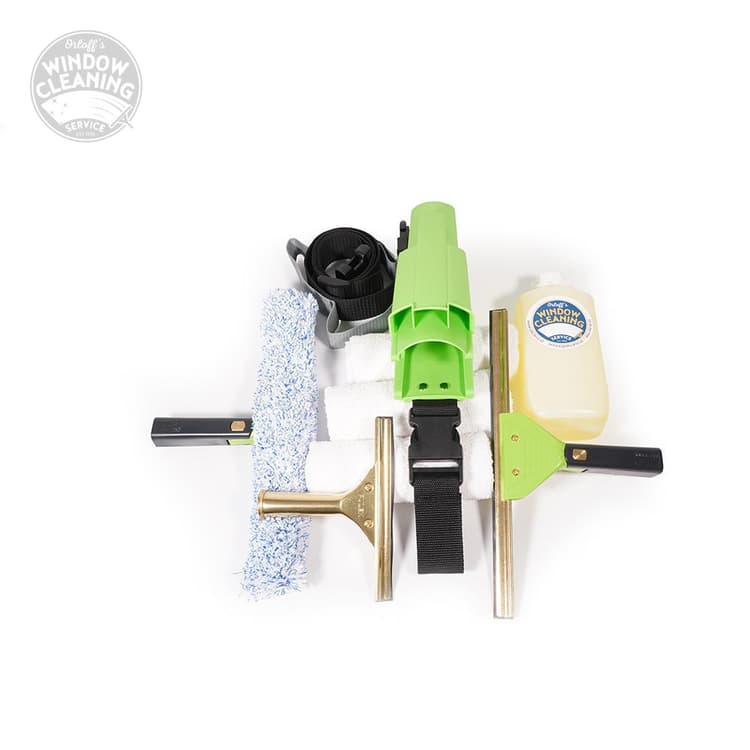
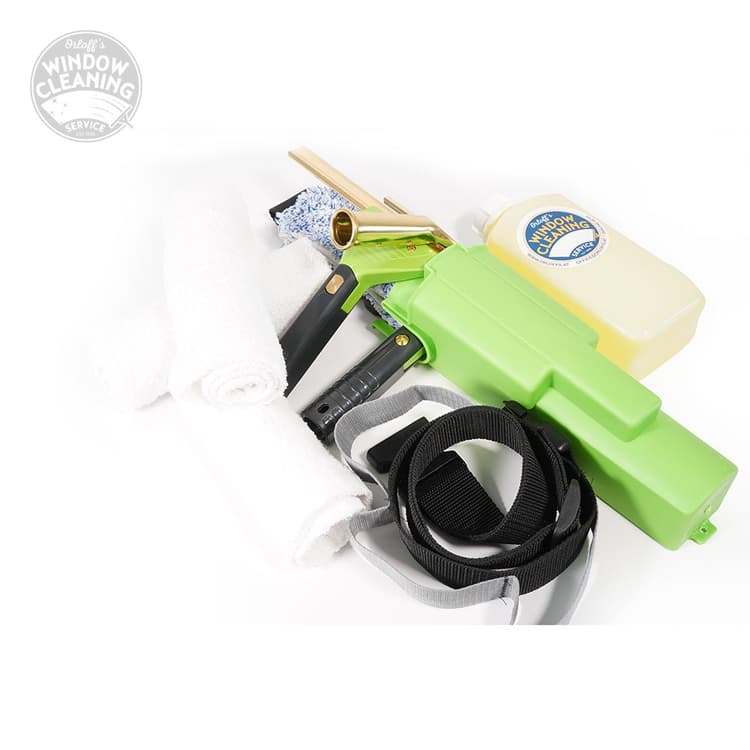
Tool Recommendations
T-bar applicator with microfibre cover
View on Amazon [coming soon]Professional squeegee with fresh rubber blade
View on Amazon [coming soon]Bucket with lukewarm water + 1 drop of mild washing-up liquid per litre
View on Amazon [coming soon]Cleaning Frequency
Glass and frames: 2x per year minimum (Quarterly in urban environments with pollution, pollen, and construction dust.). uPVC frames: 2x per year minimum (More often in polluted locations where deposits can cause long-term discolouration.). Hardware: 1x per year (Oil all hardware and check that locking mechanisms operate smoothly.). Drainage channels: 1x per year (Or after heavy storms. Check that drainage slots are clear of debris.). Gaskets and seals: Each cleaning session (Inspect during regular cleaning for damage or dirt preventing a proper seal.)
Frequently Asked Questions
Field Notes
“Glass and frames: 2x per year minimum, quarterly in urban environments with pollution and construction dust. uPVC frames: twice-yearly mild soap wipe-down prevents long-term discolouration from atmospheric deposits. Hardware: annual oiling and check that locking mechanisms operate smoothly. Drainage channels: annual clearing, or after heavy storms - blocked drainage damages sealed units. Gaskets and seals: inspect during every regular cleaning session.”
Justin Orloff
What's next for you?
The Skill
New to window cleaning?
Start with the core techniques before tackling premium systems.
Start Learning →The Standard
Upskill your team
Covers every system, product type, and tricky scenario.
View The Standard →Manufacturer
Partner with Orloffs
Are you REHAU or a similar manufacturer? Let's create official cleaning guidance together.
Get in Touch →