
Europe · Window Manufacturer
Pihla Group
🇫🇮 Finland · Last reviewed by Justin Orloff
Quick Facts
founded
1976 (Ruovesi, Central Finland)
hq
Äyritie 16, 01510 Vantaa, Finland
primaryMaterials
Wood-aluminium (Varma, Termo), Timber with aluminium cladding (Fixed)
glazingPartner
In-house
marketTier
Finland's market leader - Inwido Group
Brand at a Glance
- Founded: 1976 (Ruovesi, Central Finland)
- HQ: Äyritie 16, 01510 Vantaa, Finland
- Market position: Finland's most popular window and door brand - over 3 million units installed
- Frame materials: Wood-aluminium (Varma, Termo), timber with aluminium cladding (Fixed)
- Key ranges: Pihla Varma (triple-glazed double-sash), Pihla Termo (quadruple-glazed double-sash), Pihla Fixed Windows
- Glazing options: Triple-glazed (Varma), quadruple-glazed (Termo), fixed windows to A++ energy rating
- Warranty: 25-year guarantee against decay; 50-year lifespan if well maintained
- Parent company: Inwido Group
- Customer service: 0800 550 880 / asiakaspalvelu@pihla.fi
- Official care documentation: pihla.fi/materiaalipankki/oppaat/ and pihla.fi/kysymykset/huolto/
Product Range
- Pihla Varma
- Pihla Termo
- Pihla Fixed Windows
- Pihla Paloikkuna (Fire-Rated)
Why This System
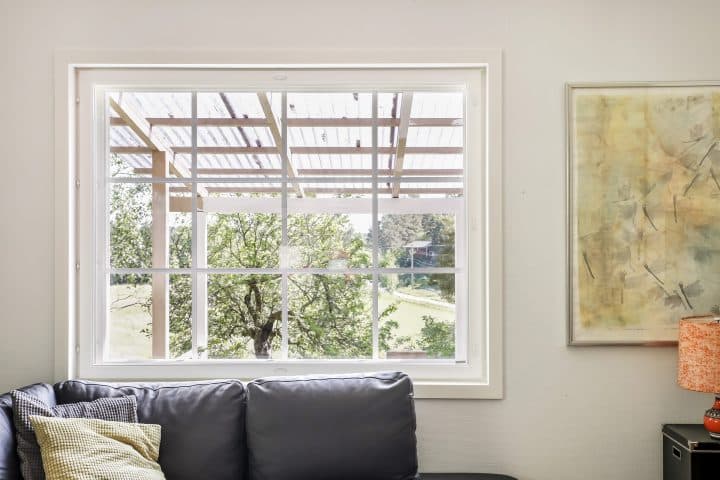
Pihla Varma and Termo are double-sash windows - one aluminium outer sash and one timber inner sash. Each sash has its own glass surface or surfaces. A Pihla Varma has three glass surfaces total; a Pihla Termo has four. The double-sash design means you can access and must clean both inner and outer surfaces separately - this takes longer than a standard single-sash window. Pihla explicitly bans dishwashing liquid for glass cleaning - it dulls the glass surface over time. Use a mild alkaline cleaning solution instead. The 25-year decay guarantee and potential 50-year lifespan depend on timber surfaces being maintained and aluminium surfaces never being exposed to solvents or ammonia. Drainage channels must be checked and cleared annually - Finnish winters deposit debris that blocks drainage and causes water pooling.
Step 1 of 2: Manufacturer Recommendations
Official Care Guidance
Source: PIHLA OFFICIAL USE AND MAINTENANCE DOCUMENTATION
Glass
- Clean with a mild, slightly alkaline cleaning solution diluted in water.
- Do not use dishwashing liquid - it can dull the glass surface over time.
- Do not use industrial-strength solvents - these may damage painted or coated finishes.
- Do not use abrasive materials or scouring pads on any Pihla glass surface.
- Do not use sharp tools or scrapers on coated or toughened glass - the surface scratches permanently.
- A small amount of white vinegar added to the cleaning water improves results on standard glass.
- Use a professional squeegee or a lint-free cloth to dry the glass. Work in horizontal overlapping strokes.
- Do not clean in direct sunlight - the cleaning solution dries too fast and leaves residue.
Wood-Aluminium Frames (Varma, Termo, Fixed)
- Clean timber interior surfaces with a soft damp cloth and mild soapy water only.
- Do not saturate the timber surface - use a damp cloth, not a wet one.
- Do not use solvents, ammonia-based products, or bleach on timber surfaces.
- Wood surfaces require periodic maintenance painting, especially in demanding weather conditions - essential to maintain the 25-year decay guarantee.
- The aluminium exterior cladding: clean with a soft cloth and mild soapy water.
- Do not use abrasive products on aluminium surfaces.
- Avoid alkaline substances on aluminium - aluminium reacts with strong alkalis.
Hardware and Fittings
- Lubricate locking mechanisms and hinges once per year using a silicone-free, acid-free oil.
- Inspect handles and locking points annually.
- Handle mechanism adjustment: rotate the shield 90 degrees to access the adjustment screws if the handle becomes stiff.
- Spare hardware components are available from Pihla's online shop.
Gaskets and Seals
- Inspect weatherstripping and seals annually.
- Treat seals with silicone-containing oil or talc to maintain flexibility and functionality.
- Replace deteriorated or cracked seals - replacement seals are available through Pihla's online shop.
Drainage Channels
- Check drainage channels and slots at the base of window frames annually.
- Clear any debris, leaves, or blockages that prevent water from draining away from the frame.
Step 2 of 2: The Orloffs Protocol
The Orloffs Protocol
This is how I clean Pihla Group windows. The tools and technique below come from 25 years of daily professional work on the glass. Every step has been tested on real installations and adapted specifically for Pihla Group systems.
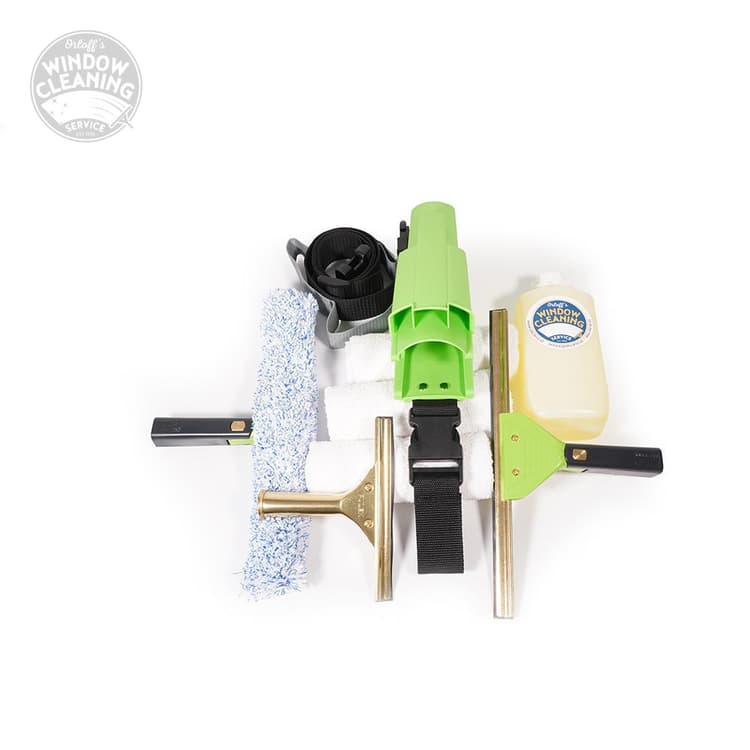
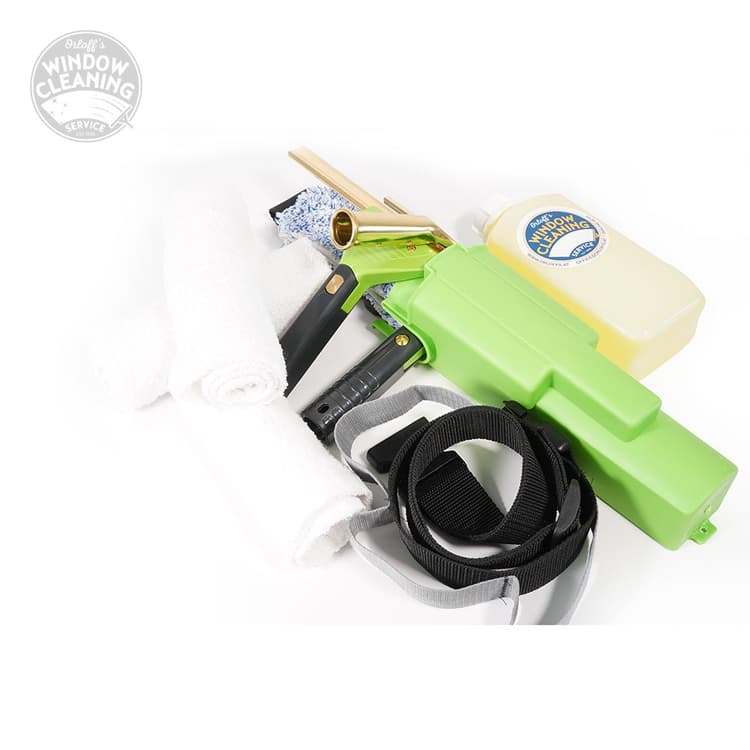
Pro Tools
My daily tool list. This is what I carry to every job.
Follow these steps in order. Each one builds on the last. This is the same sequence I use on every Pihla Group installation.
- 1
Detail the frame first
Before touching the glass, wipe the window frame edges with a damp microfibre cloth and mild soapy water. Remove the dust, pollen, and grime sitting on both the aluminium exterior and timber interior frame edges.
When the squeegee reaches the frame edge during cleaning, the rubber touches that frame. Dirty frame - dirty streak across your clean glass. Clean the frame first. Every time.
For the timber interior surface, use a lightly damp cloth only. Timber does not like being saturated.
- 2
Tackle the outer sash first
On a Pihla Varma or Termo, tilt the window inward or open it fully to access the outer sash. The outer aluminium sash carries one glass pane on the Varma. Clean this surface first - applicator on, let the solution dwell for a moment to dissolve the grime, then squeegee off with overlapping horizontal strokes.
Wipe the squeegee rubber dry after each pass. A wet rubber on the next pass just redistributes the dirty water. This is the single biggest cause of streaks.
- 3
Agitate the inner glass
Apply the cleaning solution across the inner glass surface with the T-bar applicator. Work in full overlapping passes. The goal is to dissolve and lift the dirt so the squeegee can shave it cleanly away. If the dirt is not dissolved, the squeegee drags it across the glass as a smear.
On the Termo's inner sash, which carries a double-glazed sealed unit, take the same approach. Four glass surfaces on a double-sash window. Each one gets the same treatment.
- 4
Dry the frame edge before squeegeeing
Once the glass is fully wetted, run a dry corner of your cotton rag along the top and side edges of the window frame. This removes the pooled cleaning solution sitting on the frame so the squeegee does not pick it up and drag it back across the glass.
Ten seconds. Prevents most of the remaining streaks.
- 5
The three squeegee turns
Side to side: start at the top edge with a dry rubber. Work across the glass in straight horizontal lines. Tilt the squeegee so the water channels to one side only. Wipe the rubber dry after each pass. Overlap slightly into the next line down.
Top to bottom: the same principle but in vertical lines. Dry rubber at the start. Tilt to direct water downward. Wipe after each pass. Overlap. Repeat across.
The J tune: the professional continuous motion - top to bottom in one flowing movement without stopping. Your wrist rotates the squeegee as you reach the end of a horizontal pass, and you continue down without lifting the rubber from the glass. This is the fastest and most consistent turn for any window size once it is in your muscle memory.
- 6
Edge detailing
After squeegeeing, there is always a fine line of water along the bottom edge and at the sides where the glass meets the frame seal. Fold a dry cotton rag to a clean corner and detail these edges with one smooth pass.
Get your fingertip into the rebate where the glass meets the seal. Pull out any pooled water sitting there. Left to dry, it leaves a white residue line that shows the moment sunlight hits the glass at an angle.
Rotate to a fresh rag section every couple of windows.
- 7
Never clean in direct sunlight
Pihla windows in Finnish summer sun are in bright, direct light for long stretches. The cleaning solution dries on the glass before you can squeegee it off, baking a residue film onto the surface that is harder to remove than the original dirt. Choose overcast days, early morning, or evening for window cleaning.
Pro Tips
- Varma = 3 glass surfaces, Termo = 4 glass surfaces. Plan your time before you start. Do not underestimate the job.
- No dishwashing liquid on Pihla glass. Use a mild alkaline cleaning solution. Pihla states explicitly that dish soap dulls glass over time.
- Separate cloths for aluminium exteriors and timber interiors. Products safe for aluminium can still damage timber finishes.
- Seal conditioning is active maintenance, not optional. Use silicone-containing oil or talc on seals annually.
- Check drainage channels every year. Finnish winters block them with debris. Blocked drainage causes water pooling in the frame structure.
What NOT To Do
- No dishwashing liquid on glass - it dulls the surface over time.
- No industrial-strength solvents on any Pihla surface - frames or glass.
- No ammonia-based cleaning products. Ammonia damages aluminium finishes and timber surface treatments. Most commercial glass sprays contain ammonia.
- No bleach on any Pihla surface.
- No abrasive pads, steel wool, scouring sponges, or abrasive powders on glass or frames.
- No sharp tools or scrapers on coated or toughened glass - the surface scratches permanently and cannot be repaired.
- No pressure washer on Pihla windows - it forces moisture past seals, into hardware, and behind gaskets.
- Do not saturate timber interior frame surfaces with water. Use a damp cloth, not a wet one.
- Do not use alkaline substances directly on aluminium - aluminium reacts with strong alkalis.
- Do not clean glass in direct sunlight - the solution dries before you can squeegee it off.
- Do not skip the annual seal inspection and lubrication - deteriorated seals lead to draughts, condensation problems, and energy loss.
Bundle Kits and Tool Recommendations
Bundle Kit
Tool Recommendations
T-bar applicator with a clean microfibre sleeve
View on Amazon [coming soon]Professional squeegee with a fresh rubber blade
View on Amazon [coming soon]Bucket with lukewarm water + mild alkaline cleaning solution (not dish soap)
View on Amazon [coming soon]Cleaning Frequency
Glass and frames: 2x per year minimum (Spring after Finnish winter and autumn. Urban and construction-adjacent locations: quarterly.). Timber surface inspection: 1x per year (Check for cracking, peeling, or discolouration - address promptly. 25-year decay guarantee depends on it.). Hardware lubrication: 1x per year (Silicone-free, acid-free oil on locking mechanisms and hinges.). Seal and gasket inspection: 1x per year (Treat with silicone oil or talc to maintain flexibility. Replace deteriorated seals - available from Pihla's online shop.). Drainage channel check: 1x per year (Clear any debris at the base of the frame. Blocked drainage causes water pooling.). Coastal and high-humidity locations: Increase all intervals above (More frequent inspection of timber surfaces and seals.)
Frequently Asked Questions
Field Notes
“Glass and frames: minimum twice per year - spring and autumn. Varma has 3 glass surfaces per window; Termo has 4. Plan time accordingly. Hardware: lubricate once per year with silicone-free, acid-free oil. Seals: inspect and treat with silicone oil or talc annually. Replace if cracked. Drainage channels: clear annually. Finnish winters deposit debris that blocks them. Timber surfaces: inspect annually for cracking or peeling - the 25-year decay guarantee depends on maintaining the finish.”
Justin Orloff
What's next for you?
The Skill
New to window cleaning?
Start with the core techniques before tackling premium systems.
Start Learning →The Standard
Upskill your team
Covers every system, product type, and tricky scenario.
View The Standard →Manufacturer
Partner with Orloffs
Are you Pihla Group or a similar manufacturer? Let's create official cleaning guidance together.
Get in Touch →