
Europe · Window Manufacturer
OPTIWIN
🇦🇹 Austria · Last reviewed by Justin Orloff
Quick Facts
founded
Established Austrian passive house window specialist
hq
Austria
primaryMaterials
Timber, timber-aluminium composite, PVC
glazingPartner
Triple glazing standard on Passive House certified products
marketTier
Premium
Brand at a Glance
- Country: Austria
- Market position: Premium Austrian Passive House window manufacturer
- Primary materials: Solid timber, timber-aluminium composite, PVC
- Product types: Passive House certified windows and doors, lift-and-slide terrace doors, fixed lights
- Performance: Uw values from 0.73 W/m2K - Passive House certified
- Timber species: Spruce, larch, oak, meranti depending on specification
- Aluminium cladding: Powder-coated aluminium outer shell on timber-alu products
- Glazing: Triple glazing standard - argon or krypton filled
- Standards: Passive House Institute certified, EN 14351-1
- Website: optiwin.net
Product Range
- Timber-aluminium Passive House windows
- Timber Passive House windows
- PVC Passive House windows
- Lift-and-slide terrace doors
Why This System
The timber-aluminium composite construction means the outer face and inner face are completely different materials requiring completely different care - a property owner or cleaner who treats the inner timber face the same as the outer aluminium face will cause damage to one of them. Triple-glazed units are significantly heavier than double-glazed equivalents - a full-size OPTIWIN sash can weigh 80 to 120kg. This affects the force required to open and close windows and the load on hinge scissors and running gear. Passive House windows have extremely tight tolerances on weatherstripping and sash seal compression. Damaged or dirty seals compromise the certified performance - seal maintenance is a functional requirement, not just cosmetic. The aluminium cladding on timber-alu windows protects the timber completely from weather but must itself be maintained to prevent corrosion at the cladding-to-timber junction points. OPTIWIN windows often have complex hardware systems including tilt-before-turn sequences, security mushroom cams, and threshold seals on terrace doors that require specific operating technique to avoid wear.
Step 1 of 2: Manufacturer Recommendations
Official Care Guidance
Source: ORLOFFS PROFESSIONAL GUIDANCE - BASED ON OPTIWIN PUBLISHED INFORMATION AND 25 YEARS FIELD EXPERIENCE
Glass
- pH-neutral glass cleaner, lukewarm water, microfibre T-bar and professional squeegee. Triple-glazed units have the same outer surface as double-glazed - cleaning approach is identical.
- Do not lean cleaning tools or equipment against tilted triple-glazed sashes. The sash weight is significantly higher than standard residential glazing.
- Clean outer face through the open turn position or from a ladder. Do not try to clean the outer face while the window is in tilt position.
- Check the glass unit edge at every clean. Triple-glazed units have two internal cavities - a seal failure shows as a distinct condensation ring at one cavity boundary.
Frames
- Outer aluminium cladding: pH-neutral aluminium cleaner, soft cloth, rinse, dry. No alkaline or abrasive products.
- Inner timber face: damp cloth only with minimal moisture. No water-based cleaners on oiled timber. On painted timber, a very slightly damp cloth only - allow to dry before closing the window.
- Do not use the same cloth or product on both inner timber and outer aluminium faces.
- Check the cladding-to-frame sealant bead at every annual service. Report any gaps or lifting sealant immediately.
Hardware
- Lubricate all moving hardware annually with light machine oil or PTFE spray. OPTIWIN windows with heavy triple-glazed sashes need more thorough lubrication than standard residential windows.
- Condition all rubber compression seals annually with a non-silicone rubber conditioner.
- On lift-and-slide terrace doors, lubricate running gear rollers and track at least twice per year - the load on unlubricated rollers carrying 100kg sash weight is severe.
Step 2 of 2: The Orloffs Protocol
The Orloffs Protocol
This is how I clean OPTIWIN windows. The tools and technique below come from 25 years of daily professional work on the glass. Every step has been tested on real installations and adapted specifically for OPTIWIN systems.
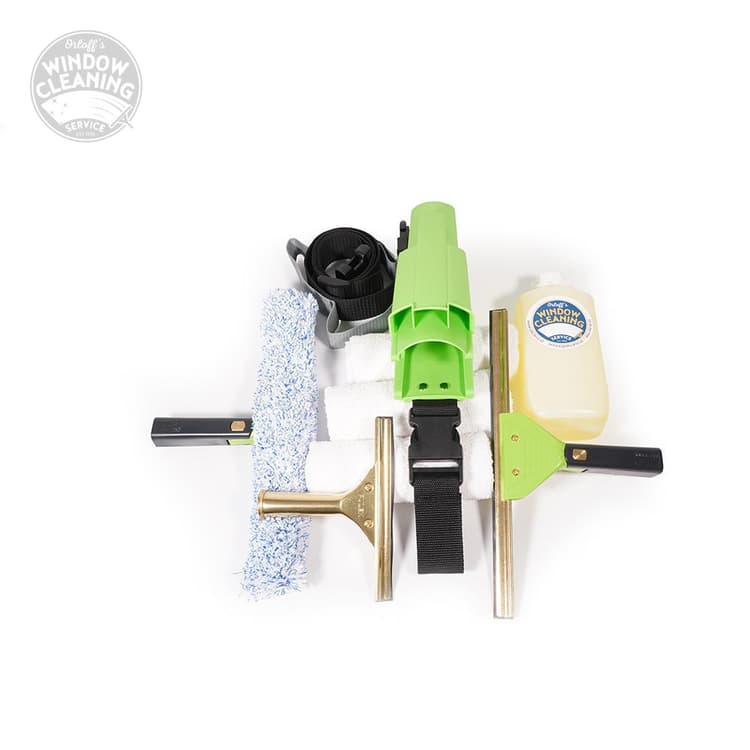
Pro Tools
My daily tool list. This is what I carry to every job.
Follow these steps in order. Each one builds on the last. This is the same sequence I use on every OPTIWIN installation.
- 1
Material identification and condition check
Identify the window construction type - timber-alu, full timber, or PVC. The outer face appearance tells you: aluminium-clad, painted timber, or white/colour PVC.
On timber-alu products, check the aluminium cladding joins at corners and sill edges for any sealant gaps or moisture staining.
On full timber products, check paint or oil finish condition before any cleaning - cracked or flaking paint needs reporting before water-based cleaning proceeds.
- 2
Outer face cleaning - aluminium or timber
On timber-alu outer face: pH-neutral aluminium cleaner on soft cloth, wipe, rinse with clean water, dry. Work top to bottom.
On full timber outer face: damp cloth with very dilute pH-neutral cleaner on sound paintwork only. Dry immediately with clean cloth.
On PVC outer face: standard pH-neutral PVC cleaner, damp cloth, rinse, dry.
- 3
Glass cleaning
Apply solution with T-bar, squeegee with consistent overlapping passes from top to bottom.
On tall OPTIWIN sashes, work from a ladder with a long-handle T-bar rather than leaning the T-bar handle against the glass to extend reach.
Edge detail wipe in rebate before final squeegee pass.
- 4
Inner face cleaning
Inner timber face (painted): very slightly damp cloth, minimal passes, allow to dry before closing.
Inner timber face (oiled): dry cloth only. No moisture on oiled timber surfaces.
Inner PVC or aluminium face: standard pH-neutral cleaner, damp cloth, dry.
- 5
Seal conditioning
Apply non-silicone rubber conditioner to all compression seals around the sash perimeter with a cloth or the product applicator.
Allow the conditioner to absorb for 5 minutes before closing the window to prevent transfer to the opposite seal surface.
On lift-and-slide terrace doors, condition the threshold seal as well as the perimeter seals - threshold seals carry the weight of the sash and wear faster.
- 6
Hardware service
Lubricate all mechanism points: hinge scissors, corner transfer pieces, espagnolette rod guides, locking cam surfaces.
On lift-and-slide doors, lubricate running gear roller axles with PTFE spray and track with a thin line of silicone grease.
Operate all windows through full cycle. Report any stiffness or misalignment that persists after lubrication.
Pro Tips
- Never use the same cloth on both the inner timber face and the outer aluminium cladding - the product safe for aluminium is not safe for oiled timber, and vice versa.
- Triple-glazed sashes in tilt position feel heavier than expected when you first rest a T-bar on them. Confirm the sash is fully settled in tilt position before resting any equipment against it.
- The compression seals on OPTIWIN Passive House windows are doing real thermal work, not just weather exclusion. A seal that has hardened and cracked means the window is losing air-tightness and the Passive House performance figures are no longer accurate.
- Oiled timber inner faces should not be cleaned with any water-based product. A dry microfibre cloth removes light dust and fingermarks without introducing moisture into the timber.
- Aluminium cladding on timber-alu windows is powder-coated after cladding fabrication. The coating is continuous across the outer face but stops at the cladding edge where it meets the timber frame. This junction is the only moisture vulnerability point - check it at every annual service.
- OPTIWIN lift-and-slide doors often have a threshold seal that rises when the door is operated, sealing against the bottom of the sash. This seal needs to be clean and in contact with a clean track to function. Clean the track channel before lubricating.
- On heavily loaded lift-and-slide running gear, apply PTFE spray to both the roller axle and the track face for best results. Lubricating only the track leaves the roller dry and the roller bearing doing most of the wear.
What NOT To Do
- Do not use water-based cleaners on oiled timber inner window faces - moisture in oiled timber raises the grain and disrupts the oil finish.
- Do not use silicone spray on OPTIWIN compression seals - silicone degrades EPDM rubber and reduces air-tightness performance over time.
- Do not lean tools or equipment against tilted triple-glazed sashes - the sash weight is significant and continuous load on the tilt stay accelerates wear.
- Do not allow water to enter at aluminium cladding-to-frame junctions - report any sealant gaps before the next cleaning visit.
- Do not use abrasive pads on powder-coated aluminium outer cladding - scratches in the powder coat are permanent and allow moisture to reach the aluminium substrate.
Bundle Kits and Tool Recommendations
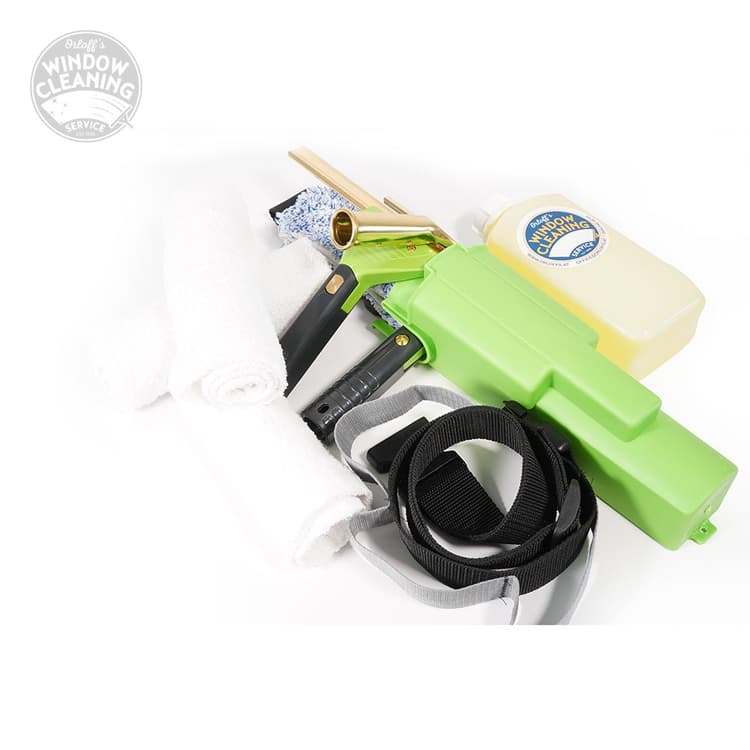
Bundle Kit
Tool Recommendations
pH-neutral aluminium frame cleaner
View on Amazon [coming soon]Non-silicone EPDM rubber seal conditioner
View on Amazon [coming soon]PTFE dry lubricant spray
View on Amazon [coming soon]Cleaning Frequency
Glass: 2x per year (Spring and autumn. Timber-alu windows in forested Austrian locations may accumulate more pollen and resin deposit than urban equivalents.). Outer frame - aluminium cladding: 2x per year (Same visit as glass. Alpine and rural locations accumulate organic deposits faster than urban locations.). Rubber seals: Once per year (Conditioning at the annual service visit. More frequent inspection in heavily used windows.). Running gear on lift-and-slide: 2x per year (Spring and autumn lubrication for heavy sash loads. More frequent in high-use locations.)
Frequently Asked Questions
Field Notes
“OPTIWIN windows are among the highest-specification products in the Austrian and German residential market. Clients who have invested in Passive House certification are typically detail-conscious and will notice cleaning quality issues that a standard client would not. The inner timber face of timber-alu windows is the most commonly damaged surface during cleaning by untrained operatives. The error is applying the same damp cloth used on the aluminium outer face to the timber inner face. Lift-and-slide terrace doors at this specification level are large, heavy, and expensive. Running gear failure on a 150kg triple-glazed sash is a significant repair. Annual lubrication is non-negotiable on these products.”
Justin Orloff
What's next for you?
The Skill
New to window cleaning?
Start with the core techniques before tackling premium systems.
Start Learning →The Standard
Upskill your team
Covers every system, product type, and tricky scenario.
View The Standard →Manufacturer
Partner with Orloffs
Are you OPTIWIN or a similar manufacturer? Let's create official cleaning guidance together.
Get in Touch →