
Europe · Window Manufacturer
Oknotherm
🇨🇿 Czech Republic · Last reviewed by Justin Orloff
Quick Facts
founded
Established Czech window manufacturer
hq
Czech Republic
primaryMaterials
PVC, aluminium
glazingPartner
Double glazing standard, triple glazing on request
marketTier
Mid-Range
Brand at a Glance
- Country: Czech Republic
- Market position: Mid-range Czech window and door manufacturer
- Primary materials: PVC, aluminium
- Product types: Tilt-and-turn windows, casement windows, entrance doors, aluminium systems
- Opening styles: Tilt-and-turn standard, casement, fixed light
- Colour options: White PVC standard, colour foil laminates, powder-coated aluminium
- Standards: CE marked, Czech national building standards
- Distribution: Czech Republic and central European markets
- Glazing: Double glazing standard, triple glazing available
- Website: oknotherm.cz
Product Range
- PVC tilt-and-turn windows
- Aluminium windows and doors
- Entrance doors
- Passive and low-energy windows
Why This System
Czech mid-range PVC windows often use colour foil laminates rather than co-extruded colour profiles - the foil finish is more vulnerable to solvent damage and requires careful product selection. Central European climate produces harder seasonal soiling than western European equivalents - winter road salt spray deposits on ground-floor windows need neutralising rather than just washing off. PVC profiles from Czech manufacturers at this price point may have a thinner foil laminate on colour options than premium manufacturers - abrasive cleaning accelerates foil edge lifting. Hardware on mid-range Czech windows is typically sourced from standard central European suppliers - MACO, ROTO, or GU - which means good hardware service life if maintained, but also means the hardware is a known quantity with known lubrication requirements. Drainage on Czech PVC tilt-and-turn windows follows standard practice with slots in the sash base - these are the standard maintenance point and are easy to miss during a routine clean.
Step 1 of 2: Manufacturer Recommendations
Official Care Guidance
Source: ORLOFFS PROFESSIONAL GUIDANCE - BASED ON OKNOTHERM PUBLISHED INFORMATION AND 25 YEARS FIELD EXPERIENCE
Glass
- Lukewarm water with pH-neutral glass cleaner. Microfibre T-bar and professional squeegee.
- Rinse ground-floor windows with plain water before applying cleaning solution to remove road salt deposits.
- Clean inner face in tilt position, outer face in turn position. Full squeegee strokes top to bottom.
- Check glass unit seal condition at each visit - mid-range units with blocked drainage slots fail earlier than correctly maintained windows.
Frames
- PVC frames: pH-neutral cleaner, damp cloth, no solvents. On colour foil profiles, no solvent-containing products under any circumstances.
- White PVC: mild detergent or PVC-specific cleaner. Persistent staining can be treated with specialist PVC restorer - test first on an inconspicuous area.
- Clear all sash drainage slots at the base of each sash after every clean. Use a soft brush or plastic tool.
- Wipe rubber seals with a damp cloth. Do not use silicone spray on rubber seals - it degrades EPDM rubber over time.
Hardware
- Lubricate all hinge scissors, espagnolette rods, and corner transfer pieces annually with light machine oil or PTFE spray.
- Wipe visible hardware with a damp cloth at every clean. Dry immediately to prevent surface rust on steel components.
- Check that all locking cams engage cleanly with no handle resistance. A stiff handle means dry hardware or sash misalignment.
Step 2 of 2: The Orloffs Protocol
The Orloffs Protocol
This is how I clean Oknotherm windows. The tools and technique below come from 25 years of daily professional work on the glass. Every step has been tested on real installations and adapted specifically for Oknotherm systems.
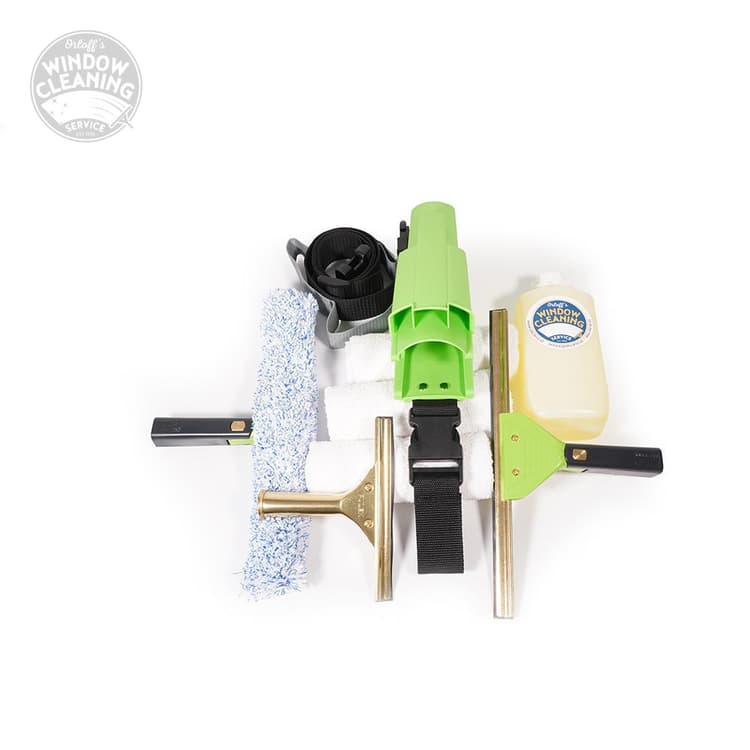
Pro Tools
My daily tool list. This is what I carry to every job.
Follow these steps in order. Each one builds on the last. This is the same sequence I use on every Oknotherm installation.
- 1
Pre-clean inspection
Open each window to tilt. Check drainage slots in the sash base - count the open slots and note any that are blocked or missing their plastic inserts.
Check the glass unit corner seals for any blackening or moisture ingress sign at the unit edge. This is early seal failure and should be reported.
On colour foil windows, check foil edges at corners and cut surfaces for lifting. Lifting foil edges are fragile and need careful cleaning to avoid further detachment.
- 2
Pre-rinse on ground-floor windows
On ground-floor windows in urban or roadside locations, rinse the glass and lower frame with plain water before applying cleaning solution.
This removes road salt and grit that would otherwise be dragged across the glass surface by the T-bar, causing fine scratching.
Allow the rinse water to drain before applying cleaning solution.
- 3
Glass cleaning
Apply solution with T-bar in tilt position for inner face. Close and open to turn position for outer face.
Squeegee from top to bottom with overlapping passes. Wipe rubber after each pass.
Finish with edge detail wipe in the rebate groove before the final squeegee pull.
- 4
Frame cleaning
Apply pH-neutral PVC cleaner to damp cloth. Wipe top to bottom in straight strokes.
On colour foil frames, use minimal moisture and avoid any scrubbing pressure near foil edges.
Rinse with clean water and dry with cotton cloth. Do not leave cleaner residue on PVC.
- 5
Drainage slot clearance
Use a plastic tool to clear each drainage slot in the sash base. Work the tool through from the inner face to confirm the slot is open.
Flush cleared slots with a small amount of clean water to confirm drainage.
Replace any missing plastic slot inserts - these prevent wind noise but must not block the slot opening.
- 6
Hardware lubrication
Apply light oil to hinge scissors pivots, corner transfer pieces, and espagnolette rod channels.
Operate the handle through full tilt and turn cycle to distribute lubrication through all mechanism points.
Dry any excess oil from the frame face immediately - oil on PVC attracts dust.
Pro Tips
- On colour foil PVC windows, always test any new cleaning product on the inside face in an inconspicuous corner before using it on the exterior - solvent damage shows as a dull patch or foil lift that starts at the edges.
- Road salt on lower window frames does not dissolve in cleaning solution the same way that general dirt does - pre-rinsing with plain water is the only way to properly clear it before the main clean.
- PVC drainage slots in tilt-and-turn sashes often have a small plastic grill insert. These grills can be removed for cleaning - remove them, brush clean, and refit rather than trying to clear the slot around them.
- A PVC frame that has turned grey or beige over time can often be significantly improved with a specialist PVC restorer product. Test on an inconspicuous area first - restorers work well on standard PVC but can lift foil on laminated profiles.
- Czech and central European winters leave a combination of road salt, grit, and anti-freeze product deposits on ground-floor windows. Treat this combination carefully - anti-freeze residue is a mild solvent that can affect foil laminates.
- Handle resistance on a mid-range PVC window increases much faster when the corner transfer piece is dry than when it is regularly oiled. Make the corner piece the first lubrication point on every annual service.
- EPDM rubber seals on PVC windows dry out and crack in 10 to 15 years. A seal that has cracked along its length is no longer weathering the window and needs replacement - no amount of seal conditioner repairs a cracked seal.
What NOT To Do
- Do not use solvent-containing cleaners on colour foil PVC windows - the solvent attacks the foil adhesive and causes edge lifting.
- Do not scrub PVC frames with an abrasive pad - micro-scratches in the PVC surface trap dirt and accelerate discolouration.
- Do not use silicone spray on rubber seals - it degrades EPDM and causes the seal to harden and crack faster than normal ageing.
- Do not ignore blocked drainage slots - water pooling in the sash rebate is the primary cause of premature glazing unit seal failure.
- Do not force a stiff tilt-and-turn handle - the mechanism needs lubrication, not force. Forcing bends the espagnolette rod.
Bundle Kits and Tool Recommendations
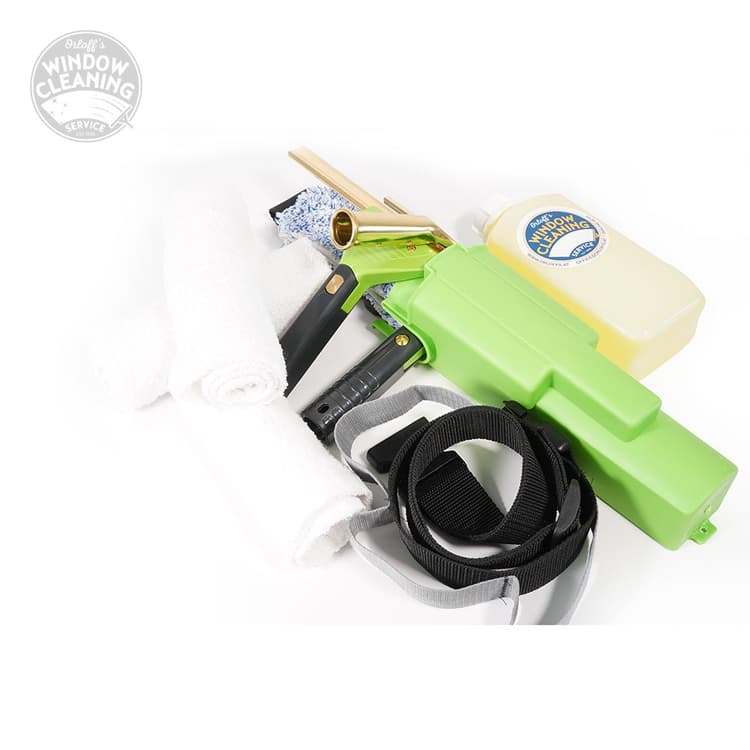
Bundle Kit
Tool Recommendations
pH-neutral PVC frame cleaner
View on Amazon [coming soon]Microfibre T-bar applicator
View on Amazon [coming soon]Professional squeegee with fresh rubber
View on Amazon [coming soon]Cleaning Frequency
Glass: 2x per year minimum (Urban and road-facing locations may benefit from quarterly cleaning in winter months when salt deposits are heaviest.). Frames: 2x per year (Same visit as glass. Colour foil frames benefit from more frequent light cleaning to prevent deposit buildup that requires harder cleaning.). Drainage slots: Every clean (The single most important maintenance task on Czech PVC tilt-and-turn windows. Do not skip.). Hardware lubrication: Once per year (Annual service prevents stiff handles and premature mechanism wear.)
Frequently Asked Questions
Field Notes
“Czech mid-range PVC windows represent good value when correctly maintained. The material quality is sufficient for a 25-year window life with regular cleaning and annual hardware service. The foil laminate issue on colour Czech windows is the most common cause of early cosmetic failure. A solvent-contaminated foil edge on a dark-colour window is immediately visible and is not covered by manufacturer warranty if cleaning products were involved. Road salt season in central European cities runs from November through March. Ground-floor windows in this zone need a different pre-clean protocol during these months than at other times of year.”
Justin Orloff
What's next for you?
The Skill
New to window cleaning?
Start with the core techniques before tackling premium systems.
Start Learning →The Standard
Upskill your team
Covers every system, product type, and tricky scenario.
View The Standard →Manufacturer
Partner with Orloffs
Are you Oknotherm or a similar manufacturer? Let's create official cleaning guidance together.
Get in Touch →