Europe · Window Manufacturer
Neuffer Fenster + Türen
🇩🇪 Germany · Last reviewed by Justin Orloff
Quick Facts
founded
1872
hq
Stuttgart, Baden-Württemberg, Germany
primaryMaterials
Timber, timber/aluminium (aluclad), aluminium, uPVC, aluminium-clad uPVC
glazingPartner
In-house, made to specification
marketTier
Mid-market to premium (direct online)
Brand at a Glance
- Founded: 1872
- HQ: Stuttgart, Baden-Württemberg, Germany
- Market position: German online-direct window manufacturer and retailer, trading since 1872
- Frame materials: Timber, timber/aluminium (aluclad), aluminium, uPVC, aluminium-clad uPVC
- Glazing: Double and triple glazed. Argon gas fill standard. Triple glazing achieves Uw-values down to 0.73 W/(m2K). Passive House certified options available.
- Key ranges: Energeto 8000 (uPVC), TwinSet Energeto 8000ED (aluclad uPVC), ECO Plano (aluclad timber), ECO Idealu (aluclad timber), Aluprof (aluminium)
- Where they sell: Germany, Europe, international (direct online sales)
- Warranty: Contact Neuffer directly for current warranty terms
- Website: neuffer.de/en
- Online configurator: neuffer.de for custom sizing and specifications
Product Range
- Energeto 8000 (uPVC)
- TwinSet Energeto 8000ED (aluclad uPVC)
- ECO Plano (aluclad timber)
- ECO Idealu (aluclad timber)
- Aluprof (aluminium)
Why This System
Five frame materials, five different care rules - the glass technique is identical across all of them, but each frame material has different chemical tolerances. Using the wrong product on the wrong frame causes permanent damage. Direct-to-consumer since 2005 via online configurator - Neuffer windows come with original order documentation that specifies exactly which profile, glazing type, and specification you have. This is the most reliable way to confirm what you are cleaning. Passive House certified Energeto uPVC profile - carbon-fibre-reinforced chambers achieve Uw values down to 0.73 W/(m2K). These precision-engineered systems need precise care at the frame-to-glass seal line. Timber ranges require active surface protection, not just cleaning - varnish every 2 to 3 years, paint coatings every 4 to 5 years, plus wood care milk twice a year after cleaning. Aluclad systems combine two materials in one frame - aluminium exterior rules and uPVC or timber interior rules running at the same time.
Step 1 of 2: Manufacturer Recommendations
Official Care Guidance
Source: NEUFFER FENSTER + TÜREN CARE AND MAINTENANCE GUIDANCE - contact neuffer.de/en or refer to the care instructions supplied with your order
Glass
- Clean with lukewarm water and a mild pH-neutral dish soap or specialist glass cleaner.
- No solvents of any kind on or near the glass seals.
- No ammonia - this rules out most commercial glass sprays.
- No bleach.
- No abrasive cloths, steel wool, scouring pads, or metal tools.
- No sharp tools or razor blades on the glass surface.
- Do not power wash or use a high-pressure hose - water can be forced past seals and into the frame.
- Never clean in direct sunlight - cleaning solution dries before it can be removed, leaving residue on the glass.
uPVC Frames (Energeto 8000 and TwinSet Energeto)
- Clean with mild soapy water and a soft cloth or soft sponge.
- Remove excess water with a clean, dry, non-abrasive cloth.
- No solvents - solvents degrade uPVC and the damage is permanent.
- No ammonia.
- No bleach - bleach discolours uPVC permanently.
- No abrasive pads or cloths.
- Rinse thoroughly after cleaning.
Aluminium-Clad uPVC Frames (TwinSet Energeto exterior)
- Wipe down the aluminium exterior with a soft cloth and mild soapy water.
- The anodised aluminium exterior is highly weather-resistant and requires minimal maintenance.
- No abrasive pads or cleaners - these scratch the anodised surface.
- No acid-based products or alkaline cleaners.
Timber Frames and Timber Interiors (ECO Plano, ECO Idealu)
- Clean timber surfaces with a soft damp cloth and mild soapy water.
- Do not saturate timber with water - use a damp cloth, not a wet one.
- Refinish the timber surface on a regular cycle: varnish approximately every 2 to 3 years, paint coatings every 4 to 5 years.
- Apply wood care milk twice a year after cleaning to protect the timber surface.
- No solvents, ammonia, or bleach on any timber surface.
Aluminium Frames (Aluprof)
- Wipe down with a soft cloth and mild soapy water.
- The powder-coated or anodised aluminium surfaces are corrosion-resistant and low-maintenance.
- No abrasive pads or harsh alkaline or acid-based cleaners.
- Rinse thoroughly after cleaning.
Hardware
- Lubricate all moving parts at least once per year using a light machine oil or specialist window hardware lubricant.
- Open the window fully (to the point of resistance, not past it) when cleaning or lubricating hardware.
- Check all hardware for smooth operation twice per year.
Step 2 of 2: The Orloffs Protocol
The Orloffs Protocol
This is how I clean Neuffer Fenster + Türen windows. The tools and technique below come from 25 years of daily professional work on the glass. Every step has been tested on real installations and adapted specifically for Neuffer Fenster + Türen systems.
Pro Tools
My daily tool list. This is what I carry to every job.
Follow these steps in order. Each one builds on the last. This is the same sequence I use on every Neuffer Fenster + Türen installation.
- 1
Identify the frame material
Before touching anything, confirm what you have: Energeto 8000 (uPVC), TwinSet Energeto (aluclad uPVC), ECO Plano or ECO Idealu (aluclad timber), or Aluprof (aluminium). Check the interior surface first - if it shows wood grain it is a timber or aluclad timber range. If it is smooth and uniform in colour it is uPVC or aluminium.
Use separate cloths for each frame material. Never use the same cloth on uPVC and timber without washing it - cross-contamination of care products can cause damage.
- 2
Detail the frame first
Wipe down the frame edges with a damp microfibre cloth and mild soapy water before touching the glass. Remove dust, pollen, and grime from the frame surface.
For uPVC frames, make sure your cloth carries no solvent residue from any other cleaning task. For timber interiors, use a damp cloth, not a wet one.
When the squeegee moves across the glass, the rubber edge makes contact with the frame. Dirt on that frame gets picked up and dragged across the clean glass as a streak. Clean the frame first, every time, without exception.
- 3
Agitate the glass
Dip your T-bar applicator fully into the soapy water. Apply the solution across the entire glass surface using overlapping strokes - the goal is to dissolve the dirt and release it from the surface so the squeegee can shave it away cleanly.
If the dirt is not fully dissolved, any remaining grit gets dragged across the glass by the squeegee, leaving smears or micro-scratches. Take your time on this step - it is where the result is determined.
Never clean in direct sunlight. The soapy water dries onto the glass before you can remove it, baking residue onto the surface that is harder to remove than the original dirt.
- 4
Detail the frame edges before squeegeeing
Once the glass is agitated, run a dry corner of your cotton rag along the top edge and both side edges of the window frame. This removes the pooled soapy water sitting on the frame surface.
When the squeegee reaches those edges in the next step, it will not pick up dirty residue and drag it back across the glass. This takes ten seconds and prevents the majority of streaks.
- 5
The three squeegee turns
Side to side: start at the top edge of the window with a dry rubber. Work across the glass in a straight horizontal line, tilting the squeegee so the soapy water spills from one side of the channel only. Wipe the rubber dry after each line. Overlap slightly into the next line down. Repeat to the bottom.
Top to bottom: the same principle, working down the glass in vertical lines. Start in the top corner with a dry rubber. Tilt to direct water downward. Wipe the rubber dry after each line. Overlap into the next line across. Repeat to the far edge.
The J tune: the professional continuous motion from the top of the window to the bottom in one smooth, unbroken movement. Your thumb guides the rotation as you reach the end of each horizontal pass, rotating the squeegee and continuing down. At the bottom, rotate back and return. When this motion is in muscle memory it is the fastest and most consistent turn for any Neuffer window.
- 6
Edge detailing
After squeegeeing, there is always a thin line of water along the bottom edge and at the sides. Take a dry cotton rag, fold it to a clean corner, and detail these edges in one smooth pass.
Get your finger into the edge where the glass meets the frame seal. Remove any pooled soap water sitting there. Left to dry, it leaves a residue mark that is visible as soon as sunlight hits the glass.
Rotate the rag to a clean section each time. Replace it with a fresh rag every few windows.
- 7
Hardware lubrication
Once a year, apply a light machine oil to all hinges, locking points, and handle mechanisms. Open each window to the point of resistance - not past it - before lubricating. Wipe away any excess oil before closing the window.
If any hardware is stiff or difficult to operate after lubrication, do not force it. Contact your installer or Neuffer directly - forced hardware causes damage to the frame and the hardware itself.
Pro Tips
- Identify the frame material before picking up a cloth - five materials, five different care rules, and the wrong product causes permanent damage.
- Use separate cloths for each frame material. Never cross-contaminate care products between uPVC, timber, and aluminium surfaces.
- Do not open a Neuffer window past the resistance point when cleaning or lubricating - forcing it damages hinges and the frame.
- Timber surfaces need wood care milk twice a year after cleaning - not just a wipe-down.
- On Energeto and TwinSet systems, avoid directing water pressure at the frame-to-glass seal line - this is where the thermal performance of the unit is most at risk from water ingress.
What NOT To Do
- Do not use solvents on any Neuffer window surface - solvents permanently damage uPVC profiles.
- Do not use ammonia-based cleaning agents - this rules out most commercial glass sprays and general household cleaners.
- Do not use bleach - bleach permanently discolours uPVC and damages timber finishes.
- Do not use abrasive cloths, scouring pads, steel wool, or metal tools on frames or glass.
- Do not use razor blades or sharp tools on glass surfaces.
- Do not use acid-based or strongly alkaline cleaners on aluminium or anodised surfaces.
- Do not power wash or direct high-pressure water at Neuffer windows.
- Do not spray water at or behind the frame-to-glass seal line on any Energeto or TwinSet product.
- Do not open a Neuffer window past the resistance point when cleaning or lubricating.
- Do not saturate timber frames with water - use a damp cloth only.
- Do not clean glass in direct sunlight.
- Do not force stiff or difficult-to-operate hardware - lubricate first, and if the problem persists contact the installer.
Bundle Kits and Tool Recommendations
Bundle Kit
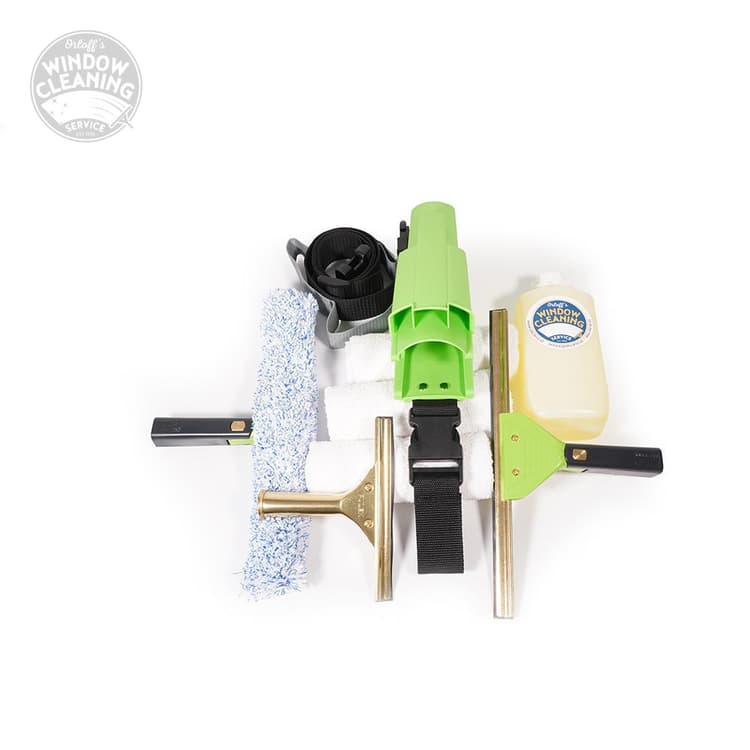
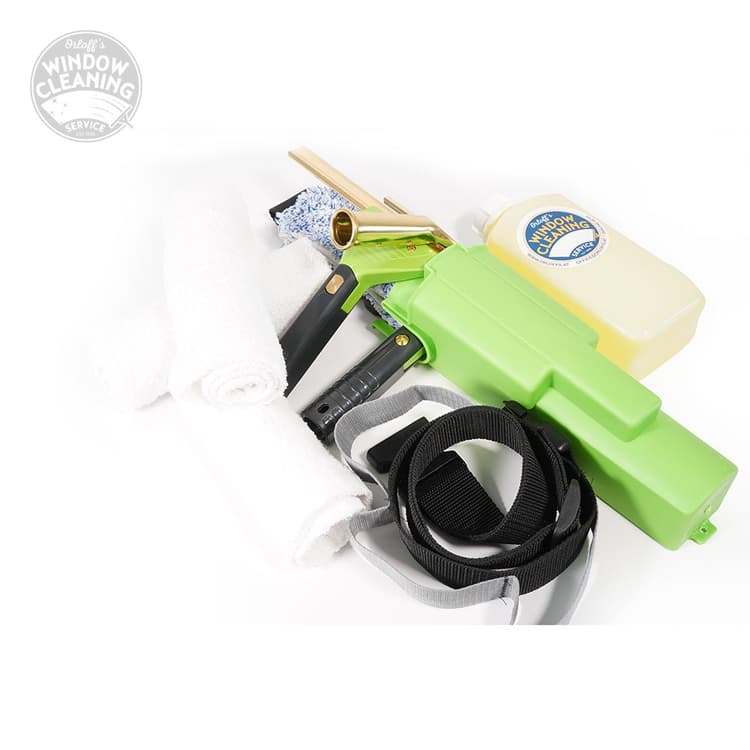
Tool Recommendations
T-bar applicator with a clean microfibre cover
View on Amazon [coming soon]Professional squeegee with a fresh rubber blade
View on Amazon [coming soon]Bucket with lukewarm water + 1 drop of mild pH-neutral dish soap per litre
View on Amazon [coming soon]Cleaning Frequency
Glass and frames: Minimum 2x per year (Inside and out. Urban and high-traffic locations: quarterly.). Timber surface refinishing: Varnish every 2-3 years (Paint coatings every 4-5 years depending on climate and weather exposure.). Wood care milk application: 2x per year (After cleaning, on all exposed timber surfaces.). Hardware lubrication: Once per year minimum (Light machine oil or specialist window hardware lubricant.). Gasket and seal inspection: Once per year (Or after severe storms or extreme weather events.). Full hardware check: 2x per year (Smooth operation with no stiffness. Stiffness means lubrication is overdue or adjustment is needed.)
Frequently Asked Questions
Field Notes
“Glass and frames: twice per year minimum, quarterly in urban or high-traffic locations. Timber surface refinishing: varnish every 2-3 years, paint coatings every 4-5 years. Wood care milk: apply twice per year on all exposed timber surfaces after cleaning. Hardware lubrication: once per year minimum with light machine oil. Gasket and seal inspection: once per year or after severe storms.”
Justin Orloff
What's next for you?
The Skill
New to window cleaning?
Start with the core techniques before tackling premium systems.
Start Learning →The Standard
Upskill your team
Covers every system, product type, and tricky scenario.
View The Standard →Manufacturer
Partner with Orloffs
Are you Neuffer Fenster + Türen or a similar manufacturer? Let's create official cleaning guidance together.
Get in Touch →