
Europe · Window Manufacturer
KAPO
🇦🇹 Austria · Last reviewed by Justin Orloff

Quick Facts
founded
1927
hq
Pöllauer Tal, Styria, Austria
primaryMaterials
Timber, timber/aluminium
glazingPartner
In-house
marketTier
Premium
Brand at a Glance
- Founded: 1927
- HQ: Pöllauer Tal, Styria, Austria
- Market position: Premium handcrafted timber and timber/aluminium, sold direct from manufacturer
- Production: 100% Austrian - no middlemen, consultation through service
- Frame materials: Timber, timber/aluminium
- Glazing: Double or triple, argon-filled, Low-E standard; solar-control and safety glass options. Kastenstockfenster and Sprossenfenster formats available
- Key ranges: Dreh-Kipp, Kastenstockfenster, Sprossenfenster, Bogenfenster, Hebeschiebtüren
- Wood sources: Sustainable Central European forests
- Care handbook: Der Gepflegte Umgang (PDF)
- Care products: KAPO Pflegeset (€29.90), Pflegeset Mechanik (€14.90)
- Maintenance contracts: kapo.at/service-und-wartung
Product Range
- Dreh-Kipp
- Kastenstockfenster
- Sprossenfenster
- Bogenfenster
- Hebeschiebtüren
Why This System
Three completely different surfaces on every window - timber, aluminium, glass - each with different products, technique, and care intervals. Pflegen statt Streichen - twice-yearly Pflegeset application replaces the need for repainting. Squeegee must stop before the timber frame. Repeated rubber contact wears the lacquer at the contact point. Microfibre marks lacquered timber - KAPO specifies cotton for the wood interior. Bird excrement is flagged by KAPO as aggressive enough to attack powder coatings if left. Timber is irreplaceable if damaged. Aluminium can be recoated, glass can be replaced - wood deserves the most careful approach.
Step 1 of 2: Manufacturer Recommendations
Official Care Guidance
Source: DER GEPFLEGTE UMGANG (2025)
Glass (§ 5.4)
- Use mild, pH-neutral cleaning products.
- No abrasion of any kind on the glass surface.
- KAPO explicitly names steel wool, scouring pads, and razor blades as prohibited.
- No chemicals on the acidic side - they can burn or etch the glass permanently.
- Applies to all KAPO glass - standard, coated, and speciality glazing.
Timber Interior (§ 5.2)
- Mild cleaning products only - heavily diluted washing-up liquid or soapy water.
- Soft cloths only - cotton recommended for wood.
- Do not allow water to pool on timber - wipe dry promptly.
- Apply KAPO Pflegeset twice per year - spring and autumn - to clean, refresh colour, and add a protective layer.
- After construction work (plastering, screeding), windows must be cleaned and treated with the Pflegeset immediately.
Aluminium Exterior (§ 5.3)
- Lukewarm water with a mild, pH-neutral cleaner.
- Soft cloth only - no abrasive products.
- Rinse with clean water after cleaning to prevent residue buildup.
- Bird excrement is aggressive enough to attack powder coatings if left - remove promptly.
Hardware (§ 5.5)
- Use only acid-free, resin-free oil or technical vaseline. KAPO Pflegeset Mechanik (€14.90) contains the appropriate lubricant.
- Check all hardware regularly for tightness and wear.
- Hardware adjustments - especially corner bearings and scissors - should only be performed by a specialist.
- Never silicone spray, rust removers, or general-purpose lubricants - they impair corrosion protection on the fittings.
Seals and Drainage (§ 5.8)
- Keep seals clean and inspect annually - functional seals are essential for thermal and acoustic performance.
- Look for cracking, hardening, or gaps.
- Vacuum debris from frame drainage channels regularly - blocked drainage leads to water accumulation that damages timber components.
- Clear drainage at every glass cleaning - it takes seconds and prevents long-term damage.
Step 2 of 2: The Orloffs Protocol
The Orloffs Protocol
This is how I clean KAPO windows. The tools and technique below come from 25 years of daily professional work on the glass. Every step has been tested on real installations and adapted specifically for KAPO systems.
Pro Tools
My daily tool list. This is what I carry to every job.
Follow these steps in order. Each one builds on the last. This is the same sequence I use on every KAPO installation.
- 1
Clear drainage and brush down
Before any water touches any surface, vacuum drainage channels in the frame. Brush down frames and glass to remove loose dust, spiderwebs, and debris.
On KAPO tilt-turn windows, the drainage points sit at specific positions in the lower frame - clearing these takes 30 seconds and prevents dirty water running into frame joints during the wash.
- 2
Agitation
Dip the microfibre T-bar into soap water and wet both sides fully. Apply across the entire glass surface with overlapping passes. The goal is to dissolve and release all dirt before the squeegee touches it.
If dirt is not fully dissolved, the squeegee transports it as a smear. For Kastenstockfenster (box-frame), clean inner and outer panes separately - start with the outer pane first.
- 3
Protect the timber before squeegeeing
Before the squeegee touches the glass, detail the edge where glass meets timber frame with a dry cotton rag. Use your finger into the rag to remove any pooled soap water sitting in the junction.
Soap water on lacquered timber does not cause immediate damage. Repeated pooling at the same point over months and years gradually undermines the finish that the Pflegeset is designed to maintain. Remove it before it runs.
- 4
The squeegee - stop before the wood
Use the side-to-side turn. Start at the top corner with a dry rubber. Work across in straight horizontal lines. Wipe the rubber dry after each line. Overlap into the next.
Stop the blade a few millimetres before it contacts the timber frame. Running squeegee rubber repeatedly against lacquered wood gradually wears the finish at that contact point. Use your cotton rag to detail the final strip.
On Sprossenfenster, work each pane separately with a smaller (20 cm) channel. On Bogenfenster, work the straight sections with the squeegee, then detail the curve by hand with a cotton rag.
- 5
Final edge detailing
Remove pooled water from all glass-to-frame edges with a clean corner of the cotton rag. Rotate to a clean section after each pass. Replace the rag every few windows.
On Kastenstockfenster: repeat steps on the inner pane. Check the gap between inner and outer frames for accumulated dust. On Hebeschiebtüren: clear the sill tracks first, use a larger 35 cm channel on the large glass areas.
- 6
Aluminium exterior
Once the glass is complete and dry, clean the aluminium. Lukewarm water, pH-neutral cleaner, soft cloth. Rinse with clean water. Dry with a soft cloth - do not let soap residue dry on the powder coating.
If bird excrement is present, soak first with water, then clean - do not scrape dry.
- 7
Timber interior - Pflegeset application
Apply the KAPO Pflegeset for lacquered and stained surfaces. Soft cloth, spread evenly, allow to absorb. This cleans, refreshes the colour, and rebuilds the protective layer against moisture.
Twice per year - spring and autumn. This is not optional. It is the core of KAPO's Pflegen statt Streichen philosophy and the reason their windows do not need repainting under normal conditions.
- 8
Hardware lubrication
Apply acid-free, resin-free oil (KAPO Pflegeset Mechanik) to all moving hardware parts - locking pins, hinges, corner bearings, and scissors. Operate the window several times after lubricating to distribute the oil evenly. Check all screws for tightness.
Never silicone spray. Never general-purpose lubricants. Never rust removers.
Pro Tips
- Stop the squeegee before the wood. Repeated rubber contact wears the lacquer at the contact point. Cotton rag closes the edge.
- Cotton on timber, microfibre on glass. Microfibre marks lacquered wood finishes - never substitute.
- Soak bird excrement before wiping. Dry-scraping it on powder-coated aluminium can take the coating with it.
- Pflegen statt Streichen. Twice-yearly Pflegeset application replaces repainting - skip it and the finish will eventually need redoing.
What NOT To Do
- No abrasive products on glass - no steel wool, no scouring pads, no razor blades.
- No acidic chemicals on glass - they can burn or etch the surface permanently.
- No harsh chemicals, solvents, or abrasive products on timber or aluminium.
- No microfibre cloths on timber interior - cotton only.
- No water pooling on timber surfaces - wipe dry promptly.
- No silicone spray on hardware - it evaporates too quickly and does not protect.
- No general-purpose lubricants or rust removers on hardware fittings.
- No high-pressure or steam cleaning on any surface.
- Never let the squeegee rubber run against the timber frame - stop before the wood.
Bundle Kits and Tool Recommendations
Bundle Kit
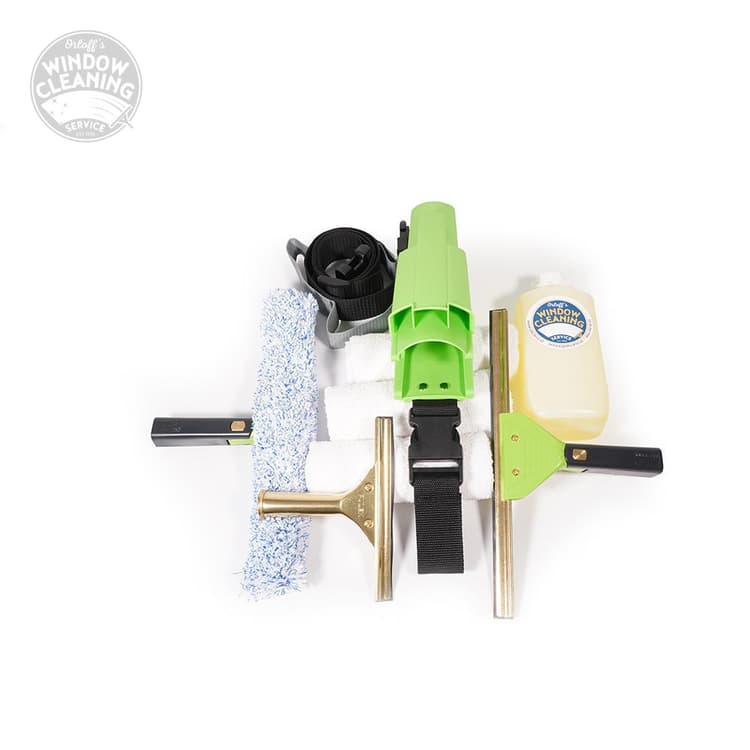
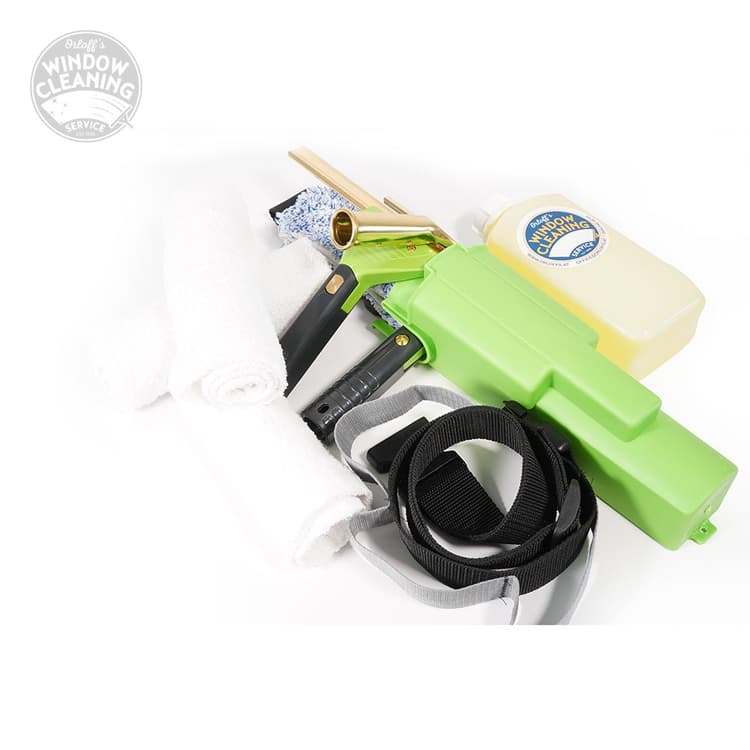
Tool Recommendations
Microfiber T-bar applicator
View on Amazon [coming soon]Professional squeegee with fresh rubber blade
View on Amazon [coming soon]Bucket with lukewarm water and a few drops of pH-neutral soap
View on Amazon [coming soon]Cleaning Frequency
Glass: 2× per year minimum (4× per year in urban environments, near busy roads, or high-pollution areas.). Timber Pflegeset: 2× per year (Spring and autumn. After any nearby construction work: immediately.). Aluminium exterior: 2× per year (More frequently in exposed locations or where bird activity is high.). Hardware: 1× per year (Acid-free, resin-free oil. Check screws for tightness at the same time.). Drainage channels: Every clean (Clear at every glass cleaning - takes seconds, prevents long-term damage.). Seal inspection: 1× per year (Look for cracking, hardening, or gaps.)
Frequently Asked Questions
Field Notes
“Glass: minimum twice per year - four times in urban environments, near busy roads, or high-pollution areas. Timber Pflegeset: twice per year, spring and autumn. Immediately after any nearby construction work. Aluminium exterior: twice per year - more frequently in exposed locations or where bird activity is high. Hardware: at least once per year with acid-free, resin-free oil. Check screws for tightness at the same time. Drainage channels: clear at every glass cleaning. Seal inspection: annually - look for cracking, hardening, or gaps.”
Justin Orloff
What's next for you?
The Skill
New to window cleaning?
Start with the core techniques before tackling premium systems.
Start Learning →The Standard
Upskill your team
Covers every system, product type, and tricky scenario.
View The Standard →Manufacturer
Partner with Orloffs
Are you KAPO or a similar manufacturer? Let's create official cleaning guidance together.
Get in Touch →