Europe · Window Manufacturer
Josko
🇦🇹 Austria · Last reviewed by Justin Orloff

Quick Facts
founded
1960
hq
Kopfing, Upper Austria
primaryMaterials
Timber/aluminium, uPVC/aluminium, full aluminium
glazingPartner
In-house IGUs
marketTier
Premium
Brand at a Glance
- Founded: 1960
- HQ: Kopfing, Upper Austria
- Market position: Market leader for timber/aluminium windows in Austria for nearly 25 years
- Name origin: JOhann Scheuringer KOpfing
- Design awards: 7 Red Dot Design Awards, 7 German Design Awards
- Frame materials: Timber/aluminium, uPVC/aluminium, full aluminium
- Glazing: In-house IGUs - double or triple, argon-filled, Low-E standard; solar-control, toughened, laminated and acoustic options
- Key ranges: Platin, Amber (timber/alu), Safir (uPVC/alu), ONE (aluminium)
- Hardware system: Concealed hardware (verdeckte Beschläge) - pioneered in Austria in the early 1990s
- Warranty programme: Joskomplett Premium - 10-year hardware warranty, biennial professional inspection
- Official documentation: josko.com/de/servicepass
Product Range
- Platin / Amber (timber/alu)
- Safir (uPVC/alu)
- ONE (aluminium)
Why This System
Aluminium surface warranty is conditional on documented cleaning records - purchase receipts required. Concealed hardware pioneered in Austria - lubrication points are hidden and easy to overlook. Silicone spray is the most common - and most damaging - hardware mistake on Josko windows. Flush (flächenbündig) design lets the T-bar glide without catching on stepped frame edges. Microfibre marks the timber interior finish - Josko specifies cotton cloths for wood.
Step 1 of 2: Manufacturer Recommendations
Official Care Guidance
Source: JOSKO SERVICEPASS (2025/07)
Glass
- Use only mild cleaning products - heavily diluted washing-up liquid or soapy water (Seifenlaugen).
- Use only soft cleaning cloths (weiche Putztücher) - no abrasive materials.
- Never use abrasive, corrosive, or solvent-based cleaning products.
- No high-pressure or steam-cleaning equipment.
- No razor blades, steel wool, or scouring pads.
Timber Interior (Platin, Amber)
- Mild cleaning products only - heavily diluted washing-up liquid or soapy water.
- Soft cotton cloths only - Josko specifies cotton, not microfibre, for wood surfaces.
- Do not allow water to pool on timber - wipe dry promptly after cleaning.
- Interior wood requires no additional care beyond regular cleaning.
- If wood shows signs of wear, contact your Josko Vertriebspartner for specialist advice.
Aluminium Exterior - Warranty Critical
- Soft cloth and mild pH-neutral cleaning solution.
- Rinse with clean water - soap residue attracts dirt and dulls powder-coated aluminium.
- For heavily soiled or chalked surfaces: use the Innotec Service Set 4.
- Professional cleaners must follow GRM guidelines (Güterichtlinien für die Fassadenreinigung).
- Warranty applies only to aluminium demonstrably cleaned 2× per year with approved products. Written documentation and purchase receipts are required.
Hardware
- Annual inspection and lubrication. Remove old grease residue with a dry cloth before applying new.
- Approved: ROTO Beschläge-Fett, Haftöl spray (AX NR. 26-soma-0365), Haftschmierstoff TecLine Beko.
- Open and close the window several times after lubricating to distribute the grease evenly.
- Never use silicone spray - Josko warns explicitly. It evaporates too quickly and fails on concealed hardware.
Seals and Drainage
- Inspect rubber seals (Dichtungen) during every cleaning - cracking, hardening, gaps.
- Use the leaf test: close on a sheet of paper. If it pulls out easily, the seal may need attention.
- Clear drainage openings (Entwässerungsöffnungen) at every glass cleaning.
- On the ONE system, insect screens run within the drainage shaft - clear these channels regardless.
Step 2 of 2: The Orloffs Protocol
The Orloffs Protocol
This is how I clean Josko windows. The tools and technique below come from 25 years of daily professional work on the glass. Every step has been tested on real installations and adapted specifically for Josko systems.
Pro Tools
My daily tool list. This is what I carry to every job.
Follow these steps in order. Each one builds on the last. This is the same sequence I use on every Josko installation.
- 1
Agitation
Dip the microfibre T-bar into soap water and wet both sides. Apply with overlapping strokes - you are loosening dirt, dissolving fingerprints and oils so the squeegee can shave them away cleanly.
If dirt is not fully dissolved, it transports under the rubber as a smear. Agitation matters more than the squeegee itself. On Josko's flush design the T-bar glides without catching. On large ONE aluminium panels, cover the full surface in overlapping passes before squeegeeing.
- 2
Detail the frame edge before squeegeeing
Wipe the frame edges where glass meets frame with a damp cotton rag. This removes dust the squeegee rubber cannot reach. Skip this and frame dirt runs onto the clean glass mid-stroke.
On timber/aluminium models, be careful with soap water near the wood interior. Wipe any contact promptly. Cotton - not microfibre.
- 3
The squeegee turns
Side to side: horizontal passes. Tilt the squeegee slightly to direct water spillover to one side only. Wipe the rubber dry after each line. Overlap into the next line down.
Top to bottom: vertical passes. Same tilt principle. Wipe dry between lines.
The J tune (continuous motion): one smooth movement from top to bottom with no stops. Rotate the wrist at each end to reverse direction without lifting. The AR Training Tool builds this exact motion.
For ONE aluminium with the 5 cm frame profile, the squeegee runs closer to the glass edge. For fixed glazing beyond arm's reach, attach the squeegee to an extension pole at roughly 45° to the glass.
- 4
Final edge detailing
Press your finger into a clean corner of the cotton rag and remove pooled soap water from the edge where glass meets frame seal. Rotate the rag for each pass. Replace every few windows.
The quality of the squeegee turn determines how much detailing you need. A confident, consistent turn means less cleanup.
- 5
Never clean in direct sunlight
Soap water evaporates before you can squeegee it when the glass is warm - streaks before you have started. Clean in the morning, evening, or on overcast days. Matters especially on Josko's large-format glazing.
Pro Tips
- Keep a cleaning log for aluminium. Date, product, and the purchase receipt. The warranty depends on it - not on the cleaning itself, but on the proof.
- Use cotton cloths on timber. Microfibre marks the wood finish. Keep two cloths - one for wood, one for aluminium - to avoid cross-contamination.
- Never silicone spray on hardware. It is the single most common - and most damaging - Josko maintenance mistake.
What NOT To Do
- No abrasive cleaners, steel wool, scouring pads, or razor blades on any surface - glass, timber, or aluminium.
- No solvents, corrosive chemicals, or acidic products on any Josko surface.
- No high-pressure or steam-cleaning equipment.
- No silicone spray on hardware - it evaporates too quickly and does not protect the concealed fittings.
- No microfibre cloths on timber interior surfaces - cotton only.
- No cleaning glass in direct sunlight.
- Never let aluminium cleaning records lapse - the warranty depends on documented proof and purchase receipts.
Bundle Kits and Tool Recommendations
Bundle Kit
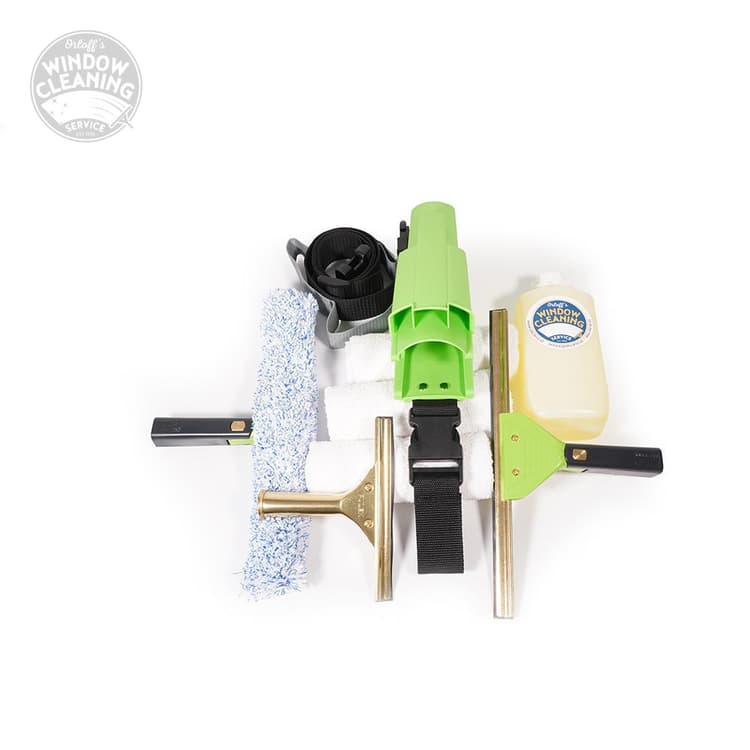
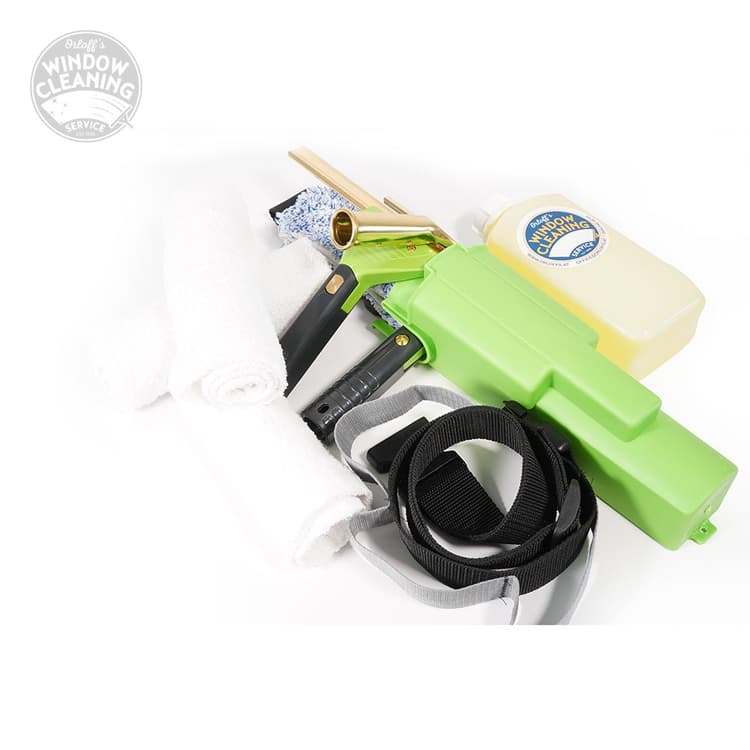
Tool Recommendations
Microfiber T-bar applicator
View on Amazon [coming soon]Professional squeegee with fresh rubber blade
View on Amazon [coming soon]Bucket with water and a few drops of pH-neutral soap (matches Josko's Seifenlaugen recommendation)
View on Amazon [coming soon]Cleaning Frequency
Glass: 2× per year minimum (4× per year in urban environments, near busy roads, or high-pollution areas.). Aluminium exterior: 2× per year (Warranty requirement, not a recommendation. More frequently in exposed locations.). Timber interior: 2× per year (Mild cleaning solution and cotton cloths.). Hardware: 1× per year (Priority lubrication points: Ecklager (corner bearing) and Axerarm (scissor bearing).). Drainage channels: Every clean (Clear at every glass cleaning. On ONE, insect screens share the drainage shaft.). Seal inspection: 1× per year (Or whenever you notice drafts, increased noise, or difficulty closing.)
Frequently Asked Questions
Field Notes
“Use cotton cloths on timber interior surfaces only - not microfibre. Microfibre can mark the wood finish. Keep two separate cloths - one for wood, one for aluminium - to avoid cross-contamination. Glass: minimum twice per year - four times in urban environments, near busy roads, or high-pollution areas. Aluminium exterior: at least twice per year - warranty requirement, not a recommendation. Hardware: annual lubrication. Priority points are the Ecklager (corner bearing) and Axerarm (scissor bearing). On larch exteriors, expect natural silvering. This is not damage and should not be 'cleaned away' aggressively.”
Justin Orloff
What's next for you?
The Skill
New to window cleaning?
Start with the core techniques before tackling premium systems.
Start Learning →The Standard
Upskill your team
Covers every system, product type, and tricky scenario.
View The Standard →Manufacturer
Partner with Orloffs
Are you Josko or a similar manufacturer? Let's create official cleaning guidance together.
Get in Touch →