Europe · Window Manufacturer
Jankó (Janko Windows)
🇭🇺 Hungary · Last reviewed by Justin Orloff
Quick Facts
founded
1987
hq
Hobol, Baranya, Hungary
primaryMaterials
Pure wood (spruce, oak options), wood-aluminium
glazingPartner
In-house to specification
marketTier
Premium
Brand at a Glance
- Founded: 1987
- HQ: Hobol, Baranya, Hungary
- Market position: Premium wood and wood-aluminium window manufacturer, leading quality producer in the region
- Frame materials: Pure wood (spruce, oak options), wood-aluminium
- Glazing: Double and triple glazed. Ug = 0.5 W/m2K (triple, premium). Uw = 0.78 W/m2K (wood-alu systems). EPDM seals as standard.
- Key ranges: CROSS, CROSS FLAT, CROSS DUO FLAT (wood-alu); BIG 92, BIG 80, BIG 68 (pure wood); RUSTIC (heritage renovation)
- Warranty: 3-year all-around repair warranty on manufacturing defects
- Where they sell: Hungary, Central and Western Europe
- Official care documentation: No standalone care document published - contact jankoablak.hu/en/contact directly
- Website: jankoablak.hu/en
Product Range
- CROSS
- CROSS FLAT
- CROSS DUO FLAT
- BIG 92
- BIG 80
- BIG 68
- RUSTIC
Why This System
Two distinct frame categories - the CROSS ranges are wood-aluminium (aluminium exterior, timber interior), while the BIG and RUSTIC ranges are pure wood throughout. The glass technique is identical. The frame care is not. EPDM seals as standard throughout the range - high-quality seal material that tolerates freeze-thaw cycles well, but is permanently degraded by solvents and silicone spray. Proprietary Plug Tec corner joint system - precision engineering at the frame corners that requires keeping cleaning products away from the joint line. Janko does not publish a standalone care document - official care guidance is delivered through their authorised dealer and installation network. If you do not have written care instructions from your installer, contact Janko directly before cleaning. The 3-year warranty covers manufacturing defects but not damage caused by incorrect maintenance or prohibited cleaning products. Janko's dealer agreement requires authorised partners to provide maintenance training - if you did not receive this, contact Janko directly.
Step 1 of 2: Manufacturer Recommendations
Official Care Guidance
Source: JANKO PRODUCT DOCUMENTATION AND CONSTRUCTION DETAILS (jankoablak.hu and jankob2b.com) combined with standard professional care practice for wood and wood-aluminium systems. Contact Janko directly for manufacturer-specific care instructions: jankoablak.hu/en/contact
Glass
- Clean with mild soapy water (pH-neutral, one drop per litre of lukewarm water) and a soft cloth or professional T-bar applicator.
- No solvents of any kind near the glass edges or seal line.
- No ammonia - rules out most commercial glass sprays.
- No abrasives, steel wool, or scouring pads on the glass surface.
- No sharp tools or razor blades.
- No high-pressure water directed at glazing edges, frame joints, or drainage channels.
- Rinse thoroughly if any soap residue remains at the glass edge.
Wood-Aluminium Frames (CROSS, CROSS FLAT, CROSS DUO FLAT)
- Aluminium exterior: wipe with a soft cloth and mild soapy water. Rinse and dry to prevent water spots.
- Janko describes the aluminium cladding as providing maintenance-free protection for the wood core - the cladding itself requires only basic cleaning.
- Wood interior: wipe with a lightly damp cloth and mild soapy water. Do not saturate - use a damp cloth, not a wet one.
- Do not use solvents, ammonia, or bleach on either the aluminium exterior or the wood interior.
- Inspect the EPDM seals at each cleaning session - if seals are cracked, compressed flat, or pulling away from the frame, contact your installer.
Pure Wood Frames (BIG 92, BIG 80, BIG 68, RUSTIC)
- Clean the wood frame with a soft damp cloth and mild soapy water only.
- Do not saturate the timber - minimal moisture, quick dry.
- The exterior wood surface on BIG and RUSTIC systems requires periodic protective treatment to maintain the timber finish. Consult your installer for the schedule.
- Inspect the exterior surface regularly for cracking, peeling, or discolouration of the finish. Address deterioration through your installer promptly.
- Do not use solvents, bleach, or acidic products on any wood surface.
Hardware
- Lubricate all moving parts (hinges, locking points, tilt-and-turn mechanisms) with a light machine oil once per year.
- Janko uses 30mm locking plates and security hardware across the range - keep these clean and free of debris.
- If hardware feels stiff or catches on operation, lubricate first. If it remains stiff after lubrication, contact your installer.
- Clean hardware with a dry cloth - avoid getting water inside locking mechanisms.
EPDM Seals and Gaskets
- Wipe seals with a damp cloth during frame cleaning.
- Do not use solvents, bleach, or silicone spray on EPDM seals. Silicone degrades EPDM over time.
- Inspect seals annually. Cracked or compressed seals allow water and air infiltration - a sign of needed replacement, not a cleaning issue.
Drainage Channels
- Janko's unique internal drainage system requires clear channels to function.
- After cleaning, check drainage holes at the bottom of the frame for blockages from debris, pollen, or dirt.
- Clear blocked channels with a soft brush or dry cloth - never poke with metal tools.
Step 2 of 2: The Orloffs Protocol
The Orloffs Protocol
This is how I clean Jankó (Janko Windows) windows. The tools and technique below come from 25 years of daily professional work on the glass. Every step has been tested on real installations and adapted specifically for Jankó (Janko Windows) systems.
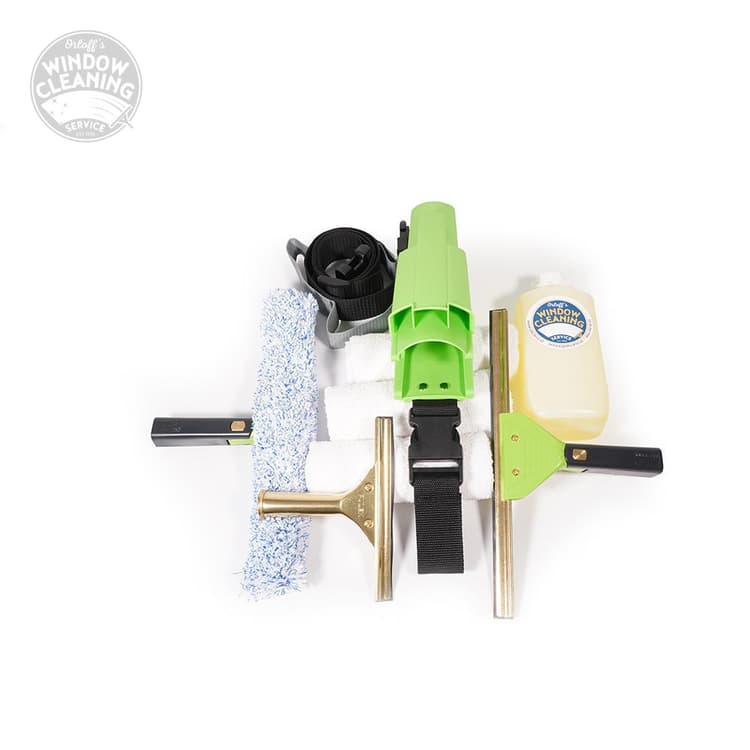
Pro Tools
My daily tool list. This is what I carry to every job.
Follow these steps in order. Each one builds on the last. This is the same sequence I use on every Jankó (Janko Windows) installation.
- 1
Detail the frame first
Before touching the glass, wipe down all frame edges with a damp microfibre cloth. Remove the dust, pollen, and grime sitting on the frame surface.
When you run the squeegee across the glass, the rubber edge makes contact with the frame. Dirt on that frame gets picked up and dragged across the clean glass as a streak. Frame first, every time.
For wood BIG and RUSTIC frames, use a cloth that is damp - not wet. Timber should not be saturated. For CROSS aluminium exteriors, a slightly wetter cloth is fine - just dry the aluminium surface after.
- 2
Agitate the glass
Dip your T-bar applicator into the soapy water so the sleeve is saturated on both sides. Apply the solution across the whole glass area using overlapping strokes. The goal is to dissolve the dirt so the squeegee can shave it away cleanly.
If dirt is not fully released from the surface before you squeegee, the remaining grit gets dragged by the rubber, leaving smears or micro-scratches. Take time on this step - it is the most important one.
Avoid getting soap solution into the drainage channels at the base of the frame - a small amount is fine but do not flood them.
- 3
Clear the frame edges before squeegeeing
Once the glass is agitated, run a dry corner of your cotton rag along the top edge and both side edges. This removes the pooled soap water sitting on the frame edge.
When the squeegee reaches those edges during the next step, it will not pick up dirty residue and drag it back across the glass. This takes ten seconds and prevents most streaks.
- 4
The three squeegee turns
Side to side: start at the top edge with a dry rubber. Work across the glass in a straight horizontal line. Tilt the squeegee so soap water spills from only one side of the channel. Wipe the rubber dry after each line. Overlap slightly into the next line down. Repeat to the bottom.
Top to bottom: same principle in vertical lines. Start in the top corner with a dry rubber. Tilt to direct water to the lower side. Wipe dry after each line. Overlap into the next vertical pass. Repeat to the far edge.
The J tune: the professional continuous motion - from top to bottom in one smooth, unbroken movement. No stops. Your thumb guides the rotation as you reach the end of each horizontal pass, rotating the squeegee and continuing down. At the bottom, rotate back and return across. When this is in muscle memory, it is the fastest and most consistent method for any window size.
- 5
Edge detailing
After squeegeeing, a thin line of water remains along the bottom edge and sides. Take a dry cotton rag, fold to a clean corner, and detail these edges in one smooth pass.
Get your finger into the edge where the glass meets the EPDM seal. Remove any pooled soap water sitting there. Left to dry, it leaves a residue mark that shows as soon as sunlight hits the glass.
Rotate the rag to a clean, dry section for each window. Replace the rag with a fresh one every few windows.
- 6
Hardware and drainage
After glass cleaning, check that the drainage channels at the base of each window are clear. Run a dry cloth along the channel to pick up any debris that has collected.
Oil all hinges and locking points once per year with a light machine oil. Work the window through its full range of motion after oiling to distribute the lubricant.
Never clean in direct sunlight on Janko windows. The soap solution dries on the glass before you can squeegee it off, baking a residue that is harder to remove than the original dirt.
Pro Tips
- Identify the range first - CROSS (wood-alu) or BIG/RUSTIC (pure wood). Frame care is fundamentally different between them.
- Use separate cloths for aluminium exterior and wood interior on CROSS systems - never cross-contaminate care products.
- Damp cloth on timber, not wet - on BIG and RUSTIC ranges especially, excessive moisture on exposed timber exteriors causes slow damage.
- Check drainage channels after every cleaning session - Janko's internal drainage system needs clear channels to function.
- Inspect EPDM seals at each clean - cracked or compressed seals on a premium triple-glazed system mean air and water infiltration, not a cosmetic issue.
What NOT To Do
- Do not use solvents on any Janko surface - frames, seals, glass edges, or hardware.
- Do not use ammonia-based cleaning products - this rules out most commercial glass sprays.
- Do not use bleach on any Janko component - bleach degrades EPDM seals and damages timber finishes.
- Do not use abrasive pads, steel wool, or scouring cloths on glass or frame surfaces.
- Do not use razor blades or sharp tools on glass or frame surfaces.
- Do not direct high-pressure water at Janko windows.
- Do not saturate pure wood frames with water - a damp cloth, not a wet one.
- Do not use silicone spray on EPDM seals - silicone degrades EPDM over time.
- Do not clean glass in direct sunlight.
- Do not ignore cracking or peeling on the exterior timber finish of BIG or RUSTIC windows - exposed timber absorbs moisture rapidly and deteriorates fast once surface protection fails.
- Do not use the same cloth on the aluminium exterior and the wood interior without washing it first.
Bundle Kits and Tool Recommendations
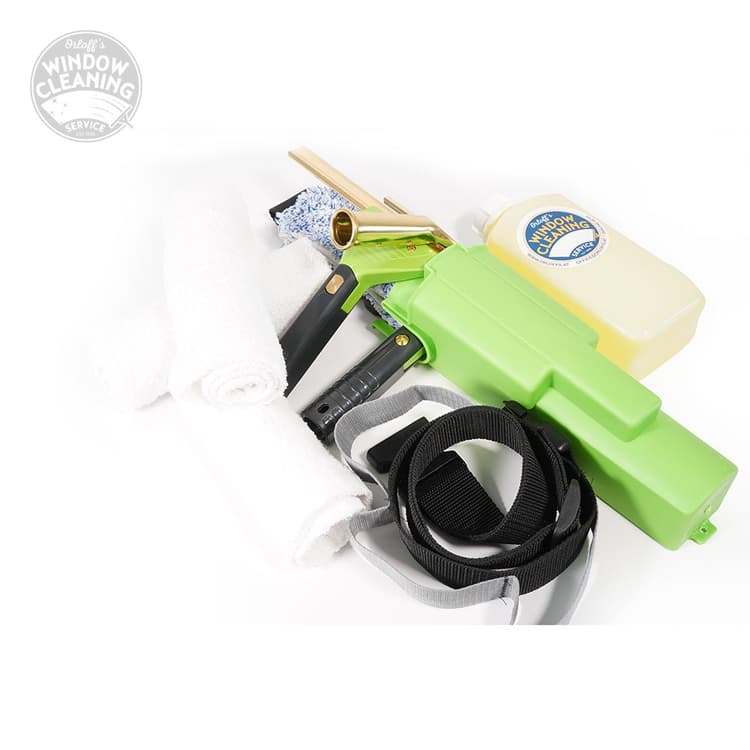
Bundle Kit
Tool Recommendations
T-bar applicator with a clean microfibre sleeve
View on Amazon [coming soon]Professional squeegee with a fresh rubber blade
View on Amazon [coming soon]Bucket with lukewarm water + 1 drop of mild pH-neutral dish soap per litre
View on Amazon [coming soon]Cleaning Frequency
Glass and frames: Minimum 2x per year (Inside and out. Urban environments, high-pollen areas, or industrial locations: quarterly.). Pure wood exteriors (BIG and RUSTIC): Inspect at every clean (Look for cracking, peeling, or discolouration and address through your installer promptly.). Aluminium exteriors (CROSS ranges): 2x per year (Sufficient in most environments with mild soapy water and soft cloth.). Hardware lubrication: Once per year (Light machine oil on hinges, locking points, and tilt-and-turn mechanisms.). EPDM seal inspection: Once per year (Or after heavy storms or extreme temperature swings.). Drainage channel checks: At every cleaning session (Janko's internal drainage system requires clear channels to function.)
Frequently Asked Questions
Field Notes
“Glass and frames: twice per year minimum - quarterly in urban environments, high-pollen areas, or industrial locations. Pure wood exteriors (BIG and RUSTIC): inspect the timber finish at every clean. Address cracking, peeling, or discolouration through your installer promptly. Aluminium exteriors (CROSS): twice per year with mild soapy water and a soft cloth. Hardware: oil once per year with a light machine oil. EPDM seals: inspect annually. Cracked or compressed seals need replacing - contact your installer. Drainage channels: check and clear at every cleaning session.”
Justin Orloff
What's next for you?
The Skill
New to window cleaning?
Start with the core techniques before tackling premium systems.
Start Learning →The Standard
Upskill your team
Covers every system, product type, and tricky scenario.
View The Standard →Manufacturer
Partner with Orloffs
Are you Jankó (Janko Windows) or a similar manufacturer? Let's create official cleaning guidance together.
Get in Touch →