Europe · Window Manufacturer
Janelas Exóticas
🇵🇹 Portugal · Last reviewed by Justin Orloff
Quick Facts
founded
Portuguese manufacturer
hq
Portugal
primaryMaterials
Aluminium, PVC
glazingPartner
Integrated glazing by specification
marketTier
Mid-Range
Brand at a Glance
- Country: Portugal
- Market position: Mid-range Portuguese aluminium and PVC window manufacturer
- Primary materials: Aluminium, PVC-U
- Product types: Casement windows, sliding doors, folding systems, entrance doors
- Opening styles: Outward casement (Portuguese standard), sliding, tilt-and-turn available
- Colour options: Powder-coated aluminium in standard RAL, white PVC
- Standards: CE marking, Portuguese NP standards
- Distribution: Portugal and Portuguese-speaking export markets
- Glazing: Double glazing standard
- Climate context: Atlantic coastal and Mediterranean climate range
Product Range
- Aluminium casement windows
- Aluminium sliding doors
- PVC windows
- Folding and bi-fold systems
Why This System
Portugal's Atlantic coastal climate creates specific window soiling conditions - salt air, high humidity, and frequent rain followed by rapid drying in sun. These conditions accelerate aluminium powder-coat chalking and rubber seal degradation. Portuguese residential buildings commonly have aluminium roller shutters or external persiana systems alongside the window. The shutter housing above the window is the standard Portuguese residential window configuration. Folding (bi-fold) door systems are common in Portuguese coastal architecture. The multiple sash panels and bottom track configuration of bi-fold systems create specific cleaning challenges distinct from standard sliding or casement products. Salt air in coastal Portuguese locations attacks aluminium powder coat and exposed steel hardware more aggressively than inland European locations. More frequent cleaning and a post-clean fresh water rinse are good practice in coastal settings. Portuguese non-thermally-broken aluminium windows are still common in older residential stock. These profiles conduct temperature from outside to inside and can show condensation on the inner face in damp Atlantic winter conditions.
Step 1 of 2: Manufacturer Recommendations
Official Care Guidance
Source: ORLOFFS PROFESSIONAL GUIDANCE - BASED ON JANELAS EXOTICAS PUBLISHED INFORMATION AND 25 YEARS FIELD EXPERIENCE
Glass
- Clean roller shutter housing before touching the glass on any property with integrated shutters.
- Lukewarm water with mild dish soap or glass cleaner. Microfibre T-bar, professional squeegee, fresh rubber.
- In coastal locations, rinse glass with clean fresh water after the squeegee pass to remove any salt residue from the cleaning solution.
- No razor blades on coated glass.
Frames
- Aluminium frames: pH-neutral cleaner on a soft cloth, rinse with clean fresh water, dry immediately.
- In coastal locations: rinse aluminium frames with fresh water after cleaning, even if the cleaner is pH-neutral. Salt residue from the cleaner drying on the frame accelerates chalking.
- PVC frames: pH-neutral cleaner, damp cloth, rinse, dry. No bleach, no solvent.
- Clear bi-fold track and sliding door tracks at every clean.
Hardware
- Wipe hardware dry after cleaning. Coastal Portuguese climate - salt air and hardware moisture is a fast corrosion combination.
- Lubricate casement hardware, sliding door rollers, and bi-fold hinges annually.
- Check rubber seals at every clean. In coastal and high-UV locations, seal life is shorter than in northern European climates.
Step 2 of 2: The Orloffs Protocol
The Orloffs Protocol
This is how I clean Janelas Exóticas windows. The tools and technique below come from 25 years of daily professional work on the glass. Every step has been tested on real installations and adapted specifically for Janelas Exóticas systems.
Pro Tools
My daily tool list. This is what I carry to every job.
Follow these steps in order. Each one builds on the last. This is the same sequence I use on every Janelas Exóticas installation.
- 1
Coastal context assessment
Identify the property's distance from the coast. Within 1 km of the Atlantic, salt air protocols apply to every clean.
Locate roller shutter housings and plan the top-to-bottom cleaning sequence.
Identify bi-fold or sliding door systems and check track condition before starting.
- 2
Shutter housing and track preparation
Brush shutter housing face and slot before any glass work.
Sweep bi-fold and sliding door tracks dry before wetting. Sand and salt in the track should be removed dry, not washed into the roller mechanism.
Open shutters and secure in the open position.
- 3
Glass wash
Apply soap solution with T-bar in overlapping passes.
On bi-fold systems, work one panel at a time and move the panel to access the full glass face if needed.
Dwell 30 to 60 seconds on soiling.
- 4
Squeegee
Standard technique, side-to-side from the top.
On coastal properties, follow the squeegee pass with a clean water rinse on the glass using a fresh damp cloth to remove any salt residue from the cleaning solution.
Bottom edge pass to complete.
- 5
Frame wipe-down
pH-neutral cleaner on a soft cloth. Rinse with clean fresh water on a separate cloth. Dry immediately.
In coastal locations, the fresh water rinse on the frame is as important as the cleaning step.
Clear tracks and drainage slots with a soft brush after the frame wash.
- 6
Hardware check and seal inspection
Run each window through full operation.
Check rubber seals on south-facing elevations for hardening or cracking.
Dry all hardware immediately. In coastal locations, dry within 5 minutes of contact to prevent salt air from combining with residual moisture on hardware.
Pro Tips
- Within 500 metres of the Portuguese Atlantic coast, every clean should include a fresh water rinse of all aluminium surfaces after the cleaning product has been applied and wiped off. This removes any residual salt from the cleaner before it can dry on the frame.
- Bi-fold door tracks in Portuguese coastal properties accumulate a mixture of fine sand and salt that compacts into a paste under the roller mechanism. Brush it out dry, then rinse the track with clean water and dry before closing the doors.
- Aluminium powder coat in coastal locations develops a chalky bloom over 5 to 10 years from salt air and UV combined. A purpose-made aluminium restorer can reduce the chalking. Increased cleaning frequency slows it down.
- Portuguese residential buildings in historic city centres (Lisbon, Porto) often have windows from multiple eras - original wrought-iron casements, 1970s non-thermally-broken aluminium, and new products in the same building. Identify each product before applying any cleaning approach.
- Folding systems with multiple sash panels need each panel cleaned individually. The sashes overlap when folded - unfold each panel to access the full glass face.
- Rubber seals on Portuguese aluminium windows should be inspected at every clean and replaced every 5 to 7 years in high-UV coastal locations. A brief seal condition note in the client record helps track seal age.
- Salt air corrosion on non-thermally-broken aluminium frames appears first at the joins between frame members and at any fixing point. A torch inspection of joins and fixings at the annual service visit catches early corrosion before it spreads.
What NOT To Do
- Do not skip the fresh water rinse on aluminium frames in coastal Portuguese locations - dried salt from the cleaning solution continues to attack the powder coat.
- Do not dry-sweep sand from bi-fold tracks with the panels closed - sand scratches the track surface. Sweep with panels open.
- Do not use abrasive materials on powder-coated aluminium.
- Do not ignore chalking on aluminium powder coat in coastal locations - it is the early stage of a corrosion process.
- Do not leave rubber seals hardened and cracked without reporting - Atlantic rain enters through failed seals quickly.
Bundle Kits and Tool Recommendations
Bundle Kit
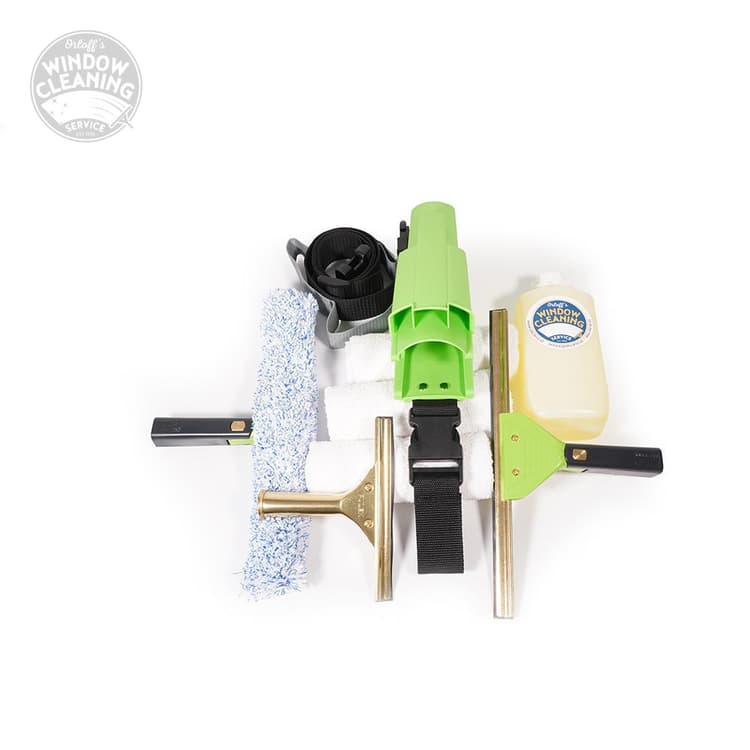
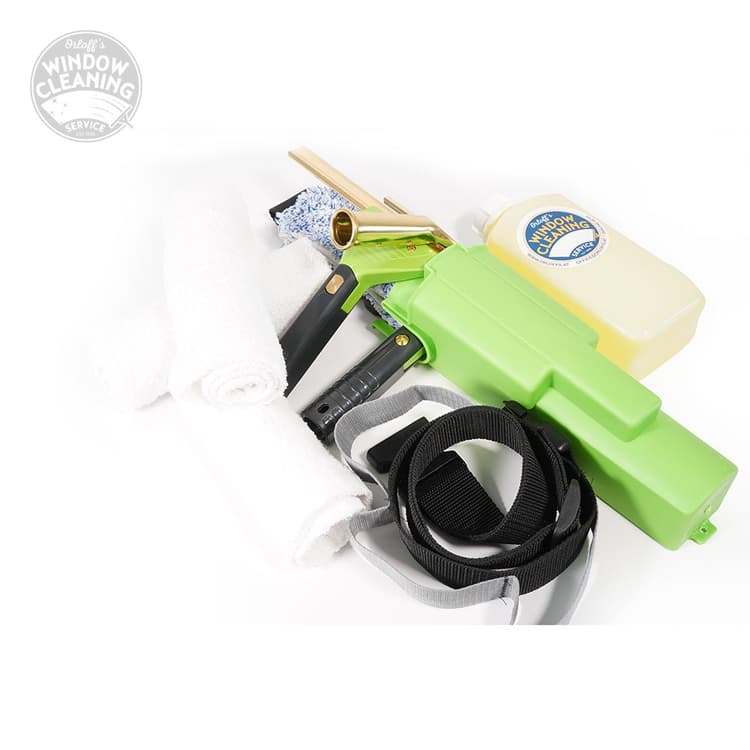
Tool Recommendations
Unger ErgoTec Ninja squeegee
View on Amazon [coming soon]Microfibre T-bar applicator
View on Amazon [coming soon]pH-neutral aluminium cleaner
View on Amazon [coming soon]Cleaning Frequency
Glass: 4x per year minimum in coastal locations (Atlantic coastal properties accumulate salt and organic soiling fast. Quarterly minimum. Monthly on properties within 200 metres of the sea.). Frames: Same schedule as glass (Fresh water rinse after every clean in coastal locations.). Tracks (bi-fold, sliding): Every clean (Salt and sand in tracks is the leading cause of roller wear on Portuguese coastal bi-fold systems.). Hardware lubrication and seal check: 2x per year in coastal locations (Annual lubrication is insufficient in high-salt-air environments.)
Frequently Asked Questions
Field Notes
“Portuguese coastal window maintenance is the most demanding environmental context in which standard window cleaning technique is expected to apply. Salt air, UV, and Atlantic rain create a combination that tests every product and seal faster than Central European climates. Bi-fold door systems are very popular in Portuguese coastal villa architecture. They are also the highest-maintenance window product in the range due to the multiple sash panels and the track accumulation issue. The fresh water rinse step after aluminium frame cleaning is not optional in coastal locations. It takes 90 extra seconds per window and prevents years of accelerated powder-coat degradation.”
Justin Orloff
What's next for you?
The Skill
New to window cleaning?
Start with the core techniques before tackling premium systems.
Start Learning →The Standard
Upskill your team
Covers every system, product type, and tricky scenario.
View The Standard →Manufacturer
Partner with Orloffs
Are you Janelas Exóticas or a similar manufacturer? Let's create official cleaning guidance together.
Get in Touch →