
North America · Window Manufacturer
Inline Fiberglass
🇨🇦 Canada · Last reviewed by Justin Orloff

Quick Facts
founded
1994
hq
Ontario, Canada
primaryMaterials
Pultruded fibreglass profiles, triple and quad glazing
glazingPartner
In-house glazing; Passive House-certified units available
marketTier
Premium to High Performance
Brand at a Glance
- Founded: 1994
- HQ: Ontario, Canada
- Market position: Premium fibreglass windows for Passive House and high-performance residential
- Primary material: Pultruded fibreglass
- Thermal coefficient: Fibreglass expands at the same rate as glass - minimal seal stress through temperature cycling
- Climate context: Ontario - freeze-thaw cycling, extreme cold, hot humid summers
- Certifications: ENERGY STAR, Passive House PHI certification, CSA
- Website: inlinefiberglass.com
Product Range
- Pultruded Fibreglass Casement Windows
- Fibreglass Awning Windows
- Fibreglass Fixed Windows
- Fibreglass Doors
Why This System
Pultruded fibreglass has a thermal expansion coefficient almost identical to float glass - approximately 9 x 10⁻⁶ per degree Celsius for both materials. This means the frame and the glass unit expand and contract together, dramatically reducing stress on the edge seal through freeze-thaw cycling. Because fibreglass and glass move together, the perimeter seal on Inline windows is under less cumulative fatigue than the same seal on a uPVC or aluminium window in the same climate. However, the seal still needs inspection - it is not immune to failure. Fibreglass profiles are paintable and often left in factory colours - white, grey, bronze, and black are common. The factory finish on fibreglass is applied differently from powder-coat on aluminium and responds differently to cleaners. Passive House windows are extremely airtight. The frame-to-wall interface is carefully detailed with membranes and tapes that are part of the building airtightness layer. Window cleaning should never involve pressure washing or water application at the frame perimeter - protecting the airtightness membrane is a professional obligation on these buildings.
Step 1 of 2: Manufacturer Recommendations
Official Care Guidance
Step 2 of 2: The Orloffs Protocol
The Orloffs Protocol
This is how I clean Inline Fiberglass windows. The tools and technique below come from 25 years of daily professional work on the glass. Every step has been tested on real installations and adapted specifically for Inline Fiberglass systems.
Pro Tools
My daily tool list. This is what I carry to every job.
Pro Tips
- Ask the client or site manager whether the windows are Passive House certified before your first visit - it changes the protocol significantly, particularly around frame-perimeter water application
- On quad-glazed units, the glass is exceptionally heavy. Use a squeegee handle with a locking channel retention system - a blade that pulls out mid-stroke on heavy glass leaves a dragged smear that is hard to correct
- Fibreglass frames clean up with less effort than aluminium frames in hard-water areas - fibreglass does not bond with calcium deposits the way anodised aluminium does. A simple pH-neutral wipe is usually sufficient
What NOT To Do
- Do not use razor blades on glass without confirming no inner-face Low-E or solar control coatings are present - Passive House glazing almost always has multi-layer coatings
- Do not use solvent-based cleaners on painted fibreglass frames
- Do not pressure-wash the frame perimeter - Passive House airtightness membranes at the frame-to-wall junction must not be disturbed
- Do not use abrasive pads on fibreglass frame surfaces - the factory finish coat is not indestructible
- Do not apply water at the frame-to-wall junction on Passive House installations
Bundle Kits and Tool Recommendations
Bundle Kit

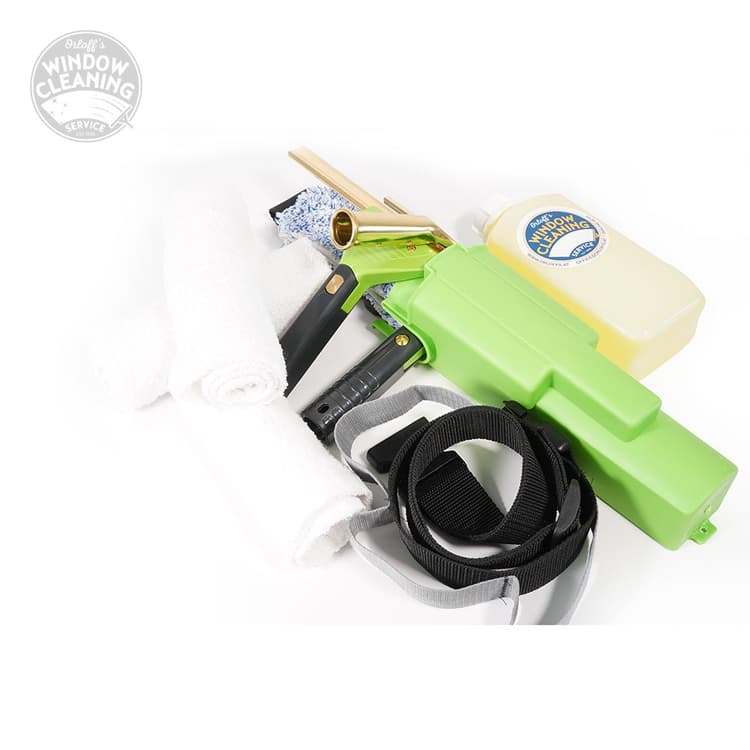
Tool Recommendations
Ettore squeegee 14 inch or 18 inch for large Passive House fixed lights
View on Amazon [coming soon]Moerman Liquidator for narrow-frame casement detail work
View on Amazon [coming soon]pH-neutral glass cleaning concentrate
View on Amazon [coming soon]Cleaning Frequency
Clean every 4–8 weeks depending on environment.
Frequently Asked Questions
Field Notes
“Passive House buildings are often occupied by clients with high awareness of building performance. They notice problems. A cleaning visit that disturbs the airtightness membrane at the frame perimeter is a significant issue - more so than on a standard residential window. Fibreglass frames do not yellow with age the way early uPVC did. However, in high-UV positions, the factory paint or pigment coat can fade unevenly. Document any uneven fading at the first spring visit. The narrow frame profiles on Inline fibreglass windows mean the sill is also narrow. Less drainage capacity than a wider uPVC sill. Spring melt and heavy rain can exceed the sill capacity if drainage slots are blocked - always clear sill drainage before the spring wet season.”
Justin Orloff
What's next for you?
The Skill
New to window cleaning?
Start with the core techniques before tackling premium systems.
Start Learning →The Standard
Upskill your team
Covers every system, product type, and tricky scenario.
View The Standard →Manufacturer
Partner with Orloffs
Are you Inline Fiberglass or a similar manufacturer? Let's create official cleaning guidance together.
Get in Touch →