
Europe · Hardware Manufacturer
Gretsch-Unitas (GU)
🇩🇪 Germany · Last reviewed by Justin Orloff
Quick Facts
founded
1872
hq
Ditzingen, Baden-Wurttemberg, Germany
primaryMaterials
Steel, stainless steel, zinc die-cast hardware components
glazingPartner
Hardware supplier - fitted to profiles from all major manufacturers
marketTier
Premium
Brand at a Glance
- Founded: 1872
- HQ: Ditzingen, Baden-Wurttemberg, Germany
- Market position: Premium European window, door, and access hardware manufacturer
- Primary products: Tilt-and-turn hardware, espagnolette systems, multipoint locks, hinges, access control
- Key ranges: GU Secural, GU Ferco, GU BKS, GU Winkhaus (separate brand)
- Compatibility: Hardware fitted to profiles from all major European manufacturers
- Market coverage: Residential, commercial, and security-rated applications
- Certification: CE marking, EN 13126 hardware standard compliance, security ratings
- Distribution: Pan-European - hardware found in windows across all European markets
- Website: g-u.com
Product Range
- Tilt-and-turn locking hardware
- Multipoint door locks
- Tilt-and-turn hinges
- Sliding and lift-and-slide hardware
Why This System
GU hardware is a system - individual components (rod, gearbox, hinge, keep) are designed to work together. Mixing GU and non-GU components in a locking system can cause compatibility issues that appear as stiff operation or incomplete locking. GU hardware is adjustable. Tilt-and-turn hinges have three-axis adjustment that allows the sash to be re-aligned after the window has settled. This adjustment is a maintenance task, not a repair. The GU Secural range includes security-rated locking hardware. Security-rated keeps and cams are deeper and stronger than standard hardware - they can look like a defect to an untrained eye when they engage firmly. GU produces hardware under multiple brand names including Ferco and BKS. The GU brand name is not always visible on every component - the system design and component shape are the identifying features. Access control hardware from GU (electronic locks, motorised drives, and escutcheons with electronic functions) requires a different maintenance approach from mechanical hardware. Water is never appropriate near electronic hardware components.
Step 1 of 2: Manufacturer Recommendations
Official Care Guidance
Source: ORLOFFS PROFESSIONAL GUIDANCE - BASED ON GRETSCH-UNITAS PUBLISHED INFORMATION AND 25 YEARS FIELD EXPERIENCE
Glass
- Standard glass cleaning - lukewarm water with mild dish soap, microfibre T-bar, professional squeegee.
- GU hardware is on the frame and sash edge, not on the glass. Standard glass cleaning technique applies without modification.
- Keep cleaning solution away from electronic GU hardware components.
- Dry the glass edge adjacent to locking cams and hinge bodies after cleaning.
Frames
- Clean frame surfaces with pH-neutral cleaner appropriate for the profile material (PVC, aluminium, or timber).
- Wipe GU hardware faces with a damp cloth and dry immediately - all GU hardware metals are susceptible to rust staining if left wet.
- Do not spray frame cleaner directly onto GU hardware - apply to a cloth first.
- Clear any cleaning product residue from the locking cam track on the frame face.
Hardware
- Lubricate espagnolette rod guides with light machine oil annually. Apply to the guide clips along the sash edge, not to the rod itself.
- Lubricate corner gearbox input shaft at the small shaft entry point on the gearbox body.
- Apply a small amount of dry lubricant or light oil to locking cam contact surfaces.
- Check hinge alignment annually - adjust with hex key if any sash shows a gap or rub against the frame.
Step 2 of 2: The Orloffs Protocol
The Orloffs Protocol
This is how I clean Gretsch-Unitas (GU) windows. The tools and technique below come from 25 years of daily professional work on the glass. Every step has been tested on real installations and adapted specifically for Gretsch-Unitas (GU) systems.
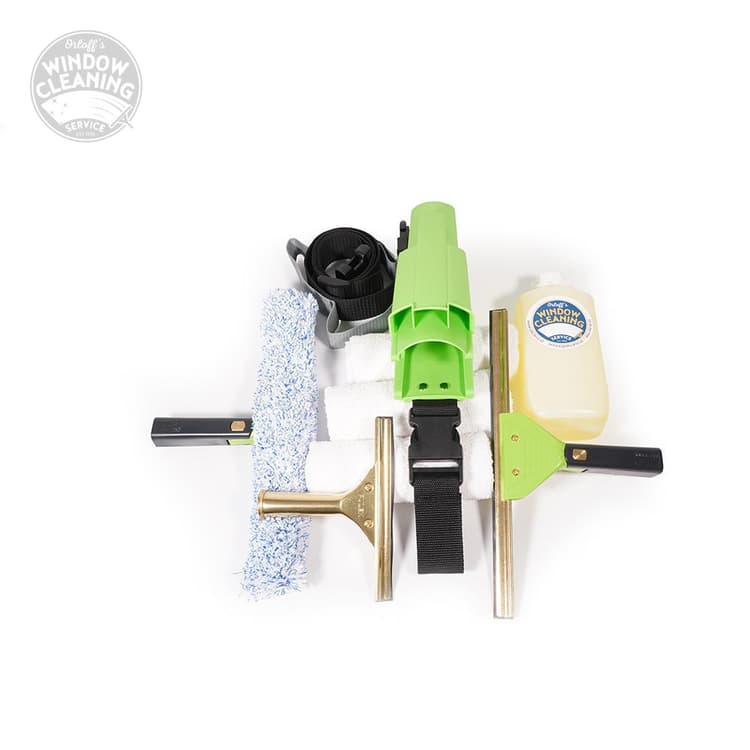
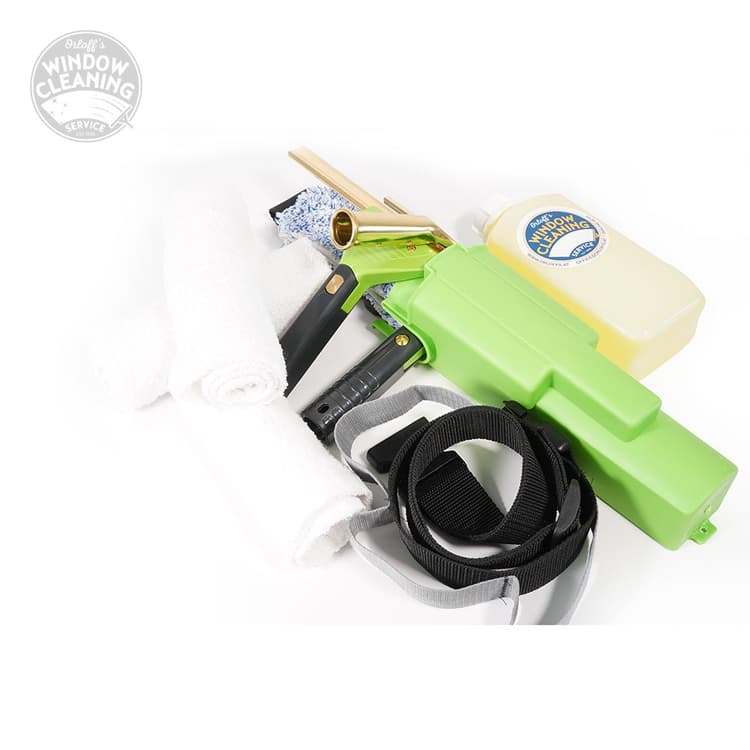
Pro Tools
My daily tool list. This is what I carry to every job.
Follow these steps in order. Each one builds on the last. This is the same sequence I use on every Gretsch-Unitas (GU) installation.
- 1
Hardware identification
Identify GU hardware by the component shape, design of the locking cams, and GU branding on the espagnolette rod or handle escutcheon.
Note the hardware generation - older hardware has visible hinge face screws; current hardware has concealed adjustment points.
Check for any electronic hardware components (motorised drives, electronic escutcheons) and note their location before any wet cleaning begins.
- 2
Glass and frame cleaning
Standard glass cleaning with T-bar and squeegee. Keep solution away from electronic hardware.
Frame cleaning with pH-neutral cleaner on a cloth - approach appropriate to the profile material.
Wipe hardware faces with a damp cloth as part of the frame clean. Dry immediately.
- 3
Operation check before lubrication
Run each window through its full operation before lubricating. Note which windows operate stiffly and at which point in the operation.
Stiffness on the turn function typically means a corner gearbox issue or a locking rod guide needs lubrication.
Stiffness on closing (the final 10 degrees of handle rotation) typically means a keep alignment issue.
- 4
Lubrication
Apply light oil to each rod guide clip along the sash edge. A few drops per guide - not a saturating application.
Apply a few drops to the corner gearbox shaft entry points. Work the handle through several cycles to distribute.
Apply a small amount of oil to the pivot points on each hinge body.
- 5
Hinge alignment check
With the sash closed, check for visible gaps around the sash perimeter. A uniform gap of 3 to 4 mm all around is correct. A wider or narrower gap at any corner indicates the sash needs adjustment.
GU three-axis hinges: the horizontal adjustment screw moves the sash left and right, the vertical screw moves it up and down, and the depth screw moves it in and out. Adjust one axis at a time and recheck the gap.
If the sash is correct and the gap is even, but the window still feels stiff to close, check the keep position at the stiff locking point.
- 6
Post-service operation test
Run each serviced window through full operation after lubrication. The handle should operate smoothly through all positions with no resistance or hesitation.
Close and lock each window fully. All locking points should engage with a smooth, solid feel.
Note any windows where stiffness persists after lubrication - these may need keep adjustment or further assessment.
Pro Tips
- GU hardware lubrication is about the rod guides, not the rods. The rod itself slides inside the guide clips - oil goes on the clips, not on the full length of the rod.
- The corner gearbox is the most common failure point in a tilt-and-turn system. It can be lubricated from the shaft entry point on the gearbox body. A gearbox that is still stiff after lubrication is worn and needs replacing.
- On GU Secural security-rated systems, the locking cams are deliberately more substantial than standard cams. The handle may feel slightly heavier to operate - this is normal. A cam that does not fully engage is a keep alignment issue, not a hardware defect.
- GU hinge adjustment should always be made with the sash in the closed position and the window locked. Adjusting with the sash open changes the load on the hinge and makes setting the gap inaccurate.
- Older GU espagnolette systems from the 1980s and 1990s use a different rod section size than current hardware. Replacement parts must match the rod size - current GU parts may not be directly compatible with older system dimensions.
- Electronic GU hardware (motorised drives, electronic escutcheons) should only be serviced by a qualified locksmith or access control technician. Never attempt lubrication or adjustment of electronic hardware components.
- When identifying GU hardware on an unfamiliar installation, look for the GU logo on the handle escutcheon, the locking cam bodies, or the hinge face. The logo is a stylised GU monogram and appears on most visible components.
What NOT To Do
- Do not spray cleaning product directly onto GU hardware components - apply to a cloth first.
- Do not apply oil to the rubber seals adjacent to GU hardware components - oil degrades rubber over time.
- Do not apply water or lubricant near electronic GU hardware.
- Do not force a stiff GU handle - locate the cause (dry guides, dry gearbox, or misaligned keep) before applying force.
- Do not mix GU and non-GU locking system components without confirming compatibility.
Bundle Kits and Tool Recommendations
Bundle Kit
Tool Recommendations
Light machine oil with precision applicator tip
View on Amazon [coming soon]Hex key set 2 mm to 5 mm
View on Amazon [coming soon]pH-neutral frame cleaner (appropriate to profile material)
View on Amazon [coming soon]Cleaning Frequency
Glass and frames: 2x per year minimum (Hardware is cleaned as part of the frame clean at each visit.). Hardware lubrication: Once per year (Annual lubrication of all GU mechanical hardware. More frequently on high-use doors.). Hinge alignment check: Once per year (Annual check prevents sash drop from becoming a misalignment problem.). Electronic hardware check: As specified by access control system (Electronic hardware servicing follows the access control maintenance schedule, not the window cleaning schedule.)
Frequently Asked Questions
Field Notes
“GU hardware is the most commonly encountered tilt-and-turn window hardware in the European residential market. Recognising GU components and knowing the correct lubrication approach is one of the most useful skills a window maintenance professional can have. The corner gearbox on GU tilt-and-turn systems is often neglected because it is hidden behind the corner cover on the sash edge. It is also the component that fails first when maintenance is deferred. A 2-minute lubrication visit every year prevents a 200-euro repair. GU three-axis hinge adjustment is one of those skills that seems complex until you do it a few times. A sash that fits properly after adjustment is the most tangible result of a window maintenance visit that the client can see and feel.”
Justin Orloff
What's next for you?
The Skill
New to window cleaning?
Start with the core techniques before tackling premium systems.
Start Learning →The Standard
Upskill your team
Covers every system, product type, and tricky scenario.
View The Standard →Manufacturer
Partner with Orloffs
Are you Gretsch-Unitas (GU) or a similar manufacturer? Let's create official cleaning guidance together.
Get in Touch →