Europe · Window Manufacturer
Finstral
🇮🇹 Italy · Last reviewed by Justin Orloff

Quick Facts
founded
1969
hq
South Tyrol, Italy
primaryMaterials
PVC, PVC/aluminium, aluminium, timber/aluminium
glazingPartner
In-house
marketTier
Premium
Brand at a Glance
- Founded: 1969
- HQ: South Tyrol, Italy
- Market position: Europe's most-certified window manufacturer
- Production: 14 facilities across Europe
- Frame materials: PVC, PVC/aluminium, full aluminium, timber/aluminium
- Glazing: In-house sealed units - double or triple, argon-filled, Low-E standard; toughened, laminated and acoustic options
- Key ranges: FIN-Window (PVC), FIN-Project (aluminium), FIN-Ligna (timber/alu)
- Surface finishes: 200+ options across aluminium ranges
- Where they sell: Austria, Germany, and 14 countries worldwide
- Official documentation: finstral.com/manuals
Product Range
- FIN-Window
- FIN-Project
- FIN-Ligna
Why This System
Four distinct ranges share one brand. Identify which range you have before choosing a product or cloth. Aluminium ranges offer 200+ precision coatings - abrasives and solvents degrade them in ways that aren't immediately visible. Engineered seals, precision fittings and integrated drainage are built to close tolerances. Sharp tools and high-pressure water near these parts cause premature wear. Insect-screen cassettes will mould inside if a damp net is rolled back in - always dry before retracting.
Step 1 of 2: Manufacturer Recommendations
Official Care Guidance
Source: FINSTRAL CARE MANUAL
Glass
- Use lukewarm water with mild washing-up liquid and a soft cloth.
- Do not use aggressive or solvent-based cleaning agents.
- Do not use ammonia-based products.
- No sharp-edged objects or abrasive materials on the glass surface.
- No razor blades - ever.
PVC and Aluminium-Clad Frames
- Use mild soapy water and a soft cloth - across PVC, aluminium-clad and timber-aluminium exteriors.
- No solvent-based products on any surface.
- No ammonia-based products on aluminium-clad or PVC/aluminium windows.
- No abrasive cloths, stiff brushes, or steel wool.
- No high-pressure water directed at frame joints, drainage channels, or hardware.
Insect Screens and Nets
- Vacuum dust from the net first.
- Wipe with a cloth dampened in lukewarm water - no solvents, no ammonia, no hydrocarbons.
- Allow the net to dry completely before rolling it back into the cassette. A damp net rolled into a sealed cassette causes mould buildup inside the housing.
Hardware and Fanlight Tilt Mechanism
- Inspect and lubricate at least once per year.
- Finstral recommends qualified personnel carry out this work.
- Contact your installation company if you are unsure.
Step 2 of 2: The Orloffs Protocol
The Orloffs Protocol
This is how I clean Finstral windows. The tools and technique below come from 25 years of daily professional work on the glass. Every step has been tested on real installations and adapted specifically for Finstral systems.
Pro Tools
My daily tool list. This is what I carry to every job.
Follow these steps in order. Each one builds on the last. This is the same sequence I use on every Finstral installation.
- 1
Agitation - the step that changes everything
Dip the T-bar completely into the soapy water on both sides. Apply across the whole glass area with overlapping passes. The goal is to dissolve the dirt and release it from the surface so the squeegee can shave it away.
If the dirt is not fully dissolved, the squeegee transports it across the glass and leaves smears. On large Finstral aluminium panels, cover the entire surface before moving to the squeegee. For stubborn spots like insect marks, re-apply and agitate again.
- 2
Detail the frame edge again before squeegeeing
Run a dry corner of your cotton rag along the top and both side edges. This removes pooled soap water sitting on the frame so the squeegee will not pick up dirty residue and drag it back across the glass.
- 3
The three squeegee turns
Side to side: start at the top edge with a dry rubber. Work across in a straight horizontal line. Tilt the squeegee slightly so soap water spills from one side only. Wipe the rubber dry after each line. Overlap into the next line down.
Top to bottom: same principles, vertical. Start in the top corner with a dry rubber. Tilt so water spills downward from one side. Wipe dry after each line. Overlap into the next line across.
The J tune (continuous motion): one smooth, unbroken movement from top to bottom. No stops. Your thumb is the guide - rotate your wrist at each end so the squeegee turns and continues without lifting. The fastest, most consistent method for any window size.
On large Finstral panels where you cannot reach the top, use top-to-bottom with a pole until you reach arm height, then finish the lower section with side-to-side.
- 4
Final edge detailing
After squeegeeing there is always a thin line of water along the bottom edge and at the sides where the squeegee cannot fully close out. Take a dry cotton rag, fold to a clean corner, and detail these edges in one smooth pass.
Get your finger into the edge where glass meets the frame seal and remove any pooled soap water. Left to dry, this leaves a residue mark that shows up as soon as the sun hits the glass. Rotate the rag for each window. Replace every few windows.
- 5
The insect screen
Clean the net separately. Vacuum the dust off first. Wipe with a cloth dampened in lukewarm water. Allow to dry completely before rolling back into the cassette.
Pro Tips
- Detail the frame before touching the glass. Dust on the frame edge gets dragged across the glass by the squeegee rubber as a streak. Clean the frame first, every time.
- No paper towels on the glass. They leave fibres and have no place in professional glass work.
What NOT To Do
- No solvent-based cleaning products on any surface.
- No ammonia-based window sprays - this rules out most commercial glass cleaners.
- No abrasive cloths, steel wool, or stiff brushes.
- No sharp-edged tools near glass or frame. No razor blades - ever.
- No high-pressure water directed at frame joints, drainage channels, or hardware.
- Never roll up a damp insect screen net.
Bundle Kits and Tool Recommendations
Bundle Kit
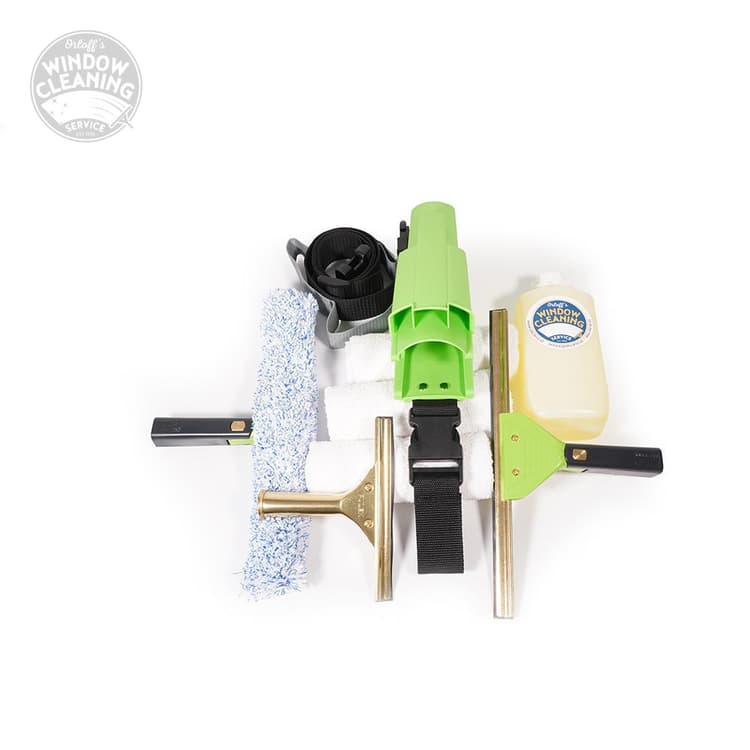
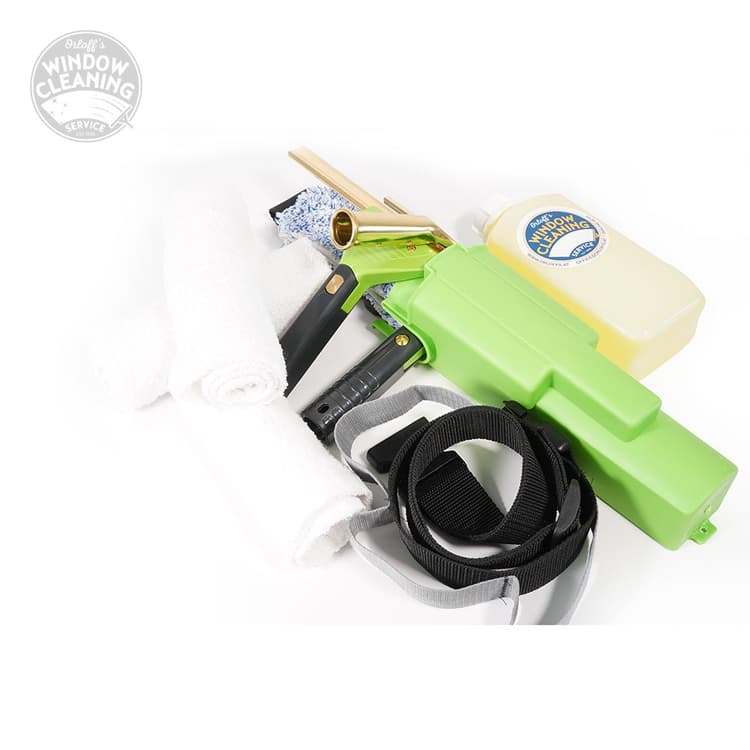
Tool Recommendations
Microfibre T-bar applicator
View on Amazon [coming soon]Professional squeegee with fresh rubber blade
View on Amazon [coming soon]Bucket of lukewarm water with one drop of mild dish soap per litre
View on Amazon [coming soon]Cleaning Frequency
Glass + frames: 2× per year (Spring and autumn. Quarterly in urban Vienna conditions.). Aluminium-clad frames: 2× per year (Mild soapy water removes acid rain deposits and pollution grime.). Hardware: 1× per year (Inspection and lubrication via Finstral installer or dealer.)
Frequently Asked Questions
Field Notes
“Glass and frames: minimum twice per year - once in spring, once in autumn. In Vienna's urban environment, with traffic pollution, pollen and construction dust, quarterly cleaning keeps the glass performing at its best. Aluminium-clad frames: a twice-yearly wipe-down with mild soapy water removes the acid rain deposits and pollution grime that accumulate on exterior surfaces. Hardware inspection and lubrication: at least once per year, through a Finstral installer or dealer. No paper towels on the glass. They leave fibres and have no place in professional glass work.”
Justin Orloff
What's next for you?
The Skill
New to window cleaning?
Start with the core techniques before tackling premium systems.
Start Learning →The Standard
Upskill your team
Covers every system, product type, and tricky scenario.
View The Standard →Manufacturer
Partner with Orloffs
Are you Finstral or a similar manufacturer? Let's create official cleaning guidance together.
Get in Touch →