Europe · Window Manufacturer
Fenster Ludwig
🇦🇹 Austria · Last reviewed by Justin Orloff
Quick Facts
founded
Austrian regional manufacturer
hq
Austria
primaryMaterials
PVC, timber-aluminium composite
glazingPartner
Integrated glazing by specification
marketTier
Mid-Range
Brand at a Glance
- Country: Austria
- Market position: Mid-range Austrian regional window manufacturer
- Primary materials: PVC profiles, timber-aluminium composite
- Product types: Tilt-and-turn windows, fixed lights, entrance doors
- Opening styles: Tilt-and-turn standard, fixed glazing
- Colour options: White PVC standard, colour foil, natural timber inner with aluminium outer
- Standards: Austrian OIB compliance, CE certification
- Distribution: Austria, regional Central European markets
- Glazing: Double and triple glazing
- Market focus: Residential renovation and new-build
Product Range
- PVC tilt-and-turn windows
- Timber-aluminium composite windows
- Fixed glazing units
- Entrance doors
Why This System
As a regional manufacturer, Fenster Ludwig products are calibrated to Austrian Alpine climate conditions - higher thermal performance at the base specification than manufacturers targeting milder markets. Timber-alu composites from Austrian regional manufacturers often use local timber species - European larch, spruce, or oak - each with different surface characteristics that affect how the inner timber face responds to cleaning. Regional manufacturer hardware fitting varies by product generation - older Fenster Ludwig installations may use different locking hardware generations than current production, requiring a quick assessment before lubrication. PVC colour foil on Austrian mid-range products often includes darker woodgrain foils popular in the Alpine residential market - darker foils absorb more heat and can show differential expansion effects at the frame corners over time. Triple glazing is common in the Fenster Ludwig range due to Austrian energy standards - the added sash weight means hinge and tilt hardware on these units requires closer attention than on standard double-glazed products.
Step 1 of 2: Manufacturer Recommendations
Official Care Guidance
Source: ORLOFFS PROFESSIONAL GUIDANCE - BASED ON FENSTER LUDWIG PUBLISHED INFORMATION AND 25 YEARS FIELD EXPERIENCE
Glass
- Lukewarm water with mild dish soap or purpose-made glass cleaner.
- Microfibre T-bar applicator on wash, professional squeegee on pull. Fresh rubber.
- Check for soft coatings before using any abrasive or hard tool on the glass surface.
- On triple-glazed units, do not lean weight against an open sash.
Frames
- PVC frames: pH-neutral cleaner on a damp cloth. No bleach, solvent, or abrasive.
- Aluminium outer cladding on composite windows: pH-neutral cleaner, soft cloth.
- Timber inner faces: damp cloth with timber-specific mild cleaner, minimal moisture. Check finish condition first.
- Clear drainage slots at the bottom of every frame at every clean.
Hardware
- Wipe hardware dry after every clean. Steel hardware on timber-alu frames rusts if left wet.
- Lubricate tilt-and-turn mechanisms and hinge points annually with light machine oil.
- On older hardware generations, locate all lubrication points before applying oil - the points may differ from current production.
Step 2 of 2: The Orloffs Protocol
The Orloffs Protocol
This is how I clean Fenster Ludwig windows. The tools and technique below come from 25 years of daily professional work on the glass. Every step has been tested on real installations and adapted specifically for Fenster Ludwig systems.
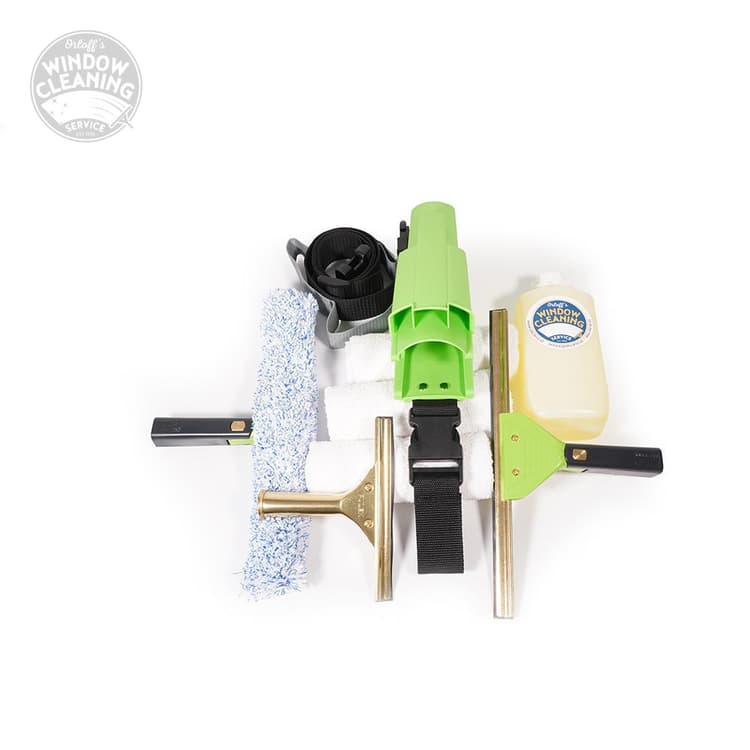
Pro Tools
My daily tool list. This is what I carry to every job.
Follow these steps in order. Each one builds on the last. This is the same sequence I use on every Fenster Ludwig installation.
- 1
Material identification and condition check
Walk the job and identify each window as PVC or timber-alu composite. Note any colour-foil profiles for the corner weld check.
On timber-alu windows, check the condition of the inner timber finish. Report any cracking, peeling, or missing finish before cleaning begins.
Brush down all glass and frame surfaces to remove loose debris, pollen, and organic matter.
- 2
Glass wash
Apply solution with T-bar in full passes. 30 to 60 seconds dwell on heavy organic soiling - Alpine pollen loads can be heavy in spring.
On triple-glazed units, work without leaning against the sash.
Rinse T-bar cover regularly.
- 3
Edge detail
Wipe the rebate groove at the glass edge with a damp cloth before squeegeeing.
On timber-alu windows, keep the edge cloth dry on the timber inner rebate.
Dry the top frame rail before squeegeeing.
- 4
Squeegee
Side-to-side passes from the top. Keep rubber clean on a cloth after every pass.
On dark-foil PVC frames, wipe rubber carefully - pigment from the foil edge sometimes transfers to the rubber and then to adjacent glass.
Finish with a bottom-edge pass.
- 5
Frame wipe-down
PVC and aluminium: pH-neutral cleaner, damp cloth, rinse, dry. Top to bottom.
Timber inner faces: timber cleaner on damp cloth, dry immediately with a clean cloth.
Check dark foil corner welds for any cracking. Note and report any separation.
- 6
Hardware check
Run each window through full tilt-and-turn operation.
On older hardware, note any resistance points for the annual lubrication visit.
Dry all hardware and clear all drainage slots.
Pro Tips
- Spring cleans on Alpine Austrian properties need extra dwell time on glass - pollen loads from surrounding woodland can be significant and bond to glass surfaces.
- Dark woodgrain foil PVC frames run warmer than white frames in direct sun - schedule summer cleaning for early morning or late afternoon when the profile has cooled.
- Timber inner faces on composite windows with oak grain need less moisture than softwood frames - oak is denser and absorbs less, but residue left on the surface shows more clearly.
- Check corner welds on dark foil frames at every visit in the first five years of installation - heat expansion stress shows up earliest at the welded corners.
- Older tilt-and-turn hardware generations on Austrian regional manufacture often use a separate hinge lubricator point that is set back from the hinge face. Look for a small cap or slot on the hinge body.
- Hard water mineral deposits from Alpine water supplies appear as white scale at the bottom of the glass unit. A diluted white vinegar solution removes scale without damaging glass or seals.
- On large fixed-light panels, assess ladder or reach tool access before starting. A fixed light that cannot be accessed from outside safely should be flagged before the job is booked.
What NOT To Do
- Do not use PVC frame cleaner on timber inner faces - the formulation is not appropriate for wood surfaces.
- Do not clean dark colour-foil frames in direct summer sun - hot profiles cause cleaning solution to dry too fast and leave residue.
- Do not force stiff tilt-and-turn hardware on older mechanism generations - locate and lubricate the correct points before applying pressure.
- Do not leave standing water on steel hardware or on timber inner faces - both corrode or stain from prolonged moisture contact.
- Do not use abrasive tools on any profile surface - PVC, aluminium cladding, or timber.
Bundle Kits and Tool Recommendations
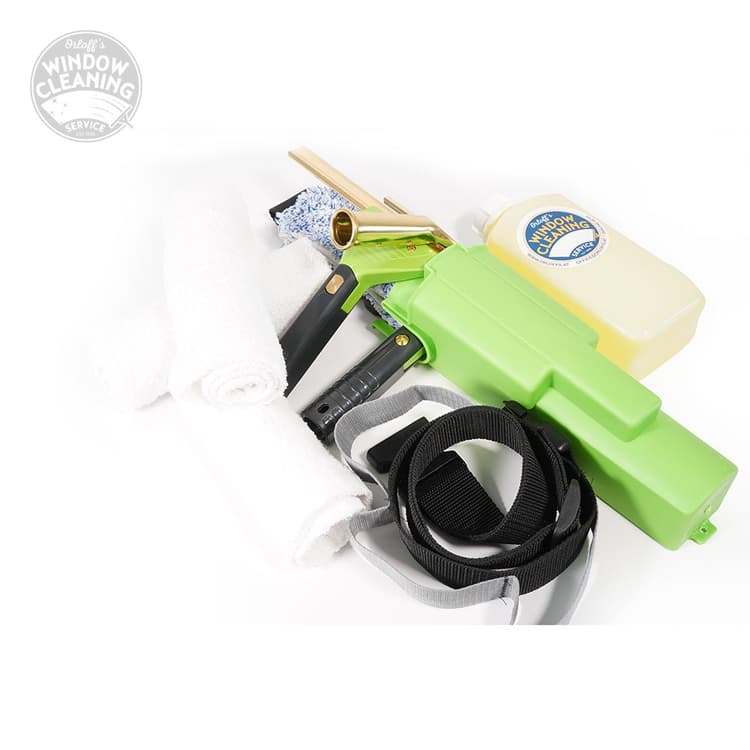
Bundle Kit
Tool Recommendations
Unger ErgoTec Ninja squeegee
View on Amazon [coming soon]Microfibre T-bar applicator
View on Amazon [coming soon]pH-neutral frame cleaner
View on Amazon [coming soon]Cleaning Frequency
Glass: 2x per year minimum (Spring and autumn. High-pollen Alpine locations may need a third clean in early summer.). Frames: 2x per year (Same visit as glass. Timber inner face condition checks at every visit.). Drainage slots: Every clean (Alpine debris loads are higher than urban - prioritise drainage at every visit.). Hardware lubrication: Once per year (Older hardware generations may need bi-annual lubrication.)
Frequently Asked Questions
Field Notes
“Austrian regional manufacturers like Fenster Ludwig produce products well-matched to their local environment. The challenge for the cleaner is that the same property often contains multiple generations of windows with different hardware specifications. Alpine pollen in spring is the most demanding soiling condition on Austrian windows. Budget extra time on first spring cleans. Dark woodgrain foil profiles are very common in Austrian residential properties - check corner welds as a standard part of every clean on these products.”
Justin Orloff
What's next for you?
The Skill
New to window cleaning?
Start with the core techniques before tackling premium systems.
Start Learning →The Standard
Upskill your team
Covers every system, product type, and tricky scenario.
View The Standard →Manufacturer
Partner with Orloffs
Are you Fenster Ludwig or a similar manufacturer? Let's create official cleaning guidance together.
Get in Touch →