Europe · Window Manufacturer
Fenêtre ADF
🇫🇷 France · Last reviewed by Justin Orloff
Quick Facts
founded
Established French manufacturer
hq
France
primaryMaterials
PVC, aluminium, timber
glazingPartner
Integrated glazing by fabricator specification
marketTier
Mid-Range
Brand at a Glance
- Country: France
- Market position: Mid-range French window and door manufacturer
- Primary materials: PVC, aluminium, timber
- Product types: Casement windows, tilt-and-turn windows, sliding doors, entrance doors
- Opening styles: Outward-opening casement (French standard), tilt-and-turn, lift-and-slide
- Colour options: White PVC standard, powder-coated aluminium, stained timber
- Standards: NF certification, DTU 36.5 installation standard
- Distribution: France and French-speaking markets
- Glazing: Double and triple glazing depending on specification
- Website: fenetre-adf.fr
Product Range
- PVC casement and tilt-and-turn windows
- Aluminium windows and doors
- Timber windows
- Entrance doors
Why This System
French outward-opening casement windows require a different cleaning approach to tilt-and-turn - the outer face is accessed by opening the sash outward, which changes safe ladder and reach-tool positioning. Cremone bolt hardware on taller French windows operates differently to espagnolette rods - the vertical bolt mechanism needs specific lubrication points that are easy to miss in a standard hardware service. Timber window products from Fenetre ADF need paint or stain condition checked at every clean - the French Atlantic and southern climate accelerates paint breakdown on south-facing timber frames. Aluminium products use standard thermal break construction - the plastic thermal break between inner and outer aluminium sections is not visible from the outside but means the outer frame can run warmer or cooler than expected depending on season. PVC drainage on French casement windows routes differently to tilt-and-turn systems - water exits through slots at the bottom of the fixed frame rather than the sash, so blockages affect the fixed light rather than the opening sash.
Step 1 of 2: Manufacturer Recommendations
Official Care Guidance
Source: ORLOFFS PROFESSIONAL GUIDANCE - BASED ON FENETRE ADF PUBLISHED INFORMATION AND 25 YEARS FIELD EXPERIENCE
Glass
- Lukewarm water with mild dish soap or a purpose-made glass cleaner. No ammonia on tinted glass.
- Microfibre T-bar applicator to wash, professional squeegee to pull. Fresh rubber on every job.
- Check for low-emissivity or solar-control coatings before using any hard tool on the glass surface.
- On outward-opening casements, secure the sash in the open position before cleaning the outer face from a ladder.
Frames
- PVC frames: damp cloth with pH-neutral cleaner. No bleach, no solvent, no abrasive pad.
- Aluminium frames: pH-neutral cleaner on a soft cloth. No alkaline or acidic products - both attack powder coat over time.
- Timber frames: damp cloth only on sound paintwork. Do not wet cracked or flaking paint. Report paint failure before cleaning.
- Clear all drainage slots at the bottom of the fixed frame after every clean.
Hardware
- Wipe all hardware with a damp cloth and dry immediately - French window hardware is often steel and rusts if left wet.
- Lubricate espagnolette rods and cremone bolt guides annually with light machine oil or purpose-made hardware lubricant.
- Check friction stays on casement sashes hold the sash open at the correct position - worn stays that drop the sash during cleaning are a safety issue.
Step 2 of 2: The Orloffs Protocol
The Orloffs Protocol
This is how I clean Fenêtre ADF windows. The tools and technique below come from 25 years of daily professional work on the glass. Every step has been tested on real installations and adapted specifically for Fenêtre ADF systems.
Pro Tools
My daily tool list. This is what I carry to every job.
Follow these steps in order. Each one builds on the last. This is the same sequence I use on every Fenêtre ADF installation.
- 1
Preparation
Identify window material before mixing cleaning product - PVC, aluminium, and timber each need a slightly different dilution approach and the timber ones need a condition check first.
On outward-opening casements, open the sash to its maximum position and confirm the friction stay holds it safely before positioning any ladder.
Brush down all glass and frame surfaces to remove loose debris. On timber frames, look for paint condition at this stage.
- 2
Glass wash
Apply soap solution with the T-bar in full overlapping passes. Allow 30 to 60 seconds dwell on heavy soiling.
On outward-opening casements, clean the outer face while the sash is open - work top to bottom and keep the squeegee stroke direction consistent.
Rinse the T-bar cover after every two or three windows to avoid depositing grit from one window onto the next.
- 3
Edge detail before squeegeeing
Run a damp cloth along the rebate groove at the edge of the glass. Solution left in the rebate deposits as a line at the frame edge after the squeegee pass.
On timber frames, keep the edge cloth relatively dry - you want to remove solution from the glass edge, not wet the timber rebate.
Wipe the top frame face dry before squeegeeing to prevent drips landing on cleaned glass below.
- 4
Squeegee
Cut in at the top corner, angle the rubber slightly away from the rebate. Side-to-side passes on standard residential panels.
Wipe the squeegee rubber dry on a clean cloth after every pass. Residue from the rubber streaks powder-coated aluminium frames.
Finish with a single pass along the bottom edge, tilting the squeegee so water falls away from the frame drainage slots rather than into them.
- 5
Frame wipe-down
Work top to bottom on frames. PVC: pH-neutral cleaner on damp cloth, rinse with clean water, dry. Aluminium: same protocol. Timber: damp cloth on sound paint only.
Pay close attention to the welded or jointed corners where frame members meet - grime collects here and is often missed.
Clear fixed-frame drainage slots with a soft brush after the frame wash. Check each slot is open by looking through it against the light.
- 6
Hardware check and lubrication
Run each window through full operation - open, tilt if applicable, close, and lock. Every locking point should engage with no resistance.
Apply light oil to espagnolette rods and cremone bolt guides at the annual service visit. On day-to-day cleans, wipe hardware dry and note any stiff points.
Check friction stay pivot screws on casement sashes. A loose pivot screw means the stay cannot hold the sash - tighten immediately or flag for repair.
Pro Tips
- On outward-opening casements, clean the top of the outer sash face first before the sash swings back - solution dripping from the top rail onto a cleaned lower section is the most common rework cause.
- French timber windows on south-facing elevations often show paint breakdown at the bottom rail first - this is the highest moisture-accumulation point and needs the most careful condition check.
- Cremone bolt guides run the full height of the sash in a narrow channel. A thin bead of light oil applied at the top guide entry point works its way down by gravity over a few operations.
- On powder-coated aluminium, a white chalky bloom after cleaning means the cleaner was too alkaline. Switch to a lower-pH product and the bloom does not return.
- Check the sealant bead between the fixed frame and the wall surround on older Fenetre ADF installations - French residential buildings often use a polymer mastic that shrinks and cracks over 10 to 15 years.
- If a casement sash rattles when closed and locked, the issue is usually the keep (strike plate) position rather than the espagnolette rod. Do not force the handle - flag for adjustment.
- On multi-light windows with a central mullion, the mullion face accumulates more grime than the outer frame because rain does not wash it. Give mullion faces extra attention on every clean.
What NOT To Do
- Do not wet timber frames with cracked or flaking paint - water enters the timber and accelerates rot.
- Do not use abrasive pads on powder-coated aluminium - scratches in the powder coat are permanent.
- Do not use bleach or strong alkali on PVC frames - irreversible yellowing on white PVC and foil lift on colour profiles.
- Do not clean the outer face of a casement sash without confirming the friction stay is holding the sash securely open.
- Do not leave steel hardware wet - rust staining on adjacent PVC or timber is slow to form and slow to remove.
Bundle Kits and Tool Recommendations
Bundle Kit
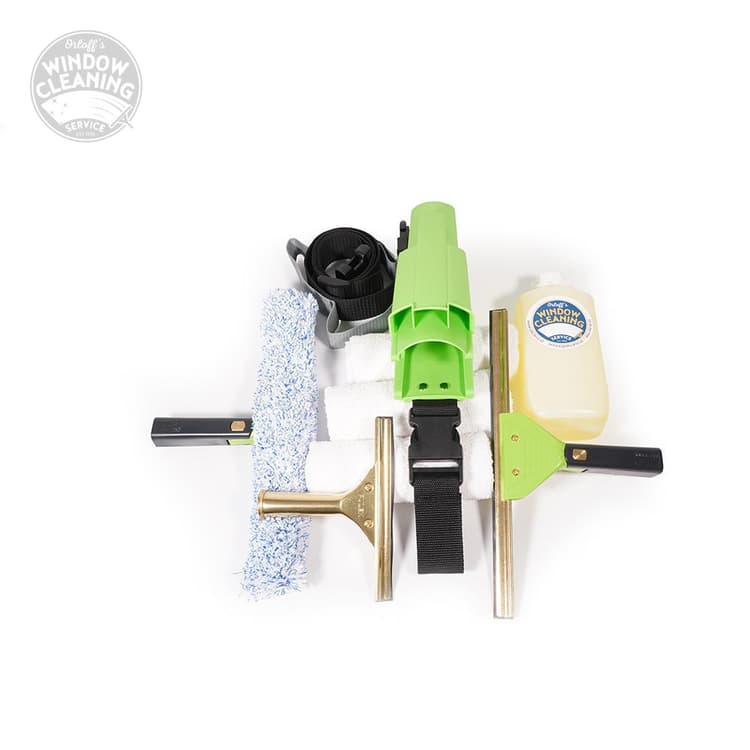
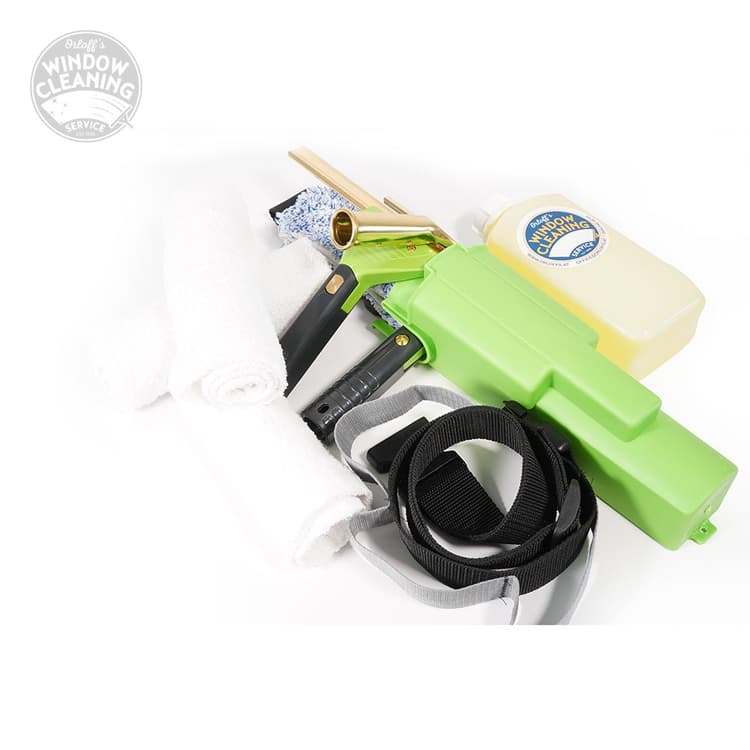
Tool Recommendations
Unger ErgoTec Ninja squeegee
View on Amazon [coming soon]Microfibre T-bar applicator
View on Amazon [coming soon]pH-neutral multi-surface window cleaner
View on Amazon [coming soon]Cleaning Frequency
Glass: 2x per year minimum (Spring and autumn. Coastal and urban locations: quarterly.). Frames: 2x per year (Same visit as glass. Timber frames may need more frequent checks in high-rainfall areas.). Drainage slots: Every clean (Fixed-frame drainage slots on casement systems are easy to miss - build them into the checklist.). Hardware lubrication: Once per year (Cremone bolts and espagnolette rods on French systems dry out faster than tilt-and-turn hardware.)
Frequently Asked Questions
Field Notes
“French casement windows require a mental shift from tilt-and-turn work - the outer face is accessed while the sash is open and the safe working position at the ladder changes accordingly. Cremone bolt hardware on tall French windows is the most commonly neglected lubrication point in any maintenance schedule. A seized cremone bolt on a 2.4 metre sash is a significant repair. Timber windows in this range sit at the higher-maintenance end of the product line. Build condition checking into every visit - catching paint failure early prevents expensive timber remediation.”
Justin Orloff
What's next for you?
The Skill
New to window cleaning?
Start with the core techniques before tackling premium systems.
Start Learning →The Standard
Upskill your team
Covers every system, product type, and tricky scenario.
View The Standard →Manufacturer
Partner with Orloffs
Are you Fenêtre ADF or a similar manufacturer? Let's create official cleaning guidance together.
Get in Touch →