
Europe · Window Manufacturer
FAKRO
🇵🇱 Poland · Last reviewed by Justin Orloff

Quick Facts
founded
1991
hq
Nowy Sacz, Poland
primaryMaterials
Timber (pine), Polyurethane-coated timber, PVC
glazingPartner
In-house
marketTier
Premium
Brand at a Glance
- Founded: 1991
- HQ: Nowy Sacz, Poland
- Market position: World's second-largest roof window manufacturer, market leader in Poland
- Frame materials: Timber (pine), Polyurethane-coated timber, PVC
- Glazing: Double and triple glazed. Low-E coated as standard. Self-cleaning glass available (titanium dioxide coating). Quadruple glazing (U8) for passive house builds. Krypton gas fill on triple and quad units.
- Key ranges: Centre-pivot (FTP/FTU), High-pivot (FDY), Top-hung preSelect (FPP), PVC pivot (PTP), Flat roof windows (Type C/F), Innoview
- Warranty: 10-year warranty on windows, 20-year warranty on glazing units and hardware. Toughened external glass carries a lifetime hail resistance warranty.
- Where they sell: Worldwide - over 50 countries across Europe, North America, Asia-Pacific, Australia
- Official care page: fakro.com/service/maintenance/
- Find a dealer: fakro.com
Product Range
- Centre-pivot (FTP/FTU)
- High-pivot (FDY)
- Top-hung preSelect (FPP)
- PVC pivot (PTP)
- Flat roof windows (Type C/F)
- Innoview
Why This System
Roof windows sit at a pitch, not vertical - pollen, sap, and bird droppings bond harder and faster than on wall-mounted windows. Three frame materials - timber, polyurethane-coated timber, and PVC - each requiring different cleaning products and maintenance cycles. Self-cleaning glass with a titanium dioxide coating is available. This coating is on the outer surface you clean and must never be scrubbed with abrasive tools or treated with ammonia. Multiple opening mechanisms - centre-pivot, high-pivot, and top-hung preSelect - each present the glass differently when rotated to the cleaning position. 10-year window warranty and 20-year glazing warranty are conditional on proper maintenance, including using the right products and renewing timber coatings on schedule.
Step 1 of 2: Manufacturer Recommendations
Official Care Guidance
Source: FAKRO OFFICIAL MAINTENANCE GUIDE
Glass
- Clean with clean water or water containing a mild detergent.
- Use a soft lint-free cloth or non-abrasive sponge.
- Do not use liquids containing ammonia on the glass or coatings.
- On self-cleaning glass, avoid products that leave a residue on the surface.
- Never dry-clean the glass - always wet the surface first.
Timber Frames
- Wash wooden surfaces twice per year, in spring and autumn.
- Use clean water with a mild detergent.
- Do not saturate the timber - wipe with a damp cloth.
- Renovate coatings and lacquers every 2-5 years depending on usage conditions.
- For damaged areas, clean with emery paper (grade 180-220) or abrasive sponge, then apply two coats of water-based paint or lacquer.
- During any painting or lacquering, do not cover the seals.
PVC and Polyurethane Frames
- Clean with a mild household cleaner and soft cloth.
- PVC frames are moisture-resistant and suitable for wet rooms.
- Do not use abrasive tools on PVC surfaces.
Aluminium Cladding
- Wash external aluminium cladding regularly using a mild detergent.
- Rinse with clean water after washing.
Hardware and Drainage
- Lubricate hinges with grease every few years.
- Check pivot points and locking mechanisms for smooth operation.
- Remove leaves and dirt from the flashing at least once per year.
- Keep drain channels clear to ensure rainwater drainage.
- Remove snow and ice accumulated around the window to ensure water flow from melting snow.
- Blocked drainage causes water to pool inside the frame, damaging seals and timber.
Step 2 of 2: The Orloffs Protocol
The Orloffs Protocol
This is how I clean FAKRO windows. The tools and technique below come from 25 years of daily professional work on the glass. Every step has been tested on real installations and adapted specifically for FAKRO systems.
Pro Tools
My daily tool list. This is what I carry to every job.
Follow these steps in order. Each one builds on the last. This is the same sequence I use on every FAKRO installation.
- 1
Rotate and secure
Open the FAKRO window and rotate it to the 180-degree cleaning position. On centre-pivot models (FTP/FTU), the outer pane swings inside. On preSelect models (FPP), switch from the top-hung mode to pivot mode before rotating. Engage the locking mechanism to hold the sash in the rotated position. This is non-negotiable - if the lock is not engaged, the window can swing back under its own weight.
- 2
Agitate the glass
Dip your T-bar applicator completely into the soap water on both sides. Apply the solution across the entire glass surface using overlapping strokes. The goal is to dissolve the dirt so the squeegee can shave it away cleanly.
Roof windows collect harder grime than vertical windows - pollen, sap, and droppings that have baked on at a pitch angle. Take your time with this step. If dirt is not fully dissolved, the remaining grime gets dragged under the squeegee blade, leaving smears and streaks.
- 3
Detail the frame edge before squeegeeing
Run a dry corner of your cotton rag along the frame edges around the glass. Remove the pooled soap water sitting on the frame and gasket. Pay particular attention to the drain channels - clear any debris you find there. When the squeegee reaches these edges, it will not pick up dirty residue and drag it back across the glass.
- 4
The three squeegee turns
With the window rotated, the glass is roughly vertical, which makes squeegeeing straightforward.
Side to side: start at the top edge with a dry rubber. Work across the glass in a straight horizontal line. Tilt the squeegee so soap water spills from one side of the channel only. Wipe the rubber dry after each pass. Overlap slightly into the next line down.
Top to bottom: same principle, vertical lines. Start in the top corner with a dry rubber. Tilt to direct water downward. Wipe dry after each pass. Overlap into the next line across.
The J tune: the professional continuous motion from top to bottom in one smooth, unbroken movement. Your thumb guides the wrist rotation at each end of the horizontal pass. When you have this in your muscle memory, it is the fastest and most consistent turn for any window.
For FAKRO windows that cannot be rotated (fixed units or flat roof windows), work from outside using a pole with the top-to-bottom turn. Never clean in direct sunlight - the soap water dries before you can squeegee it off.
- 5
Final edge detailing
After squeegeeing, take a dry cotton rag, fold it to a clean corner, and detail the edges in one smooth pass. Get your finger into the edge where glass meets the gasket seal. Remove any pooled soap water sitting there.
Make sure the drain channels are clear and not blocked with lint or debris from your cloth. These channels are the window's drainage system - if they are blocked, water pools inside the frame and damages seals and timber.
- 6
Frames and hardware maintenance
Wipe down the frame with a damp cloth and mild detergent. For timber frames, inspect the lacquer or paint finish for chips or wear - address any damage promptly. For PVC or polyurethane frames, a standard mild household cleaner is fine.
Lubricate the hinges and pivot hardware with grease. Clean the external aluminium cladding with mild detergent and rinse. Clear any leaf litter, snow, or debris from the flashing around the window perimeter.
Rotate the window back to its closed position and disengage the lock. Check that the window opens, closes, and locks smoothly.
Pro Tips
- Identify the frame material before you start - timber, polyurethane-coated timber, or PVC. Each needs different care.
- Always engage the locking mechanism when the window is rotated. The sash can swing back under its own weight.
- More soap water, not more pressure - FAKRO prohibits ammonia on all coatings and glass surfaces.
- On self-cleaning glass, avoid any product that leaves a residue. It coats over the titanium dioxide layer and stops it working.
- Never clean in direct sunlight - the soap water dries before you can squeegee it off, baking residue onto the surface.
What NOT To Do
- Do not use liquids containing ammonia on glass or coatings - FAKRO explicitly prohibits ammonia-based products.
- Do not use abrasive materials, scouring pads, or abrasive powder on glass, frames, or aluminium cladding.
- Do not dry-clean the glass - always wet the surface first.
- Do not leave drain channels or flashing blocked - pooled water damages seals, timber, and hardware.
- Do not allow snow and ice to accumulate around the window - blocked meltwater drainage causes water ingress.
- Do not cover seals when painting or lacquering timber frames.
- Do not use products that leave a residue on self-cleaning glass - they coat over the titanium dioxide layer and stop it functioning.
- Do not operate a rotated FAKRO window without engaging the locking mechanism - the sash can swing back under its own weight.
- Do not clean glass in direct sunlight - the soap water dries before you can squeegee it off, leaving residue on the surface.
Bundle Kits and Tool Recommendations
Bundle Kit

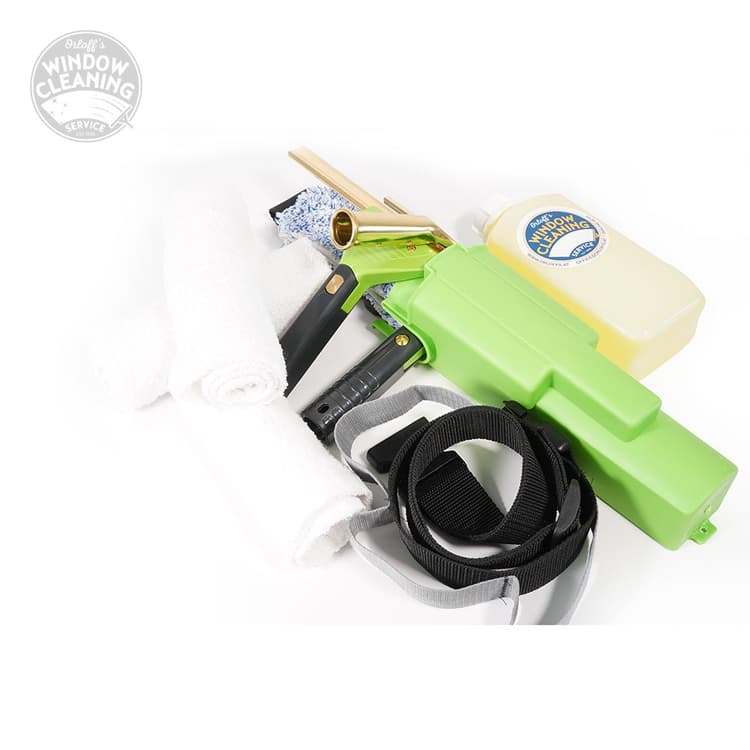
Tool Recommendations
T-bar applicator with microfibre cover
View on Amazon [coming soon]Professional squeegee with fresh rubber blade
View on Amazon [coming soon]Bucket with lukewarm water + 1 drop of mild pH-neutral dish soap per litre
View on Amazon [coming soon]Cleaning Frequency
Glass and frames: 2x per year minimum (Spring after pollen season and autumn after leaf fall. Quarterly in urban or high-pollution environments.). Flashing and drainage channels: 1x per year minimum (Clear debris to prevent water pooling inside the frame.). Hinges and hardware: Every few years (Lubricate with grease. Check pivot points and locking mechanisms.). Timber frame coatings: Every 2-5 years (Inspect at each cleaning. Renovate lacquer or paint when chips or wear appear.). Self-cleaning glass: Reduced frequency (Still requires manual cleaning after heavy pollen, under tree cover, or in sheltered positions where rain does not reach the glass.)
Frequently Asked Questions
Field Notes
“Glass and frames: 2x per year minimum, quarterly in urban or high-pollution environments. Flashing and drainage channels: clear debris at least once per year to prevent frame damage. Timber frame coatings: inspect at each cleaning, renovate lacquer or paint every 2-5 years. Self-cleaning glass: reduced frequency, but manual cleaning still needed under tree cover and during dry spells. Hardware: lubricate hinges and pivot points with grease every few years.”
Justin Orloff
What's next for you?
The Skill
New to window cleaning?
Start with the core techniques before tackling premium systems.
Start Learning →The Standard
Upskill your team
Covers every system, product type, and tricky scenario.
View The Standard →Manufacturer
Partner with Orloffs
Are you FAKRO or a similar manufacturer? Let's create official cleaning guidance together.
Get in Touch →