Europe · Window Manufacturer
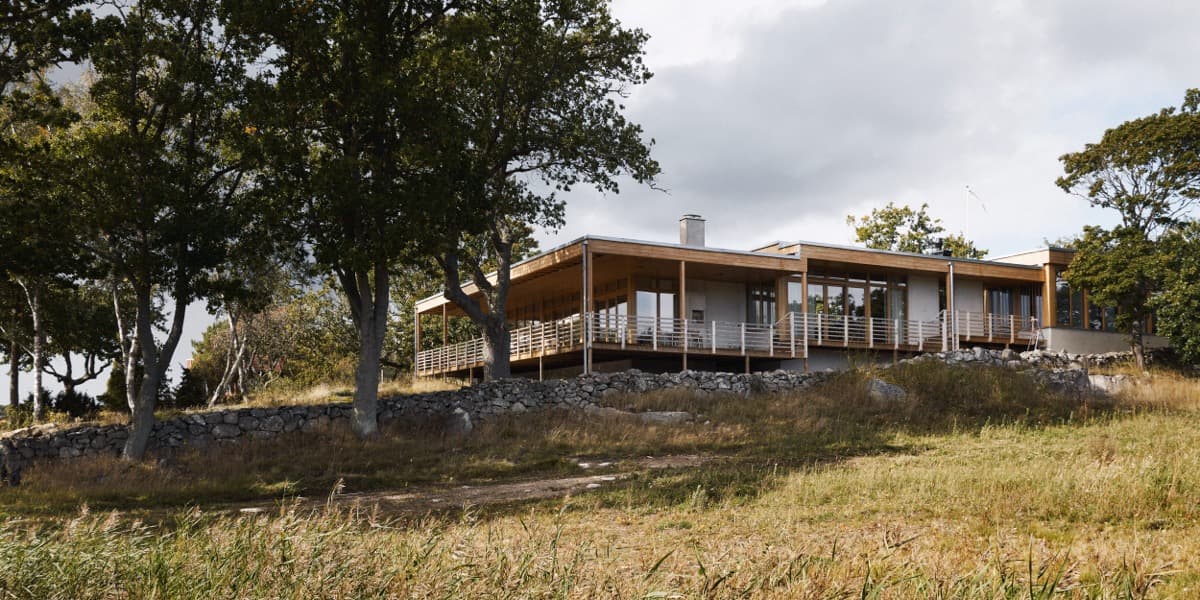
Ekstrands
🇸🇪 Sweden · Last reviewed by Justin Orloff
Quick Facts
founded
1945
hq
Osby, Skåne, Sweden
primaryMaterials
Solid timber (pine, oak, Douglas fir), timber/aluminium, composite/PVC
glazingPartner
Own glazing production
marketTier
Premium
Brand at a Glance
- Founded: 1945
- HQ: Osby, Skåne, Sweden
- Market position: Scandinavian premium timber and timber/aluminium window and door manufacturer. Third-generation family business. AAA Diamond credit rating.
- Frame materials: Solid timber (pine, oak, Douglas fir), timber/aluminium, composite/PVC
- Key ranges: EC/90 Plus+ (passive house certified timber/alu), Trä/Alu Modern, Trä Standard, Cultural Windows, Patio sliding systems
- Glazing options: Double and triple glazed. Argon gas fill. Warm-edge spacer. Ug values from 0.77 W/(m²K) on passive house range.
- Where they sell: Sweden and Scandinavia
- Painting warranty: Painting warranty with no maintenance reservation during the warranty period. Coastal areas: 5-year painting warranty.
- Official care documentation: ekstrands.com/en/about-us/documents/ (Monterings- & skötselanvisning)
- Warranty conditions: ekstrands.com/en/about-us/warranties/
- Website: ekstrands.com
Product Range
- EC/90 Plus+
- Trä/Alu Modern
- Trä Standard (Cultural Windows)
- Patio Systems
Why This System
Twelve distinct window systems - a solid pine casement, a passive house timber/aluminium tilt-and-turn, and a Patio sliding system all need different care at the frame level. The glass technique is consistent. The frame approach is not. The timber interior of timber/aluminium models must never see solvents, ammonia, or bleach - and must never be saturated with water. Most cleaners focus on the outside and forget the interior entirely. 3-layer glue-laminated timber is engineered for dimensional stability but the bonding layers and surface treatments are vulnerable to solvents and aggressive detergents. The aluminium-to-glass bonded joint on the EC/90 Plus+ is a structural as well as aesthetic detail - high-pressure water directed at this joint forces water past the bond line. The painting warranty has a geographic condition: coastal areas receive only a 5-year painting warranty due to salt air exposure.
Step 1 of 2: Manufacturer Recommendations
Official Care Guidance
Source: Ekstrands Monterings- & skötselanvisning - ekstrands.com/en/about-us/documents/
Glass
- Clean with mild liquid detergent (mild soapy water).
- No abrasive cleaning agents of any kind.
- No scouring pads, steel brushes, or scrapers on the glass surface.
- No mechanical tools on glass surfaces.
- Rinse thoroughly after cleaning.
- Dry with a lint-free cloth or squeegee.
Timber Frames (Pine, Oak, Douglas Fir)
- Clean painted timber surfaces with lukewarm water and mild detergent - Ekstrands recommends at least once per year.
- Avoid cleaning agents with high pH value.
- Avoid abrasive products that can damage the surface finish.
- Do not saturate the timber - use a damp cloth, not a wet one.
- Do not use solvents, ammonia, or bleach on timber surfaces.
- Where the painted surface shows greying or cracks, repair with matching exterior paint in the original shade.
Timber/Aluminium Frames (EC/90 Plus+, Trä/Alu Modern)
- Aluminium exterior: clean with water and a mild cleaning agent. For extra protection, the aluminium surface can be waxed.
- Timber interior: mild soapy water and a damp cloth only. Do not soak the timber.
- Do not use solvents on either the aluminium or timber surface.
- Do not use ammonia-based products on either surface.
- The aluminium-to-glass bonded joint must not be subjected to high-pressure water.
Hardware and Fittings
- Lubricate all moving parts 1-2 times per year.
- Apply lubricant to all pivot points, locking mechanisms, and hinge points.
- Check hinges and hardware annually.
- If stiffness develops on tilt-turn hardware, contact a qualified installer for adjustment.
Gaskets, Seals, and Drainage
- Keep weatherstripping clean and inspect it annually.
- Clean seals with mild soapy water and a soft cloth.
- Check seal condition after heavy storms.
- Drainage holes in the frame's lower section must be kept clear at all times.
- Check and clear drainage holes as part of annual maintenance.
Step 2 of 2: The Orloffs Protocol
The Orloffs Protocol
This is how I clean Ekstrands windows. The tools and technique below come from 25 years of daily professional work on the glass. Every step has been tested on real installations and adapted specifically for Ekstrands systems.
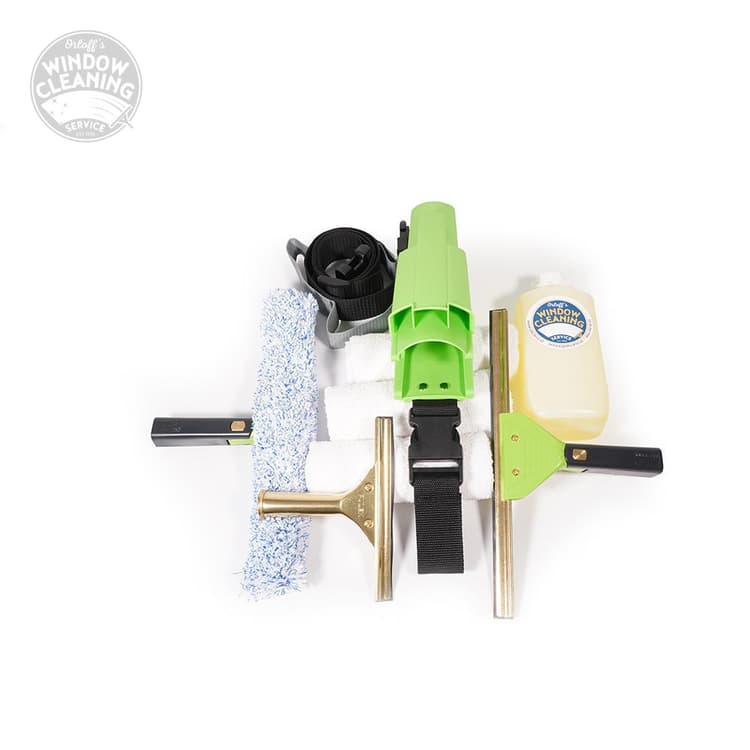
Pro Tools
My daily tool list. This is what I carry to every job.
Follow these steps in order. Each one builds on the last. This is the same sequence I use on every Ekstrands installation.
- 1
Detail the Frame Before Touching the Glass
Before the T-bar goes near the glass, wipe down the window frame edges with a damp microfibre cloth and mild soapy water. Timber sills accumulate dust, pollen, and fine grit that is invisible until it ends up on the squeegee blade and gets dragged across the glass.
On timber/aluminium models, wipe the aluminium exterior profile and then the timber interior sill separately. Use different cloths. If you have used any cleaning product on the aluminium, rinse the cloth thoroughly before it touches the timber interior.
- 2
Agitate the Glass
Dip the T-bar fully into your soapy water solution on both sides. Apply it across the whole glass surface using overlapping strokes, starting at the top and working down. The goal is to dissolve the dirt so the squeegee can shave it away cleanly, without grinding grit into the surface.
Never clean Ekstrands windows in direct sunlight or when the glass is warm to the touch. The soap solution dries on the surface before you can squeegee it off, baking a residue film.
- 3
Detail the Frame Edge Before Squeegeeing
Once the glass is agitated, run a dry corner of a cotton rag along the top edge and both side edges of the frame. This removes the pooled soapy water sitting on the frame surface.
When the squeegee reaches those edges, it picks up the pooled water rather than dirt from the timber or aluminium, and the result is a clean finish to the edge. This step takes ten seconds. Do not skip it.
- 4
The Three Squeegee Turns
Side to side: start at the top edge with a dry rubber. Work across in a straight horizontal line. Tilt the squeegee so the soapy water spills from only one side of the channel. Wipe the rubber dry after each pass. Overlap slightly into the next line down. Repeat to the bottom.
Top to bottom: the same motion but in vertical lines. Start in the top corner with a dry rubber. Tilt to direct water to the lower side. Wipe the rubber dry after each pass. Repeat to the far edge.
The J tune: the professional continuous motion. From the top of the window to the bottom in one smooth, uninterrupted movement. When this motion is in your muscle memory, it is the fastest and most consistent turn for any window size, including the large-format Ekstrands Patio and panorama systems.
- 5
Edge Detailing
After squeegeeing, there is always a thin film of water along the bottom edge and at both sides where the rubber cannot reach into the frame joint. Take a dry cotton rag, fold to a clean corner, and detail these edges in one smooth pass.
Push your finger gently into the joint between the glass and the frame seal. Lift out the pooled water sitting there. If left to dry, it leaves a white residue mark. Rotate to a clean section of rag as you work.
- 6
Timber and Hardware
For the timber frames, dry off any water that has run down onto the sill or frame edge during cleaning. Do not leave soapy water sitting on the timber surface. A dry cotton cloth wiped across the timber edge immediately after edge-detailing is enough.
Oil all hinges, locking points, and moving parts 1-2 times per year with a light machine oil or the lubricant recommended by your installer. If the window becomes stiff or the handle feels heavy, call the installer rather than forcing the mechanism.
Pro Tips
- Never cross-contaminate cloths between timber and aluminium surfaces on timber/aluminium models - what is safe on the aluminium exterior may not be safe on the timber interior.
- Keep the timber cloth damp, not wet - saturating the wood risks the painted finish and the warranty, especially on the interior timber faces.
- The bonded aluminium-to-glass joint on the EC/90 Plus+ must never be subjected to high-pressure water - this is a structural bond, not just a cosmetic edge.
- Rubbing timber frames dry in a way that creates static electricity attracts dust back to the surface almost immediately - wipe in one direction and do not buff aggressively.
- If you are in a coastal area, confirm your painting warranty period with Ekstrands directly - the standard painting warranty does not apply in salt-air environments.
What NOT To Do
- Do not use abrasive cleaning agents on glass or frame surfaces.
- Do not use scouring pads, steel brushes, steel wool, or scrapers on any Ekstrands surface.
- Do not use solvents on timber, aluminium, or glass surfaces.
- Do not use ammonia-based cleaning agents.
- Do not use bleach on any surface.
- Do not use high-pressure water (pressure washing) on any Ekstrands window or door.
- Do not direct high-pressure water at the aluminium-to-glass bonded joint on timber/aluminium models.
- Do not saturate timber frames with water - use a damp cloth, not a wet one.
- Do not leave soapy water sitting on timber surfaces after cleaning.
- Do not use cleaning agents with high pH on painted timber surfaces.
- Do not clean in direct sunlight or when the glass is hot to the touch.
- Do not force a stiff handle or tilt-turn mechanism - call the installer.
- Do not block drainage channels in the frame's lower section.
- Do not rub frames dry in a way that creates static electricity, which attracts dust back to the surface.
Bundle Kits and Tool Recommendations
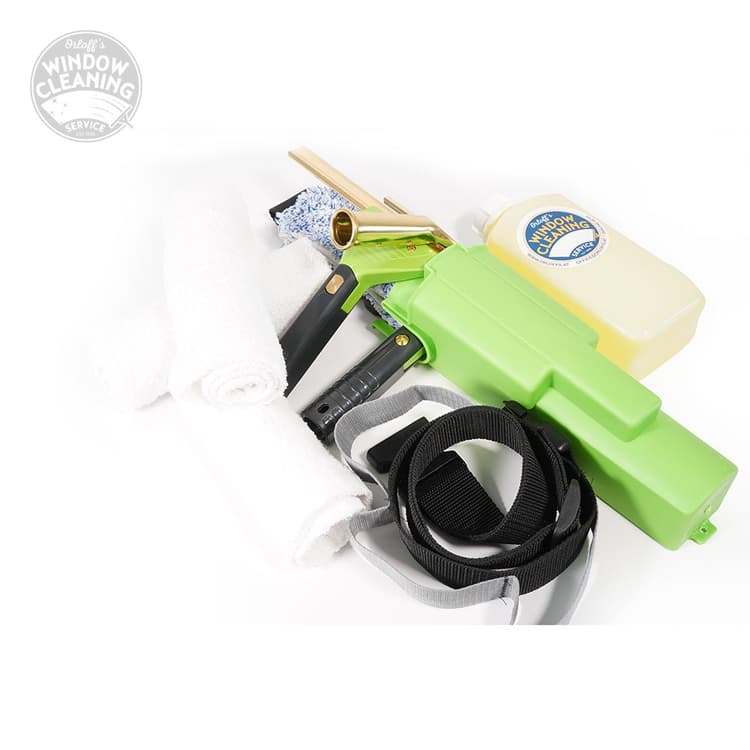
Bundle Kit
Tool Recommendations
T-bar applicator with clean microfibre cover
View on Amazon [coming soon]Professional squeegee with fresh rubber blade
View on Amazon [coming soon]Bucket with lukewarm water and one drop of pH-neutral dish soap per litre
View on Amazon [coming soon]Cleaning Frequency
Glass and frames: Twice per year minimum (Inside and out. Southern Sweden: spring clean essential before pollen season (April to June).). Urban and coastal environments: Quarterly (Salt air and pollution accelerate surface contamination.). Timber frame inspection: Annually (Look for greying or cracking in the glaze layer and repair promptly.). Hardware lubrication: 1-2 times per year (All moving parts - pivot points, locking mechanisms, hinges.). Drainage channel check: At least once per year, or after heavy rainfall. Gasket and seal inspection: Annually, with extra check after heavy storms
Frequently Asked Questions
Field Notes
“Glass and frames: minimum twice per year - quarterly in coastal or urban environments. Timber frame inspection: annually, look for greying or cracking in the glaze layer. Hardware lubrication: 1-2 times per year on all moving parts. Drainage channel check: at least once per year or after heavy rainfall. Gasket inspection: annually with extra check after heavy storms.”
Justin Orloff
What's next for you?
The Skill
New to window cleaning?
Start with the core techniques before tackling premium systems.
Start Learning →The Standard
Upskill your team
Covers every system, product type, and tricky scenario.
View The Standard →Manufacturer
Partner with Orloffs
Are you Ekstrands or a similar manufacturer? Let's create official cleaning guidance together.
Get in Touch →