
Europe · Window Manufacturer
DAKO
🇵🇱 Poland · Last reviewed by Justin Orloff

Quick Facts
founded
1994
hq
Nowy Sacz, Poland
primaryMaterials
PVC, timber, aluminium, PVC/aluminium, timber/aluminium
glazingPartner
In-house
marketTier
Mid-market to premium
Brand at a Glance
- Founded: 1994
- HQ: Nowy Sacz, Poland
- Market position: Leading European producer and exporter of window and door joinery, selling to 51 countries
- Frame materials: PVC (vinyl), timber, aluminium, PVC/aluminium hybrid, timber/aluminium hybrid
- Key ranges: DPQ-82 (7-chamber PVC), DPX-76 eXplore (6-chamber PVC), DPP-70 (5-chamber PVC), DA-SkyLine (aluminium), SmartMoveSystem-76 (patio)
- Glazing: Double and triple glazed. Triple glazing standard on premium ranges. Ug values from 0.5 W/m2K (DPQ-82) to 0.6 W/m2K (DPP-70). Uw from 0.77 W/m2K.
- Where they sell: 51 countries including Poland, Germany, France, Belgium, Italy, Spain, UK, Scandinavia, USA
- Warranty: Up to 10-year product guarantee (conditions apply)
- Website: dakowindows.com
- Official care documentation: DAKO care and maintenance blog at dako.eu
Product Range
- DPQ-82
- DPX-76 eXplore
- DPP-70
- DA-SkyLine
- SmartMoveSystem-76
Why This System
Five frame materials in one brand - PVC, timber, aluminium, PVC/aluminium, timber/aluminium. The glass technique is the same across all of them. The frame care is completely different for each material. DAKO explicitly prohibits acetone-based solutions on PVC frames - acetone leaves permanent marks on the plastic surface. Baking soda on coloured PVC frames causes irreversible whitening. Timber frames require annual maintenance and a 3-5 year refinishing cycle - more demanding than any other material DAKO produces. DAKO applies a protective film to window surfaces during manufacture. It must be removed within 3 months during storage and within 1 month after installation. Leaving it too long makes removal extremely difficult. Hardware must be cleaned with pH-neutral products only and lubricated annually. Strong cleaning products degrade the corrosion-protective coating on hinges and locks permanently. Up to 10-year product guarantee - conditional on adherence to DAKO's care guidelines.
Step 1 of 2: Manufacturer Recommendations
Official Care Guidance
Source: DAKO CARE AND MAINTENANCE DOCUMENTATION
Glass
- Clean with clean water or products dedicated to glass cleaning.
- Use cotton materials or specialised microfibre cloths only.
- Do not use abrasive cloths or brushes that could scratch the glass surface.
- Do not use chemical products not specifically designed for window cleaning.
- Do not use corrosive agents.
PVC Frames
- Clean with clean water or products specifically designed for PVC surfaces.
- Use cotton materials or soft cloths.
- No abrasive cloths or brushes.
- No acetone-based cleaning solutions - acetone leaves permanent marks on PVC.
- No baking soda on coloured PVC frames - its whitening properties cause irreversible discolouration.
- No strong commercial degreasers.
- No products designed to remove rust or lime deposits.
- No daily household chemicals - these degrade the PVC surface over time.
Aluminium Frames
- Clean with clean water or products specifically designed for aluminium.
- Use soft cloths.
- No abrasive pads or brushes.
- No corrosive agents.
- No strong degreasers or rust-removal products.
Timber Frames
- Clean once per year with mild, non-abrasive products.
- No strong detergents, ammonia, alcohol, or acetone on timber surfaces.
- Use soft cloths only.
- Monitor the timber surface for cracks or peeling - address minor finish damage immediately to prevent moisture penetration.
- Apply conservation milk for timber annually to protect the surface from atmospheric exposure.
- Full refinishing required every 3-5 years: every 5 years if conservation milk is used regularly, every 3 years without it.
Hardware
- Clean hardware twice per year using gentle, pH-neutral products only.
- No strong cleaning milks, rust removers, or lime deposit removers - these degrade the corrosion-protective coating on hinges and locks.
- No daily household chemicals.
- Lubricate all moving parts and contact points annually with dedicated maintenance grease or oil.
- Inspect hardware for wear and replace damaged components promptly.
Protective Film
- Remove DAKO's manufacturer-applied protective film within 3 months during storage and within 1 month after installation.
- Do not remove film too early - premature removal risks surface damage.
- Do not leave the film in place too long - delayed removal makes it extremely difficult to remove and can damage the surface underneath.
Step 2 of 2: The Orloffs Protocol
The Orloffs Protocol
This is how I clean DAKO windows. The tools and technique below come from 25 years of daily professional work on the glass. Every step has been tested on real installations and adapted specifically for DAKO systems.
Pro Tools
My daily tool list. This is what I carry to every job.
Follow these steps in order. Each one builds on the last. This is the same sequence I use on every DAKO installation.
- 1
Detail the frame first
Before touching the glass, wipe down the frame edges with a soft, damp microfibre cloth. Use only clean water or a product appropriate for the frame material - PVC needs PVC-safe products, timber needs something gentle, aluminium needs a soft cloth and nothing corrosive.
When the squeegee rubber reaches the frame edge, it picks up any dirt sitting there and drags it across the clean glass as a streak. Clean the frame first, every time, before the glass gets wet.
- 2
Agitate the glass
Dip the T-bar applicator fully into the soapy water and apply the solution across the whole glass surface in overlapping strokes. The goal is to dissolve and release the dirt from the glass surface so the squeegee can shave it away cleanly.
If dirt is not fully dissolved and separated from the glass, the grit left behind is dragged across the surface by the squeegee rubber, producing smears or micro-scratches. Take your time with this step, particularly on the DPQ-82's larger triple-glazed panels which hold more surface contamination.
Never clean in direct sunlight. The soapy water evaporates before you can squeegee it off, baking residue onto the glass that is harder to remove than the original dirt.
- 3
Clear the frame edges before squeegeeing
Once the glass is agitated, run a dry corner of your cotton rag along the top edge and both side edges of the window. This removes pooled soap water sitting on the frame ledge.
When the squeegee rubber reaches those edges at the end of each stroke, it will not pick up dirty residue and drag it back across clean glass. This step takes ten seconds and eliminates most streaks.
- 4
The three squeegee turns
Side to side: start at the top edge with a dry rubber. Work across in a straight horizontal line, tilting the squeegee so soap water spills only from one side. Wipe the rubber dry after each line. Overlap slightly into the next line down. Repeat to the bottom.
Top to bottom: the same principle in vertical lines. Start in the top corner with a dry rubber. Tilt to direct water to the lower side. Wipe dry after each pass. Overlap into the next line across. Repeat to the opposite edge.
The J tune: the professional continuous motion from the top of the glass to the bottom in one smooth, unbroken movement. Your thumb guides the rotation: as you reach the end of a horizontal pass, rotate your wrist so the squeegee pivots and continues downward. When this motion is in muscle memory it is the fastest and most consistent technique for any DAKO window size, including the large-format DPQ-82 panels.
- 5
Edge detailing
After squeegeeing, there is always a thin line of water along the bottom edge and at the sides. Take a dry cotton rag, fold it to a clean corner, and detail these edges in one smooth pass.
Get your finger into the edge where the glass meets the frame seal. Remove any pooled soap water sitting there. On DAKO's deeper 82mm profiles, more water tends to collect in the frame channel - pay attention to the bottom channel and drainage points. Left to dry, the residue shows up as soon as sunlight hits the glass.
Rotate the rag to a clean section after every window. Replace with a fresh rag every few windows.
- 6
Hardware
Lubricate all hinges, handles, and locking points annually with dedicated maintenance grease or conservation oil. Use only pH-neutral products when cleaning hardware surfaces. If a handle or hinge feels stiff or shows signs of corrosion, contact your installer - do not force it.
Pro Tips
- Identify the frame material before you start - PVC, aluminium, timber, or hybrid. One wrong product on the wrong surface causes irreversible damage.
- Never use acetone on DAKO PVC frames - it leaves permanent marks. Never use baking soda on coloured PVC - irreversible whitening.
- Use separate cloths for each frame material to prevent cross-contamination from residue on other surfaces.
- On DAKO DPQ-82 deep profiles, pay extra attention to the bottom frame channel - more water collects there than on shallower profiles.
- If DAKO's protective film is still on the window, check the installation date. Remove within 1 month of installation. Do not delay.
- Timber frames need annual conservation milk application - not just cleaning. The 3-5 year refinishing cycle is not optional if you want the wood protected.
What NOT To Do
- Do not use acetone-based cleaning products on PVC frames - acetone leaves permanent marks.
- Do not use baking soda on coloured PVC frames - it causes irreversible whitening.
- Do not use strong commercial degreasers or rust removers on any DAKO surface.
- Do not use corrosive agents on frames, glass, hardware, or seals.
- Do not use abrasive cloths, brushes, or scouring pads on glass or frames.
- Do not use strong detergents, ammonia, alcohol, or acetone on timber frames.
- Do not use daily household chemicals on hardware - they degrade the corrosion-protective coating.
- Do not leave DAKO's protective film in place beyond 1 month after installation or 3 months during storage.
- Do not direct high-pressure water at any DAKO window.
- Do not ignore minor cracks or peeling on timber frames - moisture will penetrate and cause damage that cleaning cannot fix.
- Do not neglect hardware lubrication - a stiff hinge forced open or shut causes damage that may not be covered under warranty.
- Do not clean glass in direct sunlight.
Bundle Kits and Tool Recommendations
Bundle Kit
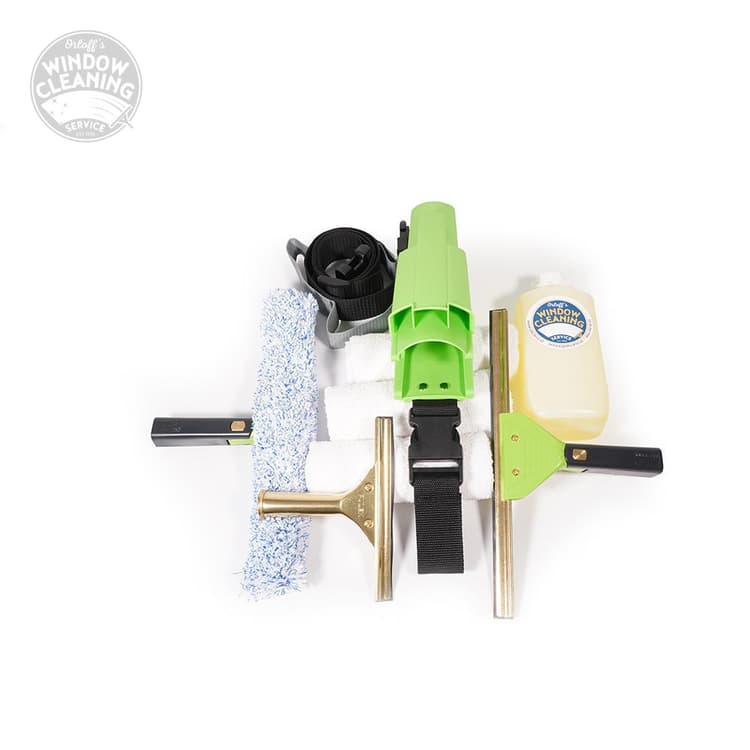
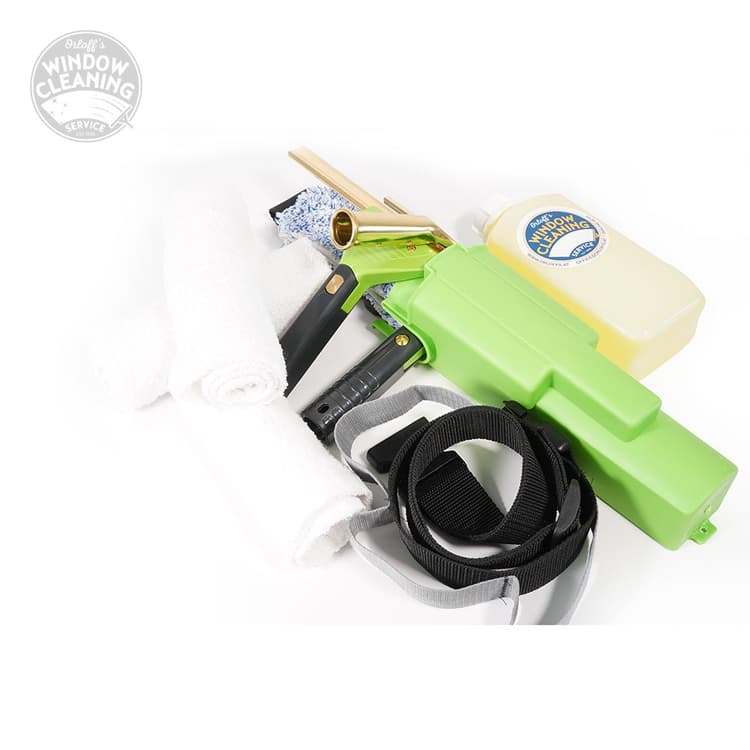
Tool Recommendations
T-bar applicator with microfibre cover
View on Amazon [coming soon]Professional squeegee with fresh rubber blade
View on Amazon [coming soon]Bucket with lukewarm water + 1 drop of mild pH-neutral dish soap per litre
View on Amazon [coming soon]Cleaning Frequency
Glass and frames: 2x per year minimum (Inside and out. Urban environments with traffic pollution or construction dust: quarterly.). Hardware cleaning: Twice per year (pH-neutral products only.). Hardware lubrication: Once per year (Dedicated maintenance grease or conservation oil.). Timber frames - conservation milk: Once per year. Timber surface refinishing: Every 3-5 years (Every 5 years with regular conservation milk use; every 3 years without it.). Gasket and seal inspection: Once per year, or after heavy storms. Drainage channels: Check and clear at each cleaning
Frequently Asked Questions
Field Notes
“Glass and frames: minimum twice per year; quarterly in urban environments with high pollution or construction dust. Hardware: clean twice per year with pH-neutral products; lubricate annually with dedicated maintenance grease. Timber frames: annual conservation milk application; refinishing every 3-5 years. Drainage channels: check and clear at every cleaning session. Protective film: remove within 1 month of installation - do not delay.”
Justin Orloff
What's next for you?
The Skill
New to window cleaning?
Start with the core techniques before tackling premium systems.
Start Learning →The Standard
Upskill your team
Covers every system, product type, and tricky scenario.
View The Standard →Manufacturer
Partner with Orloffs
Are you DAKO or a similar manufacturer? Let's create official cleaning guidance together.
Get in Touch →