
Europe · Profile System
Cortizo
🇪🇸 Spain · Last reviewed by Justin Orloff
Quick Facts
founded
1972
hq
Padrón, A Coruña, Galicia, Spain
primaryMaterials
Aluminium, PVC
glazingPartner
Own glazing production
marketTier
Premium
Brand at a Glance
- Founded: 1972
- HQ: Padrón, A Coruña, Galicia, Spain
- Market position: Number one aluminium systems manufacturer in Spain and Portugal; major European supplier
- Frame materials: Aluminium, PVC
- Key ranges: COR 60, COR 70, COR 70 Evolution, Vision Plus sliding, Millennium Plus, COR 4700
- Glazing options: Double and triple glazed. Thermally broken frames. Glass up to 48 mm thick. U-values from 1.0 W/m²K (triple glazed). Solar control glass available.
- Where they sell: Spain, Portugal, UK, Europe, and over 60 countries worldwide
- Maintenance kits: PREVENT BASE (anodised aluminium/basic PVC) and PREVENT COLOR (lacquered aluminium/foil-wrapped PVC) - available through authorised retailers
- Official care documentation: cortizo.com/en/paginas/part_limpieza
- Website: cortizo.com
Product Range
- COR 60
- COR 70 / COR 70 Evolution
- Vision Plus / COR 4700
- Millennium Plus
Why This System
Two finish types with two completely different sets of rules - Cortizo supplies separate PREVENT BASE (anodised) and PREVENT COLOR (lacquered) kits for a reason. Using the wrong product on the wrong finish is the most common damage I see. Thermally broken aluminium (RPT technology) has a polyamide barrier between the inner and outer profiles - aggressive chemicals that attack the polyamide strip can compromise the thermal break over time. Slim sightlines on the COR 70 (as narrow as 20 mm) mean less margin for error at the frame edge - squeegee technique matters more on slim-sightline systems. Coastal, industrial, and motorway locations require more frequent maintenance - Cortizo explicitly notes higher contamination rates in these environments. PVC ranges require their own approach - a product safe for aluminium may degrade PVC, and vice versa.
Step 1 of 2: Manufacturer Recommendations
Official Care Guidance
Source: Cortizo cleaning and maintenance documentation - cortizo.com/en/paginas/part_limpieza
Glass
- Clean with lukewarm water mixed with 2% neutral soap solution.
- Use a soft sponge, drying cloth, or absorbent paper.
- Gently rub the glass surface, then wipe dry with an absorbent cloth.
- Cortizo recommends repeating this operation monthly.
- Steam cleaning machines may be used on glass.
- Do not use sharp tools (knives, spatulas) on glass surfaces.
- Do not use steel wool or abrasive sponges.
- Do not use aggressive bathroom cleaners or lacquer solvents.
Aluminium Frames (Lacquered/Powder-Coated) - Use PREVENT COLOR kit
- Clean with lukewarm water and 2% neutral soap using a soft sponge.
- Wipe dry with an absorbent cloth after cleaning.
- Use the Cortizo PREVENT COLOR kit specifically for lacquered aluminium and foil-wrapped PVC.
- Do not use solvents, abrasive cleaners, or lacquer removers.
- Do not use steel wool or abrasive sponges.
Aluminium Frames (Anodised) - Use PREVENT BASE kit
- Clean with lukewarm water and 2% neutral soap using a soft sponge.
- Wipe dry with an absorbent cloth after cleaning.
- Use the Cortizo PREVENT BASE kit specifically for anodised aluminium and basic PVC finishes.
- Do not use alkaline or acid-based products on anodised surfaces.
- Do not use abrasive materials.
PVC Frames
- Clean with lukewarm water and 2% neutral soap using a soft sponge.
- No solvents - solvents degrade PVC permanently.
- No ammonia-based products.
- No bleach.
- PREVENT BASE kit covers basic PVC; PREVENT COLOR covers foil-wrapped PVC.
Hardware
- Lubricate all friction elements (hinges, handles, locks) every six months using clean, non-resinous grease or oil.
- Corner drives contain permanent grease and do not require additional lubrication.
- Check that all locking points engage correctly during each lubrication cycle.
Gaskets and Drainage
- Vacuum dust and debris from around seals and the chamber between the frame and the sash.
- Inspect seals annually for cracking, compression, or shrinkage.
- Clear drainage slots of any blockages at least every six months.
- Blocked drainage leads to water accumulation inside the frame channel, which accelerates corrosion and can cause seal damage.
Step 2 of 2: The Orloffs Protocol
The Orloffs Protocol
This is how I clean Cortizo windows. The tools and technique below come from 25 years of daily professional work on the glass. Every step has been tested on real installations and adapted specifically for Cortizo systems.
Pro Tools
My daily tool list. This is what I carry to every job.
Follow these steps in order. Each one builds on the last. This is the same sequence I use on every Cortizo installation.
- 1
Identify the Frame Finish Type First
Before cleaning, confirm whether your Cortizo frames are lacquered (powder-coated) or anodised. Anodised aluminium has a metallic sheen with visible grain - it looks like raw metal with a slight colour. Powder-coated aluminium has a smooth, uniform painted appearance.
This determines which Cortizo maintenance kit to use. PREVENT BASE for anodised aluminium and basic PVC. PREVENT COLOR for lacquered aluminium and foil-wrapped PVC. Using the wrong kit on the wrong finish causes permanent damage.
- 2
Detail the Frame First
Before touching the glass, wipe down the frame edges with a damp microfibre cloth and mild soapy water. Dust, pollen, and grime collect on the frame surface around the glass.
When the squeegee rubber reaches the frame edge, it picks up that dirt and drags it back across the glass as a streak. Clean the frame first on every window. For Cortizo's slim-sightline profiles like the COR 70, this step requires precision - the frame edge is narrow.
- 3
Agitate the Glass
Dip the T-bar applicator fully into the soapy water. Apply the solution across the entire glass surface in overlapping strokes, covering every corner. The goal is to dissolve the dirt so the squeegee can shave it away cleanly.
Never clean Cortizo windows in direct sunlight. The soap water dries faster than you can squeegee it off, baking a film onto the glass.
- 4
Edge Detail Before Squeegeeing
After agitating the glass, run a dry corner of your cotton rag along the top edge and both side edges of the window frame. This removes the pooled soap solution sitting on the frame that the squeegee would otherwise pick up and redistribute.
This step is especially important on Cortizo sliding and patio door systems where the frame channels are close to the glass edge.
- 5
The Three Squeegee Turns
Side to side: start at the top edge with a dry rubber. Work across the glass in a straight horizontal line. Tilt the squeegee so the soap water spills from one side of the channel only. Wipe the rubber dry after each line. Overlap slightly. Repeat to the bottom.
Top to bottom: same approach in vertical lines. Start in the top corner with a dry rubber. Tilt to direct water to the lower side. Wipe dry after each line. Repeat across.
The J tune: the continuous professional motion - top to bottom in one smooth, unbroken movement. Your thumb guides the rotation as you reach the end of each horizontal pass. When this motion is in muscle memory, it is the fastest approach for any size of Cortizo window or door.
- 6
Final Edge Detailing
After squeegeeing, there is always a thin line of water along the bottom edge and at the sides where the squeegee cannot reach. Take a dry cotton rag folded to a clean corner and detail these edges in one smooth pass.
Get a finger into the edge where the glass meets the frame seal and remove any pooled solution sitting there. Left to dry, it produces a white residue mark that becomes visible when sunlight hits the glass.
- 7
Hardware and Drainage
Every six months, apply clean non-resinous grease or oil to all hinges, handles, and locking points. Corner drives contain permanent grease and do not need additional lubrication - apply oil only to friction elements.
Clear the drainage slots in the frame base at each cleaning visit. Blocked drainage is the most common cause of water damage to Cortizo aluminium frame bases over time.
Pro Tips
- Identify the finish type before anything else - anodised and lacquered aluminium look similar when installed but require completely different products. When in doubt, check the original documentation or contact the installer.
- Cortizo recommends monthly glass cleaning for best results - more frequent than most manufacturers. In coastal, motorway, or industrial locations this is especially important to prevent atmospheric deposits from bonding to the finish.
- The PREVENT BASE and PREVENT COLOR kits are available through authorised Cortizo retailers - using the correct kit is the safest approach and the one the manufacturer endorses.
- Corner drives in Cortizo hardware contain permanent grease and should never be lubricated with additional product - only oil the friction elements.
- On the COR 70's 20 mm exterior sightlines, the frame edge is very narrow. Squeegee control matters more here than on wider-profile systems.
What NOT To Do
- Do not use sharp tools such as knives or spatulas on glass or frame surfaces.
- Do not use steel wool or abrasive sponges on glass or aluminium.
- Do not use aggressive bathroom cleaners on any Cortizo surface.
- Do not use lacquer solvents or paint strippers on frames or glass.
- Do not use ammonia-based products.
- Do not use bleach on PVC or aluminium frames.
- Do not use the wrong maintenance kit - PREVENT BASE is for anodised aluminium and basic PVC; PREVENT COLOR is for lacquered aluminium and foil-wrapped PVC.
- Do not block or ignore clogged drainage slots.
- Do not skip hardware lubrication - seized hinges on tilt-and-turn systems require professional adjustment to correct.
- Do not clean in direct sunlight.
- Do not pressure wash Cortizo windows.
Bundle Kits and Tool Recommendations
Bundle Kit
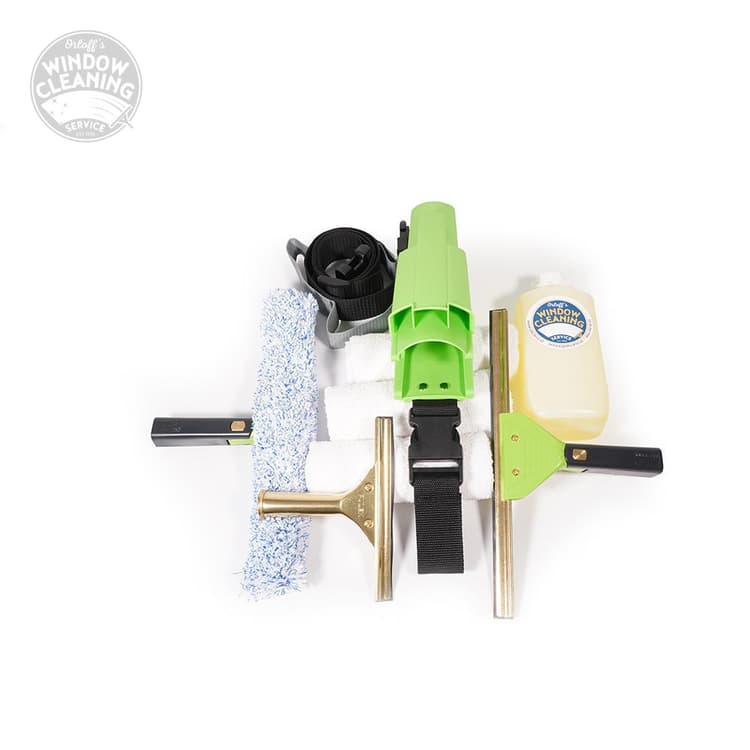
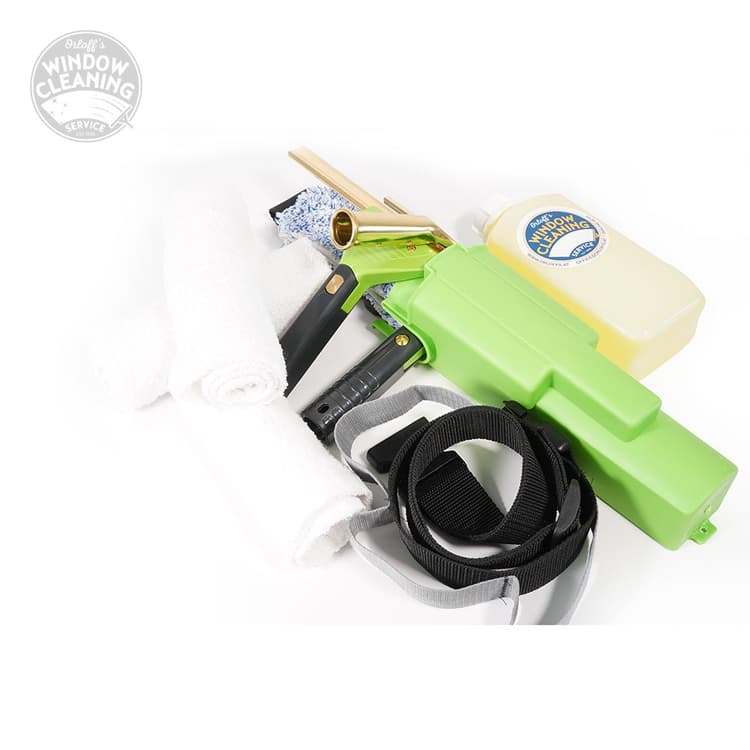
Tool Recommendations
T-bar applicator with microfibre sleeve
View on Amazon [coming soon]Professional squeegee with fresh rubber blade
View on Amazon [coming soon]Bucket with lukewarm water and 2% neutral soap
View on Amazon [coming soon]Cleaning Frequency
Glass and frames: Twice per year minimum (Cortizo recommends monthly glass cleaning for best results.). Urban, coastal, or industrial environments: Quarterly (Cortizo explicitly notes higher contamination in these locations.). Hardware lubrication: Every six months (Clean non-resinous oil or grease on friction elements only. Corner drives do not need additional lubrication.). Drainage slot clearance: Every six months minimum. Seal and gasket inspection: Annually, and after heavy storms. Chamber vacuuming (between frame and sash): Every six months
Frequently Asked Questions
Field Notes
“Glass and frames: minimum twice per year - Cortizo recommends monthly for best results. Coastal, industrial, and motorway locations: quarterly minimum. Hardware lubrication (friction elements only): every six months. Drainage slot clearance: every six months minimum. Seal inspection: annually and after heavy storms.”
Justin Orloff
What's next for you?
The Skill
New to window cleaning?
Start with the core techniques before tackling premium systems.
Start Learning →The Standard
Upskill your team
Covers every system, product type, and tricky scenario.
View The Standard →Manufacturer
Partner with Orloffs
Are you Cortizo or a similar manufacturer? Let's create official cleaning guidance together.
Get in Touch →