
Europe · Window Manufacturer
Capoferri Serramenti
🇮🇹 Italy · Last reviewed by Justin Orloff

Quick Facts
founded
Established Italian luxury joinery manufacturer
hq
Bergamo, Italy
primaryMaterials
Solid timber, timber-aluminium, aluminium for bespoke facades
glazingPartner
Project-specified premium glazing, often from Italian and European suppliers
marketTier
Luxury
Brand at a Glance
- Country: Italy
- Base: Bergamo, Lombardy
- Market position: Luxury bespoke joinery - windows, doors, facades
- Primary material: Solid timber and timber-aluminium; some full-aluminium for commercial facades
- Typical finish: Hand-applied paint or stain on timber inner; custom RAL or NCS powder-coat on aluminium outer
- Product scope: Bespoke windows, entrance doors, curtain wall facades, balustrades, interior joinery
- Hardware: Premium Italian and German hardware - Fusital, Colombo, Maco, Geze depending on specification
- Glazing: Triple glazing with specialist coating packages on most premium configurations
- Market: High-end residential Italy and international; luxury hospitality; prestige commercial
- Website: capoferri.it
Product Range
- Bespoke Timber Windows
- Timber-Aluminium Systems
- Entrance and Interior Doors
- Facade and Curtain Wall
Why This System
Capoferri windows are bespoke products - dimensions, timber species, finish, hardware, and glazing are all project-specific. There is no standard Capoferri window that can be described in generic terms. The hand-applied paint and stain finishes on Capoferri timber inner frames are professional decorating finishes, not factory-applied industrial coatings - they are beautiful but require careful handling near water and cleaning products. Hardware on Capoferri installations is often architect-specified from premium Italian suppliers (Fusital, Colombo) and is part of the design language of the project - it needs to be maintained, not just cleaned. Glass specification on luxury installations frequently includes laminated glass, acoustic glass, or specialist solar control units with multiple coating layers - the glass cleaning approach must account for this. Capoferri facade systems in commercial and hospitality settings involve structural silicon joints, unitised panels, and drainage systems that require specialist knowledge to clean safely.
Step 1 of 2: Manufacturer Recommendations
Official Care Guidance
Source: ORLOFFS PROFESSIONAL GUIDANCE - BASED ON CAPOFERRI PUBLISHED INFORMATION AND 25 YEARS FIELD EXPERIENCE
Glass
- Lukewarm water with a small amount of mild soap. Minimal solution volume - keep solution away from the timber inner frame and from structural silicon joints on facade installations.
- Microfibre T-bar on the wash, professional squeegee on the pull. Very fresh rubber - luxury glass installations show squeegee lines from worn rubber more clearly than standard windows.
- No razor blades on any Capoferri glass - assume specialist coatings (laminated, acoustic, solar control, low-E) on all luxury installations unless you have confirmed the specification from the project documentation.
- Edge detail with a soft cloth before squeegeeing - do not allow solution to sit against the edge seal of the glass unit or at the junction of the glass and the timber rebate.
Frames
- Aluminium outer face: damp cloth with pH-neutral cleaner, wiped dry. No abrasive pads. No acid or concentrated alkali products on bespoke powder-coat finishes.
- Timber inner face: barely damp cloth only, dried immediately and completely. Do not spray cleaners onto or near the timber inner surface.
- Hardware surfaces (handles, hinges, escutcheons): wipe with a damp cloth and dry immediately. No metal polishes on designer hardware finishes - they can remove the surface coating on brushed or PVD-finished hardware.
- Silicon joints on facade systems: do not disturb, cut into, or apply cleaning products directly to structural silicon beads. Clean the glass and aluminium up to the silicon joint; clean around it, not into it.
Hardware
- Wipe all hardware surfaces with a damp cloth and dry immediately. Pay attention to the back face of handles and the hinge knuckle - cleaning solution pools in these areas.
- Lubricate all moving points - hinges, pivot mechanisms, locking bars - with a light machine oil or purpose-made hardware lubricant once per year. Consult the project documentation if available for the specific lubricant recommended for the hardware specification.
- If hardware finish shows any dullness or discolouration, do not attempt to restore it with metal polish. Flag to the owner - the hardware may need specialist attention from the original supplier.
Step 2 of 2: The Orloffs Protocol
The Orloffs Protocol
This is how I clean Capoferri Serramenti windows. The tools and technique below come from 25 years of daily professional work on the glass. Every step has been tested on real installations and adapted specifically for Capoferri Serramenti systems.
Pro Tools
My daily tool list. This is what I carry to every job.
Follow these steps in order. Each one builds on the last. This is the same sequence I use on every Capoferri Serramenti installation.
- 1
Preparation and assessment
On a first visit to a Capoferri installation, take time to identify the materials and finishes before starting. Timber species, handle finish, glass specification, and any facade system details should be noted.
Check project documentation if available. Luxury installations often come with a maintenance file from the manufacturer or architect. If it exists, it takes precedence over generic guidance.
Inspect all glass edge seals and silicon joints before washing. Note any issues - do not start cleaning on a window with a compromised seal or disturbed silicon joint without flagging it to the building manager first.
- 2
Glass wash
Apply minimal solution to the glass with the microfibre T-bar. Control the water volume carefully - on luxury installations with painted timber inner frames, flooding is the main risk.
Work panel by panel rather than section by section on facade systems. Complete the full sequence on one panel before moving to the next.
Rinse the T-bar cover between each panel. A cover carrying grime from one panel scratches the glass on the next - this is unacceptable on luxury glass.
- 3
Edge detail
Before squeegeeing, run a lint-free cloth along all four edges of each glass panel. Solution at the edge of the glass runs onto the frame during the squeegee pass - remove it before it gets there.
On timber inner frames, dry the rebate edge immediately after the edge detail. Do not leave moisture on the painted timber surface even briefly.
On facade silicon joints, dry the glass surface within 5 mm of the silicon bead. Do not touch the bead itself.
- 4
Squeegee
Use a squeegee sized for each panel. On bespoke shaped windows (arched, trapezoid), use the largest squeegee that fits within the glass area without touching the frame.
Maintain consistent pressure. On laminated glass, lighter pressure than on standard glass - the glass is slightly more flexible and a heavy squeegee pass on a large unit can cause a faint drum-like vibration. This is not damaging, but it unsettles the edge seal over time with heavy repeated pressure.
Finish each panel with a dry cloth edge wipe. On luxury glass, the final detail work takes more time than on standard residential glass - build this into the job estimate.
- 5
Frame and hardware
Aluminium outer face: damp cloth with pH-neutral cleaner, wiped dry. Work methodically around the frame perimeter. Pay attention to shadow gaps between the frame and adjacent wall surface - grime accumulates there.
Timber inner face: barely damp cloth, dried immediately. On dark-stained or oiled timber, a clean dry cloth shows any residue left by the damp wipe - use this as your quality check.
Hardware: wipe with a damp cloth, dry with a separate clean cloth. Do not use the same cloth that has been on the aluminium frame or the timber face - cross-contamination is a risk on precision hardware finishes.
- 6
Final inspection
Walk every panel after cleaning and check for streaks, frame marks, and any solution residue on hardware. At the luxury tier, the standard is perfection - rework anything that does not meet it before leaving.
Operate each window or door through its full range. Check handle action, locking engagement, and seal compression. Note any stiffness or resistance.
Document any maintenance issues identified during the clean - seal condition, timber finish condition, hardware function - and provide this to the building manager or owner. At the luxury tier, this is part of the service.
Pro Tips
- On dark-stained timber inner frames, water marks are invisible when wet but become visible as they dry - work in small sections and dry immediately rather than washing a large area and drying it after.
- Fusital and Colombo handles with a brushed or PVD finish show fingerprints from the cleaning process itself - always dry hardware with a clean cloth as the last step, not before the final inspection.
- If the glass on a Capoferri facade has a permanent haze or fogging that does not clean off, it may be internal condensation in a failed unit - confirm before doing remedial cleaning work that will not resolve it.
- On lift-and-slide or tilt-and-slide systems at this tier, the threshold seal is precision-machined and should not be cleaned with anything abrasive - a soft damp cloth along the threshold channel is sufficient.
- Acoustic glass in hospitality and residential luxury installations has a visible PVB interlayer at the edge - do not mistake this for a failed seal. The PVB interlayer is part of the laminated unit construction.
- On oiled timber inner frames, a very light application of the same oil used on the frame (typically Danish oil or Rubio Monocoat) on a barely damp cloth at the annual clean maintains the finish without a full recoat.
- On bespoke shaped windows, use a detail squeegee or a narrow rubber pull-tool for corners and arched sections rather than trying to wrap a standard squeegee around the shape - it leaves a cleaner result.
What NOT To Do
- No razor blades on any glass in a luxury installation - assume specialist coatings on all Capoferri glass.
- No solvent-based or acidic cleaners near timber inner frames - they damage hand-applied paint and stain finishes.
- No abrasive pads or cloths on aluminium outer faces or designer hardware finishes.
- Do not apply cleaning products directly to structural silicon joints on facade systems.
- Do not use metal polishes on brushed or PVD-finished hardware - they strip the surface treatment.
Bundle Kits and Tool Recommendations
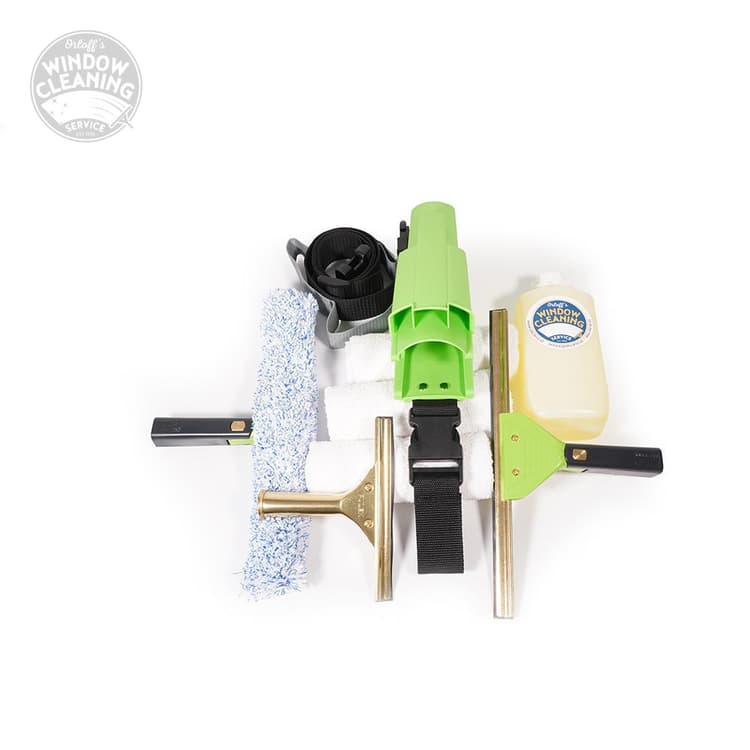
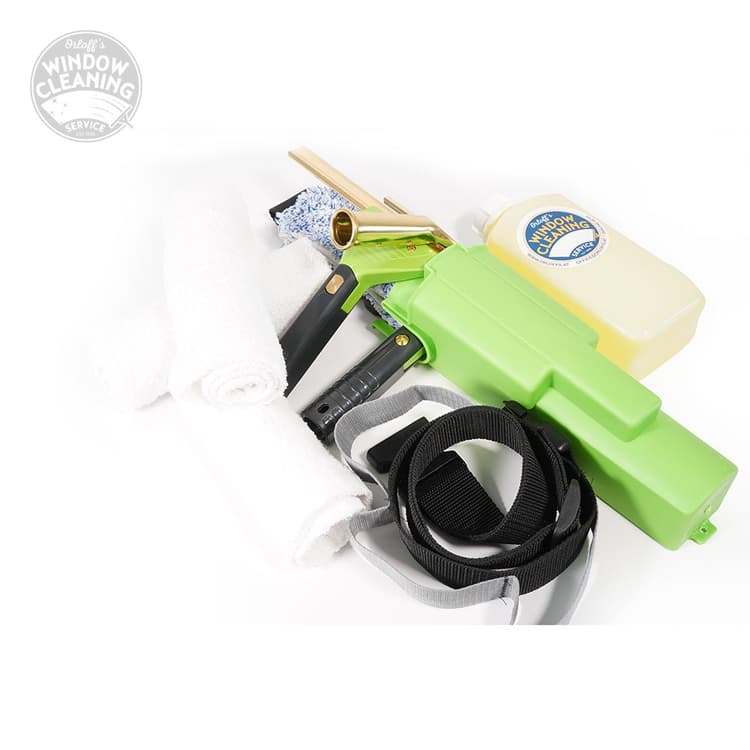
Bundle Kit
Tool Recommendations
Ettore Master squeegee, multiple widths
View on Amazon [coming soon]Microfibre T-bar applicator, narrow format
View on Amazon [coming soon]pH-neutral low-foaming glass and frame cleaner
View on Amazon [coming soon]Cleaning Frequency
Glass: 4x per year recommended (Quarterly for hospitality and luxury residential. Spring and autumn minimum for secondary properties.). Frames and hardware: Every glass clean (Frame and hardware wipe at every visit. Annual hardware lubrication.). Facade drainage: Every clean (Drainage channels in facade systems need to be checked and cleared at every visit - blockages cause water ingress into unitised panels.). Timber finish inspection: Annual (Oiled and painted timber inner faces need a specialist inspection once per year - the cleaning contractor should flag any finish deterioration as part of the annual visit.)
Frequently Asked Questions
Field Notes
“The most common damage on luxury Italian joinery is water marks on painted timber inner frames caused by using too much solution volume on the glass - technique discipline on water control matters more here than on any other system. Capoferri hardware handles often have a complex geometry with shadow gaps and recessed details that collect cleaning solution - dry these areas with a soft brush before the final cloth wipe. On facade installations, the visible result after cleaning is assessed by the client looking up from street level or from inside - streaks that would be acceptable on standard residential glass are immediately visible on large luxury facade panels at eye level.”
Justin Orloff
What's next for you?
The Skill
New to window cleaning?
Start with the core techniques before tackling premium systems.
Start Learning →The Standard
Upskill your team
Covers every system, product type, and tricky scenario.
View The Standard →Manufacturer
Partner with Orloffs
Are you Capoferri Serramenti or a similar manufacturer? Let's create official cleaning guidance together.
Get in Touch →