
Europe · Window Manufacturer
Bruckner Fenster und Türen
🇦🇹 Austria · Last reviewed by Justin Orloff
Quick Facts
founded
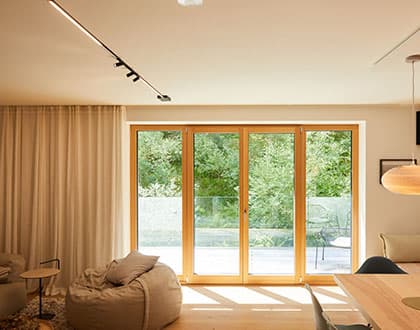
Regional Austrian manufacturer, established presence in the timber-alu segment
hq
Austria
primaryMaterials
Timber core with aluminium outer cladding, solid timber
glazingPartner
Glazing specified per project, typically from premium Austrian suppliers
marketTier
Premium
Brand at a Glance
- Country: Austria
- Market position: Premium regional timber and timber-alu windows and doors
- Primary material: Timber core with aluminium outer cladding (timber-alu) and solid timber
- Typical finish: Powder-coated aluminium outer, painted or oiled timber inner
- Product scope: Windows, entrance doors, sliding systems, special formats
- Market: Austrian residential and premium new-build, high-end renovation
- Hardware: Premium European hardware - Maco, Siegenia, Roto depending on specification
- Glazing: Triple glazing standard on premium configurations, double on entry-level
- Sealing: Multi-stage EPDM sealing typical of Austrian premium tier
- Website: bruckner-fenster.at
Product Range
- Timber-Aluminium Windows
- Solid Timber Windows
- Entrance Doors
- Sliding and Lift-and-Slide Systems
Why This System
Timber-alu construction means two different cleaning requirements on the same window - the aluminium outer face responds to standard metal-safe cleaners, the timber inner face requires wood-compatible products and must never be left wet. Austrian timber windows typically use triple glazing with warm-edge spacers as standard on premium configurations - the glass unit is thicker and heavier than standard double-glazed residential units. The junction between the aluminium cladding and the timber frame is sealed at the factory but is a point of long-term vulnerability if cleaning water is allowed to stand at the join. Hardware on Bruckner windows is typically from premium Austrian and German suppliers (Maco, Siegenia) and is machined to tight tolerances - it operates smoothly when maintained but degrades noticeably if lubrication is neglected. Regional Austrian manufacturers like Bruckner often use custom colour and finish specifications for individual projects - the powder-coat on the aluminium outer may be a non-standard RAL colour that cannot be touched up from stock.
Step 1 of 2: Manufacturer Recommendations
Official Care Guidance
Source: ORLOFFS PROFESSIONAL GUIDANCE - BASED ON BRUCKNER PUBLISHED INFORMATION AND 25 YEARS FIELD EXPERIENCE
Glass
- Lukewarm water with a small amount of mild soap or a dedicated glass cleaner. Keep water away from the timber inner frame during the glass wash.
- Microfibre T-bar applicator on the wash, professional squeegee on the pull. Fresh rubber blade - triple-glazed units have a slightly different flex than standard double-glazed and a worn rubber blade leaves marks.
- Check for coatings before using any hard tool on the glass. Triple-glazed premium units commonly carry low-E or solar control coatings on inner faces - no razor blades on coated glass.
- Wipe the rebate edge dry after squeegeeing - solution that sits in the timber rebate groove softens the paint or finish at the glass edge over time.
Frames
- Aluminium outer face: wipe with a damp cloth and pH-neutral cleaner. No abrasive pads. No acid or strong alkali products.
- Timber inner face: wipe with a lightly damp cloth only. Dry immediately and completely. Do not use spray cleaners on bare or painted timber.
- The alu-timber junction at the frame perimeter: wipe dry after every clean. Do not allow water to pool at this joint.
- Inspect painted timber faces for any chips or bare patches at each visit - bare timber exposed to condensation or cleaning water will absorb moisture and raise the grain under the paint edge.
Hardware
- Wipe all visible hardware with a damp cloth and dry immediately. Steel components left wet rust quickly in the gap between the hardware and the frame face.
- Lubricate all moving points - hinges, locking bars, tilt-and-turn mechanisms - with a purpose-made window hardware lubricant or light machine oil once per year.
- Check that all locking points engage cleanly with smooth handle operation. Resistance at the handle is the first sign that lubrication is needed.
Step 2 of 2: The Orloffs Protocol
The Orloffs Protocol
This is how I clean Bruckner Fenster und Türen windows. The tools and technique below come from 25 years of daily professional work on the glass. Every step has been tested on real installations and adapted specifically for Bruckner Fenster und Türen systems.
Pro Tools
My daily tool list. This is what I carry to every job.
Follow these steps in order. Each one builds on the last. This is the same sequence I use on every Bruckner Fenster und Türen installation.
- 1
Preparation
Identify which face of each window is aluminium (exterior) and which is timber (interior). The approach differs for each and mixing them up is a common cause of damage on timber-alu systems.
Check drainage slots at the base of the frame and, on sliding systems, the threshold channel. Clear any debris dry before washing begins.
Inspect the rebate seal around the glass unit on each window. Note any sections where the seal is lifting or pulling away from the glass - flag these to the owner before cleaning, not after.
- 2
Glass wash
Apply soap solution to the glass with the microfibre T-bar. Work top to bottom. Keep solution off the timber inner frame - apply to the glass only.
On large-format sliding panels, work in sections. A T-bar that covers the full width in one pass is faster but harder to control around the frame edges on wide panes.
Allow 30 to 60 seconds dwell time on soiled glass. Triple-glazed units run slightly cooler on the inner face and solution dries slower - dwell time is less critical than on single-glazed, but do not leave solution to dry on the glass.
- 3
Edge detail
Before squeegeeing, run a damp cloth along the rebate edge on the timber inner frame to remove any solution that has reached the frame. Dry this immediately.
On the aluminium outer face, the rebate groove is shallower and easier to manage - a quick wipe with a damp cloth is sufficient before the squeegee pass.
Wipe the top frame rail dry before squeegeeing - drips from the top frame during the squeegee pass land on already-cleaned glass below.
- 4
Squeegee
Cut in at the top of the glass with the squeegee, angling the rubber away from the timber rebate. Side-to-side passes work well on standard panel sizes. On large sliding panels, a fanning technique covers more area per pass.
Wipe the rubber dry on a clean cloth after every pass. Solution from the rubber deposits as a stripe on the frame face if the rubber is not kept clean.
Finish with a single pass along the bottom edge. Direct water away from the timber rebate and toward the drainage slot.
- 5
Frame wipe-down
Aluminium outer face: wipe with a damp cloth and pH-neutral cleaner, working top to bottom. Rinse with clean water on a separate cloth. Buff dry.
Timber inner face: wipe with a barely damp cloth only. Dry completely and immediately with a dry cotton cloth. Do not leave any moisture on painted or oiled timber surfaces.
The alu-timber junction at the frame perimeter: wipe dry after cleaning both faces. Run a dry cloth along the junction line to remove any moisture that has migrated to the join.
- 6
Hardware and final check
Wipe all visible hardware with a damp cloth, then dry immediately. Check all locking points by operating the handle through the full range.
Lubricate all moving hardware points annually. On the first visit of the year, apply lubricant to hinges, espagnolette rods, and tilt-and-turn mechanisms before operating them - operating stiff hardware dry wears the mechanism faster.
Do a final check of the alu-timber junction and the rebate seal. Any sign of water ingress, swelling timber, or lifting paint near the joint needs to be flagged to the owner as a maintenance issue, not a cleaning issue.
Pro Tips
- Keep a separate T-bar cover for the glass and never use it on timber frames - fibres picked up from painted timber deposit on the glass on the next application pass.
- On oiled timber inner frames, check that the oil finish is intact at the glass rebate edge - bare timber in the rebate absorbs condensation and cleaning water and raises the grain over time.
- The powder-coat on Bruckner's aluminium outer is high quality but will dull over years without occasional treatment with a dedicated aluminium or powder-coat restorer - flag this to owners at the annual visit.
- Sliding system thresholds accumulate grit and debris that wear the threshold seal - brush the threshold channel clear at every clean, not just when it looks dirty.
- On triple-glazed units, a faint internal reflection is normal on certain glass specifications - do not attempt to clean it off. Confirm with the owner before any remedial action.
- If the outer aluminium cladding has surface oxidation or white powdering, a dedicated aluminium cleaner resolves it - standard glass cleaning products will not.
- Timber inner frames that show raised grain or paint lifting near the bottom rail have absorbed water at some point - flag this as a maintenance issue, as it indicates drainage is not working correctly.
What NOT To Do
- No water left standing on the timber inner face - dry completely after every contact with moisture.
- No acid or strong alkali cleaners on the powder-coated aluminium outer - they etch the finish and expose bare aluminium to the weather.
- No abrasive pads on aluminium or timber faces - they scratch the powder-coat and damage painted timber surfaces.
- Do not allow cleaning water to pool at the alu-timber junction - wipe the join dry at the end of every clean.
- Do not use silicone spray on hardware - it attracts dust and gums up precision mechanisms over time. Use purpose-made hardware oil.
Bundle Kits and Tool Recommendations
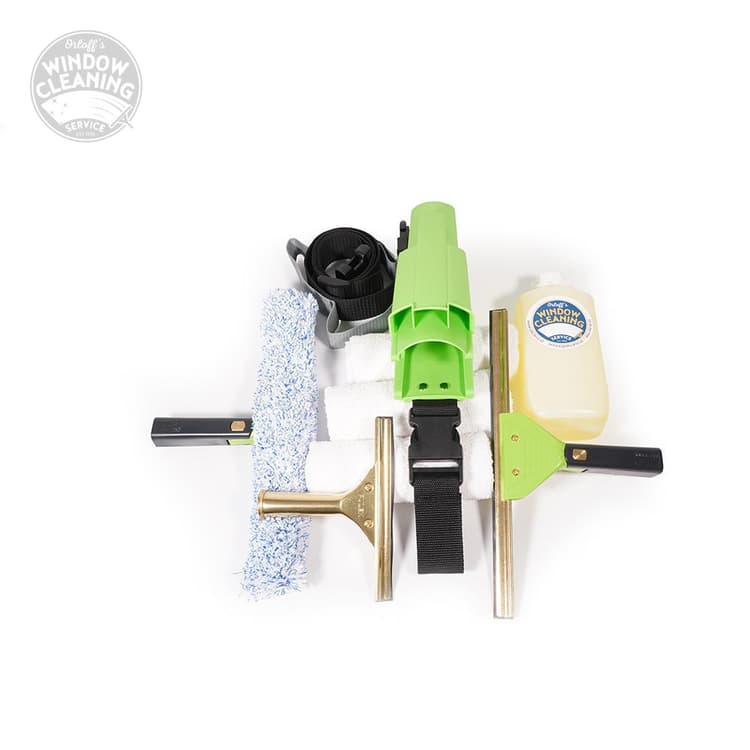
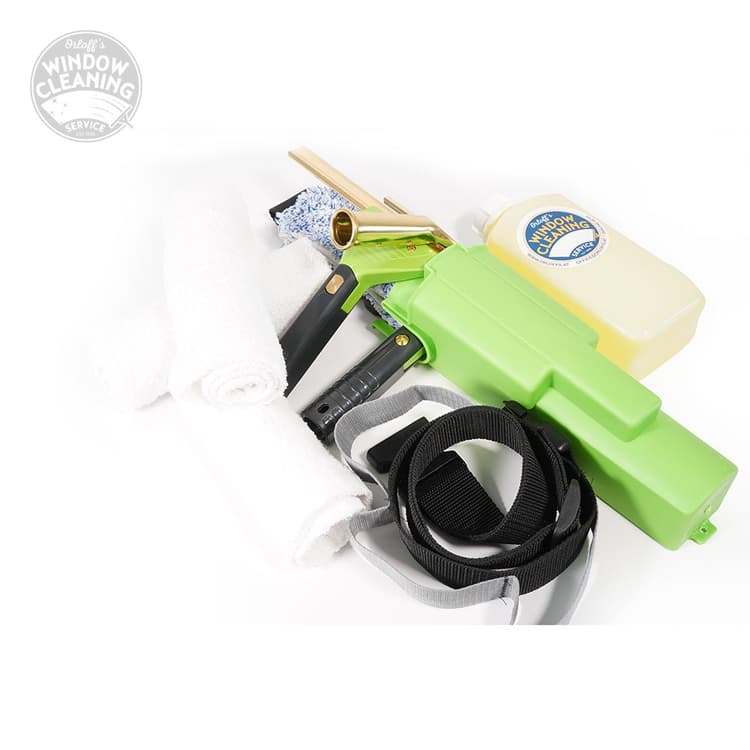
Bundle Kit
Tool Recommendations
Unger ErgoTec Ninja squeegee
View on Amazon [coming soon]Microfibre T-bar applicator with clean cover
View on Amazon [coming soon]pH-neutral aluminium-safe frame cleaner
View on Amazon [coming soon]Cleaning Frequency
Glass: 2x per year minimum (Spring and autumn. South-facing elevations and urban locations benefit from quarterly cleaning.). Aluminium frames: 2x per year (Same visit as glass. Annual treatment with aluminium restorer on exposed elevations.). Timber inner frames: As needed (Light wipe at each glass clean. Full inspection and oiling or repainting by a joinery specialist every 3 to 5 years.). Hardware lubrication: Once per year (All moving points. First visit of the year on the autumn or spring clean.)
Frequently Asked Questions
Field Notes
“On Austrian timber-alu installations, the inside face of the frame is almost always the higher-risk surface - the aluminium outer is robust, the painted or oiled timber inner is not forgiving of wet technique. Lift-and-slide threshold seals on premium Austrian systems are machined to very fine tolerances - grit in the threshold channel damages the seal on the first operation after a dirty clean. The alu-timber junction line is where problems start on neglected windows - a dry wipe at the end of every clean takes 30 seconds and prevents the kind of water damage that costs thousands to repair.”
Justin Orloff
What's next for you?
The Skill
New to window cleaning?
Start with the core techniques before tackling premium systems.
Start Learning →The Standard
Upskill your team
Covers every system, product type, and tricky scenario.
View The Standard →Manufacturer
Partner with Orloffs
Are you Bruckner Fenster und Türen or a similar manufacturer? Let's create official cleaning guidance together.
Get in Touch →