
Europe · Window Manufacturer
Bøjsø Døre & Vinduer
🇩🇰 Denmark · Last reviewed by Justin Orloff
Quick Facts
founded
1972 (by Bøje Sørensen, near Billund, Denmark)
hq
Højagervej 5-7, 6623 Vorbasse, Denmark
primaryMaterials
Solid heartwood pine (99% core timber)
glazingPartner
In-house
marketTier
Premium - heritage and renovation specialist
Brand at a Glance
- Founded: 1972 (by Bøje Sørensen, near Billund, Denmark)
- HQ: Højagervej 5-7, 6623 Vorbasse, Denmark
- Market position: Denmark's premium coupled-window specialist for heritage and renovation
- Frame materials: Solid heartwood pine (99% core timber)
- Key ranges: Koblede vinduer (coupled windows), Termovinduer (thermal windows), Sprossevinduer (muntin windows), Palævinduer (palace windows), Facadedøre (facade doors), Terrassedøre (terrace doors)
- Glazing options: Coupled construction: single outer pane with double inner energy pane. Low-energy, sound-reducing, solar-control, machine-drawn heritage glass, and textured/ornamental glass.
- Warranty: 20-year warranty on all coupled windows (maintenance-conditional)
- Where they sell: Denmark, primarily renovation and heritage building market
- Parent company: Inwido Group (acquired 2017)
- Official care documentation: boejsoe.dk/teknisk-info/montage-og-vedligeholdelse/
Product Range
- Koblede vinduer (Coupled Windows)
- Termovinduer (Thermal Windows)
- Sprossevinduer (Muntin Windows)
- Palævinduer (Palace Windows)
- Facadedøre & Terrassedøre
Why This System
Every Bøjsø window is custom-made to order - no standard off-the-shelf sizes or configurations. The coupled-window construction creates two separate glass surfaces and an air cavity between them - cleaning requires opening both frames. Heritage glass options use machine-drawn glass with linseed oil putty in glazing bars - softer than modern float glass and intolerant of abrasive tools. The Teknos four-stage acrylic paint system is durable but solvent-sensitive - solvents, ammonia, and bleach destroy it. The 20-year warranty on coupled windows is conditional on correct timber surface maintenance and following the repainting schedule.
Step 1 of 2: Manufacturer Recommendations
Official Care Guidance
Source: BØJSØ OFFICIAL MAINTENANCE DOCUMENTATION
Glass
- Clean glass with a mild soap solution and a soft cloth.
- Do not use harsh cleaning agents or scouring pads - these damage the glass surface and the surrounding putty.
- Do not use abrasive tools of any kind on glass or glazing bars.
- For the coupled construction, open the frames using the included Bøjsø tool and clean between the frames.
- Contact Bøjsø directly for guidance on machine-drawn heritage glass cleaning.
Timber Frames
- Clean timber frames with a mild soapy water solution and a soft cloth.
- Do not use solvents, ammonia-based products, or bleach on timber surfaces - these attack the Teknos acrylic paint system and the linseed-based putty.
- Do not use abrasive pads or scouring materials on painted surfaces.
- Timber frames require periodic repainting. The Teknos diffusion-open acrylic system allows long intervals between full repaints - the exact schedule depends on exposure and climate.
- For linseed oil-painted heritage windows, recoat with compatible linseed oil paint to preserve the diffusion-open character of the finish.
- Wooden door thresholds require annual treatment with cold-pressed linseed oil with added fungicide or hardwood oil to prevent deterioration.
Hardware
- Oil all hinges and locking mechanisms 1-2 times per year.
- Use acid-free oil or grease on all moving parts.
- Most Bøjsø hinges have pre-drilled holes specifically for oil injection.
- Do not use general-purpose lubricants that leave sticky residues - these attract dust and grit.
Gaskets and Seals
- Inspect seals and gaskets once per year, or after heavy storms.
- The linseed oil-based putty in heritage glazing bars is flexible but requires protection - do not allow water to sit in contact with glazing bar putty over winter.
- Contact your Bøjsø installer if gaskets are damaged or compressed flat.
Coupled Window Cavity
- Open the coupled frames regularly and clean the cavity between the outer and inner frame.
- Condensation between the coupled frames can appear seasonally - particularly after heavy rain or on winter mornings - and is normal. It typically dissipates quickly.
- If condensation persists in the cavity over extended periods, contact your installer.
Step 2 of 2: The Orloffs Protocol
The Orloffs Protocol
This is how I clean Bøjsø Døre & Vinduer windows. The tools and technique below come from 25 years of daily professional work on the glass. Every step has been tested on real installations and adapted specifically for Bøjsø Døre & Vinduer systems.
Pro Tools
My daily tool list. This is what I carry to every job.
Follow these steps in order. Each one builds on the last. This is the same sequence I use on every Bøjsø Døre & Vinduer installation.
- 1
Detail the frame edges first
Before touching the glass, wipe the frame edges with a damp microfibre cloth and mild soapy water. Timber frames with putty glazing bars need a gentle touch here - damp, not wet. Do not let water pool in the putty grooves.
When the squeegee crosses the glass surface, its rubber edge contacts the frame. Any grit or dirt on the frame gets dragged across the clean glass as a streak. Clean the frame first, every time.
- 2
Agitate the glass
Dip your T-bar applicator fully into soapy water and apply the solution across the whole glass surface using overlapping strokes. The goal is to dissolve and release the dirt from the glass before the squeegee shaves it away.
If dirt is not fully dissolved first, the remaining grit gets dragged across the surface by the squeegee. This causes smearing and, on machine-drawn heritage glass, can leave fine scratches. Take your time with this step.
Never clean Bøjsø windows in direct sunlight. The soap solution dries before you can squeegee it off, leaving a baked-on residue that is harder to remove than the original dirt.
- 3
Detail the frame edges again before squeegeeing
Run a dry corner of your cotton rag along the top and both side edges of the glass before you start squeegeeing. This removes pooled soap water from the frame surface.
When the squeegee reaches those edges, it will not pick up dirty residue and drag it back across the clean glass. This step takes ten seconds and prevents most streaks.
- 4
The three squeegee turns
Side to side: start at the top edge with a dry rubber. Work across the glass in a straight horizontal line. Tilt the squeegee so soap water spills from only one side of the channel. Wipe the rubber dry after each pass. Overlap slightly into the next line down.
Top to bottom: the same principle in vertical lines. Start in the top corner with a dry rubber. Tilt to direct water to the lower side. Wipe the rubber dry after each line. Overlap into the next line across.
The J tune: a continuous motion from top to bottom in one smooth, unbroken movement. Your thumb guides the rotation as you reach the end of a horizontal pass. Rotate your wrist so the squeegee turns and continues down. When this is in your muscle memory, it is the fastest and most consistent approach for any window size.
- 5
Clean between the coupled frames
Use the Bøjsø coupling tool to open the outer frame away from the inner frame. Clean the inside face of the outer single pane and the outside face of the inner energy pane using your damp microfibre cloth, then a dry cloth. Do not use the squeegee in the cavity - the space is too tight for a full squeegee pass.
Check for any debris, dead insects, or moisture residue in the cavity while you have it open. Close the frame firmly after cleaning.
- 6
Final edge detailing
After squeegeeing, there is always a thin line of water along the bottom edge and at the sides. Take a dry cotton rag, fold it to a clean corner, and detail these edges in one smooth pass.
Get your finger into the edge where the glass meets the putty or frame seal. Remove any pooled soap water sitting there. If left to dry, it leaves a residue mark that shows up as soon as the sun hits the glass.
Pro Tips
- Coupled windows have two glass surfaces - the outer single pane and the inner energy pane - plus the cavity between. Plan time for all three.
- Machine-drawn heritage glass is softer than modern float glass. Use a fresh squeegee rubber and moderate pressure.
- Never let water pool in the putty glazing bar grooves - damp putty softens and loosens from the glass.
- Clean the frame first, every time. Dirty frame edges cause most of the streaks on Bøjsø windows.
- The 20-year warranty is conditional on the timber repaint schedule. Do not skip it.
What NOT To Do
- No harsh or abrasive cleaning agents on glass or frames.
- No scouring pads, steel wool, or abrasive cloths on any surface.
- No solvents on timber frames - these destroy the Teknos acrylic paint system and the linseed-based putty.
- No ammonia-based products. Most commercial glass sprays contain ammonia.
- No bleach on timber or glass surfaces.
- No high-pressure water on any part of a Bøjsø window - this forces water past seals and into the coupled frame cavity.
- Do not let water pool in putty glazing bar grooves - this softens the linseed putty, especially in cold weather.
- Do not clean Bøjsø windows in direct sunlight - soap water dries before you can squeegee it off, baking residue onto the glass.
- No sharp tools, razor blades, or scrapers on glass - particularly on machine-drawn heritage glass, which is softer than modern float glass.
- Do not skip the timber repaint cycle. The 20-year warranty is conditional on correct frame maintenance.
Bundle Kits and Tool Recommendations
Bundle Kit
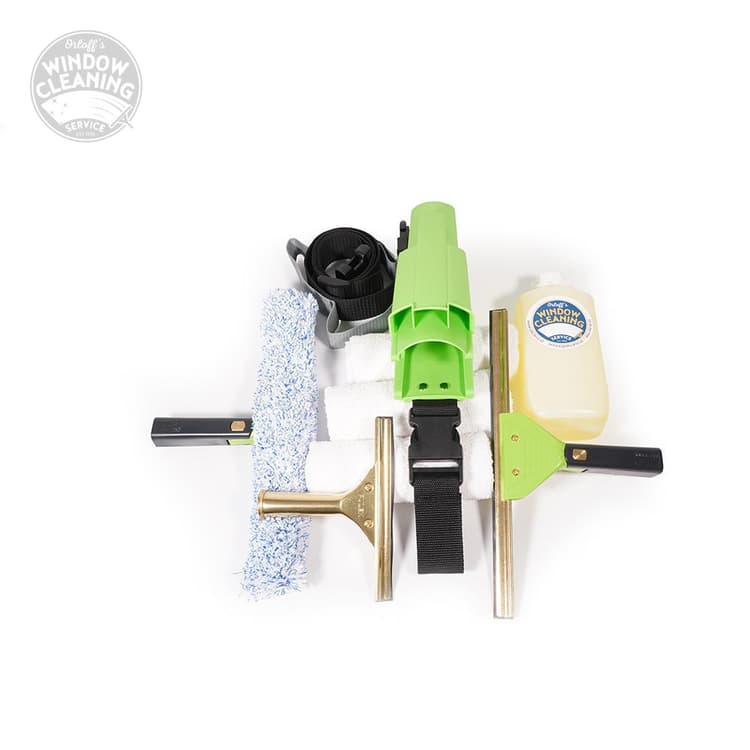
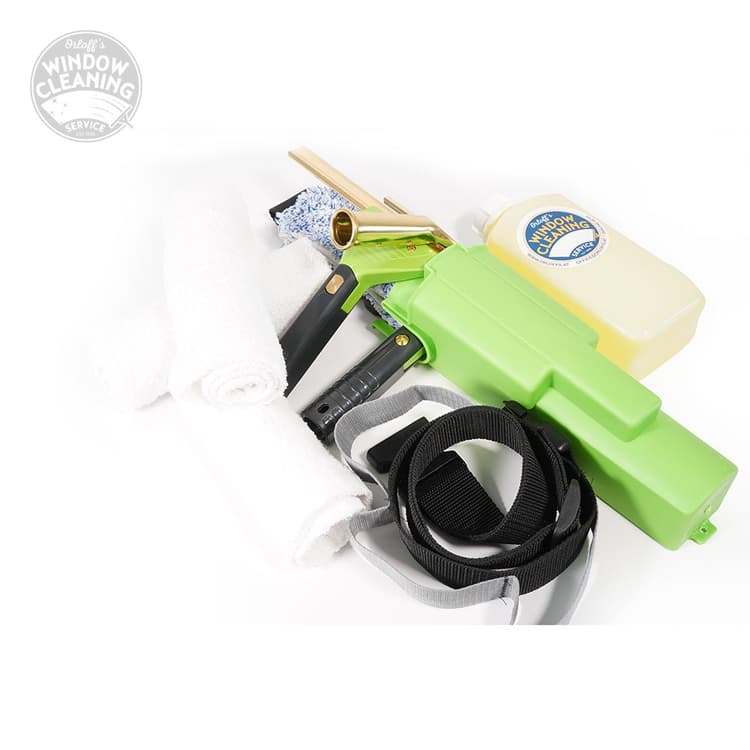
Tool Recommendations
T-bar applicator with a clean microfibre cover
View on Amazon [coming soon]Professional squeegee with a fresh rubber blade
View on Amazon [coming soon]Bucket with lukewarm water + 1 drop of mild pH-neutral dish soap per litre
View on Amazon [coming soon]Cleaning Frequency
Glass (both panes): 2x per year minimum (Inside and out. The cavity between the coupled frames should also be opened and cleaned once per year.). Timber frame wipe-down: 2x per year (Mild soapy water and a soft cloth. Inspect the paint finish at the same time.). Wooden door thresholds: 1x per year (Cold-pressed linseed oil with added fungicide to prevent deterioration.). Hardware oiling: 1-2x per year (Acid-free oil into the pre-drilled oiling holes on Bøjsø hinges.). Gasket and seal inspection: 1x per year (Or after heavy storms. Contact installer if damaged.). Timber repaint cycle: Per installer schedule (Follow the interval recommended by your installer based on exposure and climate. The 20-year warranty depends on this.)
Frequently Asked Questions
Field Notes
“Glass: minimum twice per year inside and out - spring and autumn. Coupled frame cavity: once per year, or whenever condensation lingers between frames for more than a day or two. Timber frame wipe-down: twice per year alongside glass cleaning - inspect paint finish at the same time. Hardware oiling: 1-2 times per year with acid-free oil into the pre-drilled hinge holes. Timber repaint cycle: per installer schedule - the 20-year warranty depends on it.”
Justin Orloff
What's next for you?
The Skill
New to window cleaning?
Start with the core techniques before tackling premium systems.
Start Learning →The Standard
Upskill your team
Covers every system, product type, and tricky scenario.
View The Standard →Manufacturer
Partner with Orloffs
Are you Bøjsø Døre & Vinduer or a similar manufacturer? Let's create official cleaning guidance together.
Get in Touch →