
Europe · Profile System
Alumil
🇬🇷 Greece · Last reviewed by Justin Orloff

Quick Facts
founded
1988
hq
Kilkis, Greece
primaryMaterials
Aluminium (powder-coated, anodised, preanodised, and wood-effect sublimation)
glazingPartner
In-house
marketTier
Premium
Brand at a Glance
- Founded: 1988
- HQ: Kilkis, Greece
- Market position: Major Greek aluminium systems manufacturer with global reach - over 30 subsidiaries worldwide
- Frame materials: Aluminium (powder-coated, anodised, preanodised, and wood-effect sublimation finishes)
- Glazing: Double and triple glazed. Low-E coated as standard. SWISSPACER Ultimate warm-edge spacer on SUPREME S91. Uw from 0.79 W/m2K.
- Key ranges: SMARTIA S67, SMARTIA S77 (windows), SUPREME S77, SUPREME S91 (high-performance/Passive House), SMARTIA M-Series (sliding)
- Warranty: Through certified fabrication partners. Surface warranty tied to Qualicoat-certified powder coating.
- Where they sell: Worldwide - 30+ subsidiaries across Europe, Middle East, Africa, Asia, Americas
- Official care page: alumil.com/greece/en/support/plan-your-project/customization-options/after-sales-service-and-product-care
- Find a fabricator: alumil.com (local fabricator network)
Product Range
- SMARTIA S67
- SMARTIA S77
- SUPREME S77
- SUPREME S91
- SMARTIA M-Series
Why This System
Four distinct surface treatments - powder coating, anodising, preanodising, and wood-effect sublimation - each with different care requirements. SUPREME S91 Passive House glazing reflects so much heat that exterior condensation forms on cool mornings - this is a feature, not a defect. Burglar resistance (RC) certified systems use reinforced profiles, multi-point locking mechanisms, and security glass that need specific maintenance attention. SMARTIA M-series sliding door bottom tracks are the number one cause of stiff sliding operation and scratched sill profiles when debris collects. Wood-effect sublimation finishes look like wood but clean like coated aluminium - except abrasive pads scratch through the decorative layer permanently.
Step 1 of 2: Manufacturer Recommendations
Official Care Guidance
Source: ALUMIL OFFICIAL CARE & MAINTENANCE
Glass
- Clean glass surfaces with lukewarm water and a mild cleaning product such as dish soap.
- Use a very soft cloth or sponge. Do not use abrasive materials or sharp objects.
- Rinse thoroughly with clean water after washing.
- Remove construction debris, cement, and plaster promptly - they become harder to remove over time.
- Do not stick adhesive tape or similar materials onto the glass or frames - they may damage the surface.
Aluminium Frames (Powder-Coated)
- Clean with a very soft cloth or sponge, lots of water, and a mild cleaning product such as dish soap.
- A simple microfibre cloth and water is sufficient for routine cleaning.
- Never use gardening hoses or high-pressure cleaning equipment.
- Avoid harsh cleaners or corrosive products - they can destroy the finish over time.
- Do not use sharp objects for cleaning. Dampen a cloth with warm water and run it over stubborn spots repeatedly.
Anodised Aluminium Frames
- Clean with lukewarm water and a neutral pH detergent suitable for anodised surfaces.
- Do not use alkaline cleaners on anodised aluminium - they etch the surface permanently.
- Do not use acidic cleaners below pH 5 on anodised aluminium.
- When in doubt, test any cleaning product on a small, inconspicuous area first.
Hardware
- Inspect hinges, handles, and mechanisms regularly.
- Lubricate all moving parts at least once per year with a light machine oil or silicone-free lubricant.
- On RC-rated systems, check that all multi-point locking points engage smoothly.
Gaskets and Seals
- Inspect sealing rubbers regularly for cracking, UV degradation, or loss of elasticity.
- Wipe gaskets with a damp cloth to remove dirt and debris.
- Do not use solvent-based products on gaskets - they accelerate rubber degradation.
Drainage and Tracks
- Keep frame tracks clean - this is where dust and small debris collect over time.
- Clear drainage slots in the frame profile to prevent water pooling.
- On sliding systems, vacuum or brush out the bottom track at every cleaning session.
Step 2 of 2: The Orloffs Protocol
The Orloffs Protocol
This is how I clean Alumil windows. The tools and technique below come from 25 years of daily professional work on the glass. Every step has been tested on real installations and adapted specifically for Alumil systems.
Pro Tools
My daily tool list. This is what I carry to every job.
Follow these steps in order. Each one builds on the last. This is the same sequence I use on every Alumil installation.
- 1
Identify the finish
This comes before everything else. Alumil offers four surface treatments and you need to know which one you have. Powder-coated finishes have a slight texture and a uniform colour. Anodised finishes have a metallic sheen with the grain of the aluminium visible beneath the surface.
Preanodised finishes combine both processes. Wood-effect sublimation finishes look like timber but feel like coated aluminium. If you are not sure, check the original documentation or contact your Alumil fabricator.
- 2
Detail the frame before touching the glass
Before touching the glass, wipe down the window frame edges with a microfibre cloth dampened in mild soapy water. This removes the dust, pollen, and grime sitting on the aluminium surface.
When you run the squeegee across the glass, the rubber edge makes contact with the frame. If there is dirt on that frame, the squeegee picks it up and drags it across the clean glass as a streak. Clean the frame first. Every time.
- 3
Agitation
Dip your T-bar applicator completely into the soapy water on both sides. Apply the solution across the whole glass area using overlapping strokes. The purpose is to dissolve the dirt fully so the squeegee can shave it away cleanly.
If the dirt is not fully dissolved, the remaining particles get dragged across the surface by the squeegee, leaving smears. On large Alumil sliding panels, cover the entire surface with overlapping passes before reaching for the squeegee.
- 4
The three squeegee turns
Side to side: start at the very top edge with a dry rubber. Work across in a straight horizontal line. Tilt the squeegee at a slight angle so soap water spills from one side. Wipe the rubber dry after each line. Overlap slightly into the next line down.
Top to bottom: same principle in vertical lines. Start in the top corner with a dry rubber. Tilt to direct water to the lower side. Wipe dry after each line. Overlap into the next line across.
The J tune (continuous motion): from top to bottom in one smooth, unbroken movement. No stops. Your thumb guides the squeegee rotation at each end of the horizontal pass. The fastest and most consistent turn for any window size.
- 5
Final edge detailing
After squeegeeing, take a dry 100% cotton towelling rag, fold to a clean corner, and detail the edges in one smooth pass.
Get your finger into the edge where the glass meets the frame seal. Remove any pooled soap water sitting there. Left to dry, it leaves a residue mark visible in direct sunlight.
- 6
Tracks, drainage, and hardware
For Alumil sliding systems, vacuum the bottom track to remove grit and debris before wiping it down. Grit in the track is the number one cause of stiff sliding doors and scratched sill profiles.
Check that the drainage slots are clear. Apply a light silicone-free oil to hinges and locking points once per year. On RC-rated systems, check that every locking point engages fully and smoothly.
Never clean in direct sunlight - the soap water dries before you can squeegee it off, baking residue onto the glass.
Pro Tips
- Identify the surface finish before you start - powder-coated, anodised, preanodised, or wood-effect sublimation. The cleaning protocol differs.
- Do not use alkaline cleaners on anodised Alumil frames - they etch the surface permanently.
- Clean the frame first, every time. Most streaks come from dirt the squeegee picks up at the frame edge.
- On SMARTIA M-series sliding systems, vacuum the bottom track at every cleaning session.
- Wood-effect sublimation finishes scratch through permanently if scrubbed with an abrasive pad.
What NOT To Do
- Do not use gardening hoses or high-pressure cleaning equipment on Alumil windows or frames.
- Do not use harsh cleaners or corrosive products on any surface - they destroy the finish over time.
- Do not use sharp objects to remove stubborn stains or construction debris.
- Do not stick adhesive tape onto aluminium profiles - it damages the paint.
- Do not use alkaline cleaners on anodised Alumil frames - they etch the surface permanently.
- Do not use acidic cleaners below pH 5 on anodised aluminium.
- Do not use abrasive pads, steel wool, or scouring products on any Alumil surface - especially wood-effect sublimation finishes.
- Do not use solvent-based products on gaskets or seals - they accelerate rubber degradation.
- Do not leave drainage holes or frame tracks blocked - pooled water and trapped grit cause hardware damage and corrosion.
- Do not clean glass in direct sunlight - the soap water dries before you can squeegee it off.
Bundle Kits and Tool Recommendations
Bundle Kit
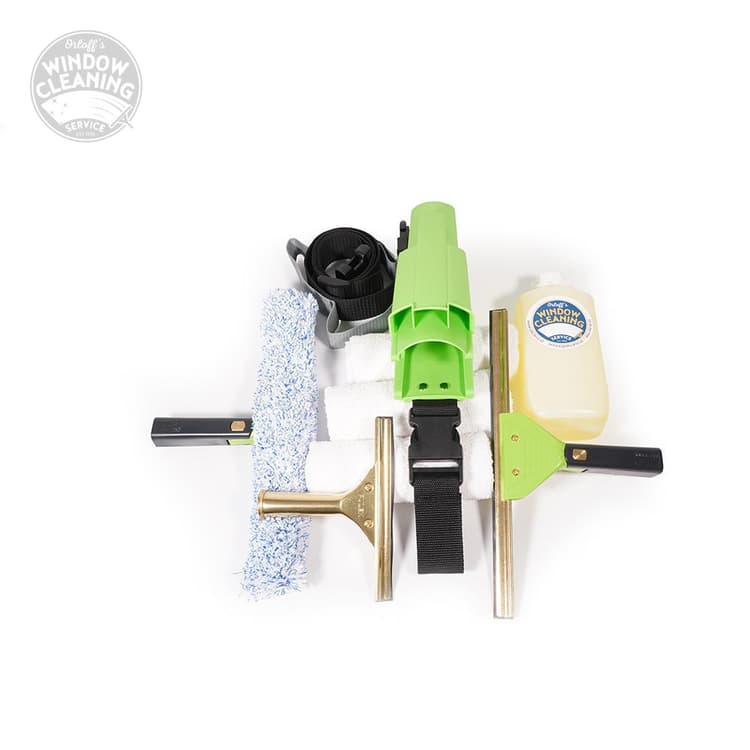
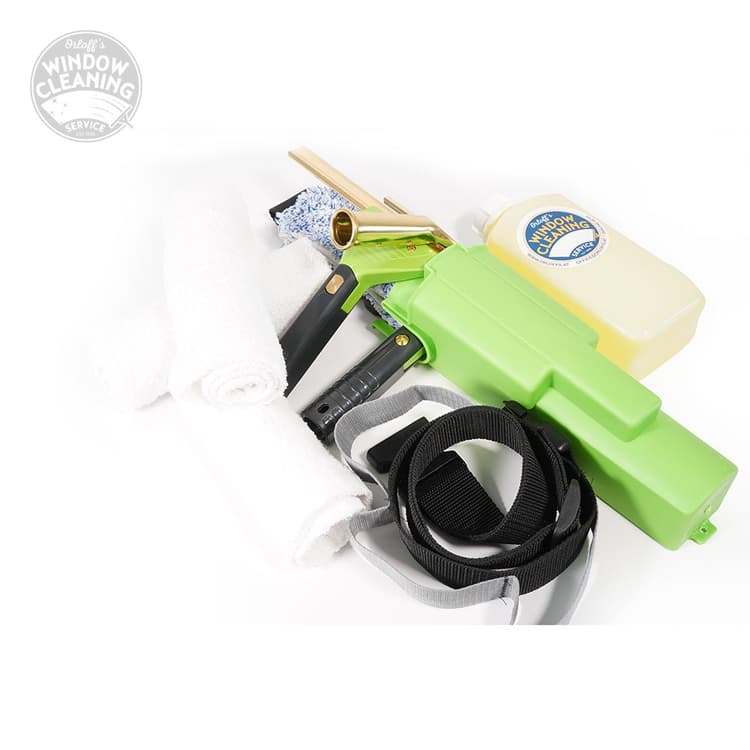
Tool Recommendations
T-bar applicator with microfibre cover
View on Amazon [coming soon]Professional squeegee with fresh rubber blade
View on Amazon [coming soon]Bucket with lukewarm water + 1 drop of mild pH-neutral dish soap per litre
View on Amazon [coming soon]Cleaning Frequency
Glass and frames: 2x per year minimum (Quarterly in urban environments with pollution, pollen, and construction dust.). Coastal or seaside locations: 4x per year minimum (Salt corrosion on aluminium needs regular removal.). Hardware inspection and lubrication: 1x per year (Without fail. Check all moving parts and locking points.). Gasket and seal inspection: Every cleaning session (Note UV degradation and report damaged seals to your Alumil fabricator.). Sliding system track clearing: Every cleaning session (Vacuum or brush out the bottom track to prevent grit buildup.)
Frequently Asked Questions
Field Notes
“Glass and frames: twice per year minimum, quarterly in urban environments, four times per year near the coast. Identify the surface finish first - wrong products on anodised aluminium cause permanent etching. Sliding system tracks: vacuum at every cleaning session to prevent grit buildup and scratched sills. Hardware: annual lubrication with silicone-free oil. On RC-rated systems, check every locking point. Gaskets: inspect at every cleaning session for UV degradation and loss of elasticity.”
Justin Orloff
What's next for you?
The Skill
New to window cleaning?
Start with the core techniques before tackling premium systems.
Start Learning →The Standard
Upskill your team
Covers every system, product type, and tricky scenario.
View The Standard →Manufacturer
Partner with Orloffs
Are you Alumil or a similar manufacturer? Let's create official cleaning guidance together.
Get in Touch →