
Europe · Glass Manufacturer
AGC Glass Europe
🇧🇪 Belgium · Last reviewed by Justin Orloff

Quick Facts
founded
1961 (as Glaverbel; renamed AGC Glass Europe in 2010)
hq
Louvain-la-Neuve, Belgium
primaryMaterials
Flat glass - float, coated, laminated, fire-rated, self-cleaning
glazingPartner
Supplies glass to all major European window fabricators
marketTier
Europe's largest flat glass manufacturer
Brand at a Glance
- Founded: 1961 (as Glaverbel; glassmaking roots from 1914)
- HQ: Louvain-la-Neuve, Belgium
- Market position: Europe's largest flat glass manufacturer; European branch of AGC Inc., a world leader in flat glass
- What they make: Flat glass products supplied to window fabricators - not a window brand
- Key products: Thermobel (insulating units), iplus (Low-E thermal), Planibel (base float glass), Stopray (solar control), Sunergy (pyrolytic solar), Stratobel (safety/laminated), Stratophone (acoustic), Pyrobel (fire-rated), Planibel Easy (self-cleaning), Lacobel (back-painted decorative)
- Glazing performance: Ug from 0.6 (triple Thermobel TG LS) to 1.1 (double Thermobel Advanced)
- Where they operate: Pan-European - over 100 distribution and processing sites across 30 countries
- Official care documentation: Facade Glazing Cleaning and Maintenance Guide (Version 2.0, August 2024) - agc-yourglass.com
- Technical resources: AGC YourGlass portal - agc-yourglass.com
Product Range
- Thermobel
- iplus (Low-E range)
- Planibel
- Stopray
- Sunergy
- Planibel Easy
- Stratobel
- Stratophone
- Pyrobel
- Lacobel
Why This System
AGC glass is inside almost every high-performance window in Europe - you are likely cleaning it without knowing it. Multiple product lines with different coating chemistries mean one cleaning rule does not fit all - iplus, Stopray, Sunergy, and Planibel Easy each require specific product choices. Planibel Easy self-cleaning glass is deactivated by wax, polish, and film-forming agents - the wrong cleaning product destroys the coating's function invisibly. Sunergy's pyrolytic coating sits on the outer glass surface (not sealed inside the unit) and is more robust than vacuum-deposited coatings but still sensitive to abrasive tools. AGC glass has no visible external branding once installed - identification requires checking the spacer bar markings at the glass edge.
Step 1 of 2: Manufacturer Recommendations
Official Care Guidance
Source: AGC GLASS EUROPE - FACADE GLAZING CLEANING AND MAINTENANCE GUIDE (Version 2.0, August 2024) and DECORATIVE GLASS CLEANING AND MAINTENANCE GUIDE - agc-yourglass.com
Glass (all products)
- Wash with plenty of clean water or a pH-neutral glass cleaner and a soft sponge or rubber squeegee.
- Apply cleaning solution generously across the whole surface before squeegeeing.
- Do not clean glass in direct sunlight or near a strong heat source - the solution dries too quickly and leaves residue.
- Rinse thoroughly with clean water after cleaning.
Coated Glass (iplus, Stopray, Sunergy, Stopsol)
- Use only pH-neutral cleaning products.
- Do not use products containing hydrofluoric acid, fluorine, chlorine, or ammonia derivatives - these damage coatings permanently.
- Do not use highly acidic or highly alkaline products - they abrade the glass surface.
- Do not apply excessive pressure during cleaning - pressure causes scratches or stains on coated surfaces.
- When using a squeegee, do not allow the metal squeegee handle to contact the glass surface - use the rubber blade only.
Planibel Easy Self-Cleaning Glass
- Do not use products containing wax, polish, or film-forming agents - these block the photocatalytic coating.
- Do not use products containing strong solvents.
- Wait at least one week after installation before first cleaning to allow sealants to fully cure.
- Never clean a specific mark without wetting the full surface first with water.
- The self-cleaning function requires UV light - glass on north-facing elevations or in deep shadows will see reduced self-cleaning effect.
Decorative and Acid-Etched Glass (Lacobel, Matelux)
- Always wet-clean the entire surface - never spot-clean dry.
- Do not use abrasive cleaners on etched surfaces.
- Do not use strong alkalis on etched surfaces.
- Do not use razor blades, steel wool, or similar abrasive items.
Step 2 of 2: The Orloffs Protocol
The Orloffs Protocol
This is how I clean AGC Glass Europe windows. The tools and technique below come from 25 years of daily professional work on the glass. Every step has been tested on real installations and adapted specifically for AGC Glass Europe systems.
Pro Tools
My daily tool list. This is what I carry to every job.
Follow these steps in order. Each one builds on the last. This is the same sequence I use on every AGC Glass Europe installation.
- 1
Detail the frame before touching the glass
Wipe the frame edges with a damp microfibre cloth before you apply any solution to the glass. Dust, pollen, and debris on the frame edge will be picked up by the squeegee and dragged across the clean glass as a streak.
This is especially important on windows where the outer glass surface has a Sunergy or Stopray pyrolytic or coated surface. Any grit carried across the glass by the squeegee leaves micro-scratches you cannot reverse.
- 2
Agitate the glass fully
Dip the T-bar applicator and apply soapy water across the full glass surface with overlapping strokes. The goal is to dissolve and float the dirt off the glass so the squeegee can remove it cleanly.
Skipping proper agitation means the squeegee encounters dirt that has not been fully released from the glass. That remaining grit gets dragged across the surface. On coated glass, this is where micro-scratching happens.
Never clean in direct sunlight. The solution evaporates before you can squeegee it away, leaving a film of dried mineral deposits and soap residue that is harder to remove than the original dirt.
- 3
Wipe frame edges dry before squeegeeing
After agitating the glass, run a dry corner of your cotton rag along the top edge and side edges of the frame. This removes pooled soap solution sitting on the frame.
When your squeegee reaches those edges, it will not pick up residue and pull it back across the glass as a streak. Ten seconds of work that prevents most problems.
- 4
The three squeegee turns
Side to side: start at the top left corner with a dry rubber. Draw the squeegee horizontally across the glass, tilting so water falls to one side. Wipe the rubber dry after each pass. Overlap slightly into the next pass down. Repeat to the bottom.
Top to bottom: the same principle in vertical lines. Start top left, draw down, tilt to direct water to one side, wipe dry, overlap into the next line, repeat across.
The J turn: the professional continuous motion - from the top to the bottom of the glass in one smooth, unbroken movement. Your thumb guides the rotation: as you reach the end of a horizontal pass, rotate your wrist so the squeegee turns and continues downward. This is the fastest and most consistent turn for large-format AGC glass panels and floor-to-ceiling glazing.
- 5
Edge detailing
After squeegeeing, a thin line of water remains along the bottom edge and at the sides. Fold a dry cotton rag to a clean corner and detail these edges in one smooth pass.
Get a finger into the glass-to-frame joint and remove any pooled solution sitting there. If this dries in the joint it leaves a white mineral line that shows up as soon as sunlight hits the glass at an angle.
Rotate to a fresh dry section of rag every few windows. A wet rag smears rather than removes.
- 6
Planibel Easy self-cleaning glass
If you are cleaning Planibel Easy self-cleaning glass, use plain water only. No soap, no glass cleaner, no product of any kind. The photocatalytic coating breaks down organic dirt on its own. Your job is to rinse, not to clean.
Pro Tips
- Identify the AGC product in the frame before cleaning - check the spacer bar for iplus, Stopray, Sunergy, or Planibel Easy markings. Each requires a different product approach.
- On Planibel Easy self-cleaning glass, use plain water only - no soap. Any wax or film-forming agent deactivates the photocatalytic coating.
- On iplus and Stopray coated glass, never allow the metal squeegee body to contact the glass - only the rubber blade.
- pH-neutral products only on all coated AGC glass. Ammonia, fluorine, chlorine, acids, and alkalis are all explicitly prohibited.
- On large-format facade panels, consistent controlled pressure prevents tracking and streaking. Do not bear down at the edges.
What NOT To Do
- Do not use products containing hydrofluoric acid, fluorine, chlorine, or ammonia derivatives on any AGC coated glass - these permanently damage iplus, Stopray, Sunergy, and all coated surfaces.
- Do not use highly acidic or highly alkaline cleaning products - they abrade the glass surface.
- Do not use abrasive cleaning tools - no steel wool, scouring pads, or abrasive sponges.
- Do not use razor blades or scrapers on any AGC glass surface.
- Do not apply excessive pressure with squeegee or sponge on coated glass - pressure causes scratches.
- Do not allow the metal body of a squeegee to contact the glass surface - only the rubber blade.
- Do not use wax-based products, polishes, or film-forming agents on Planibel Easy self-cleaning glass - these block the photocatalytic coating.
- Do not use strong solvents on Planibel Easy self-cleaning glass.
- Do not spot-clean dry on AGC acid-etched or decorative glass - always wet the full surface first.
- Do not clean any AGC glass in direct sunlight or near a heat source.
- Do not use a pressure washer on glazed units - forced water penetrates seals and causes unit failure.
- Do not clean Planibel Easy self-cleaning glass within the first week after installation.
Bundle Kits and Tool Recommendations
Bundle Kit
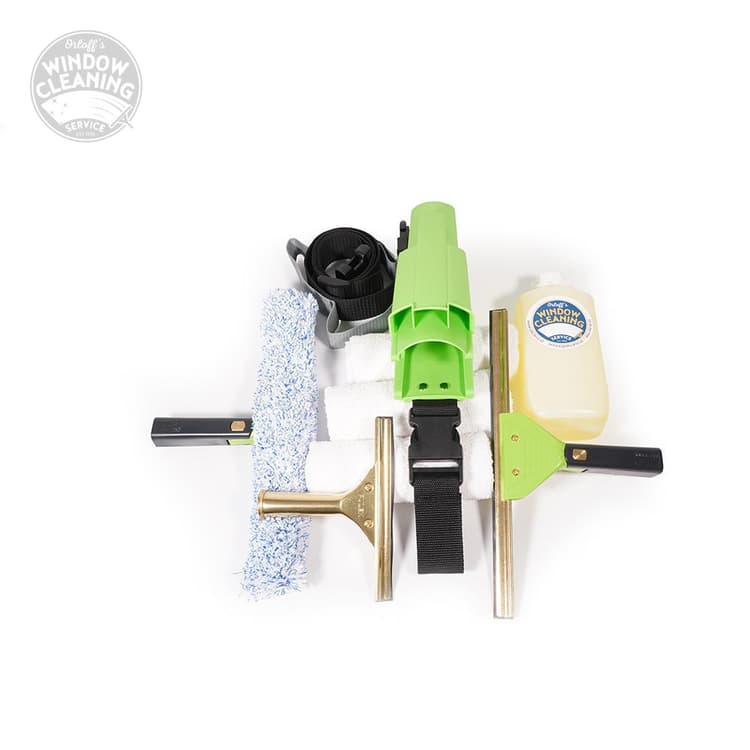
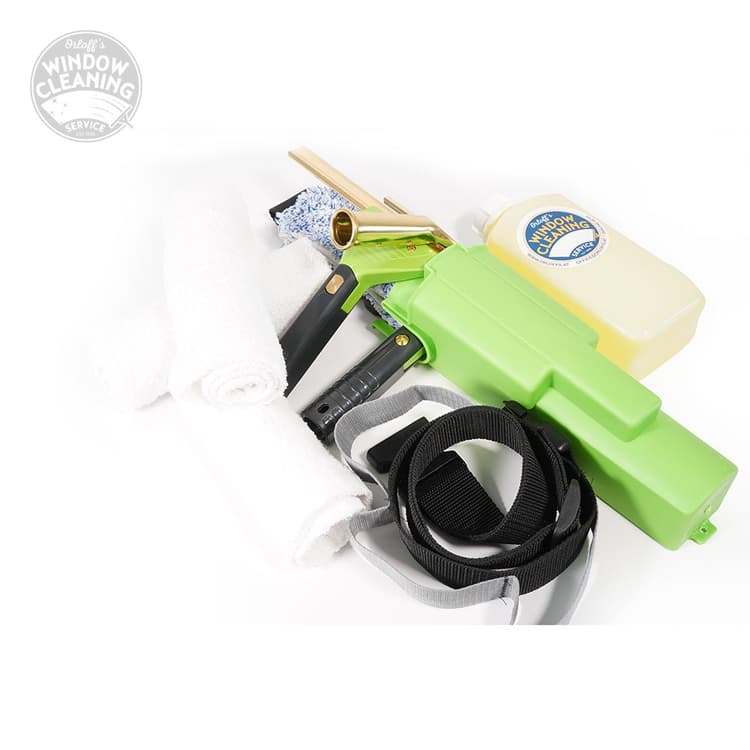
Tool Recommendations
T-bar applicator with a clean, fresh microfibre sleeve
View on Amazon [coming soon]Professional squeegee with a fresh rubber blade (no nicks)
View on Amazon [coming soon]Bucket with lukewarm water and 1 drop of pH-neutral dish soap per litre
View on Amazon [coming soon]Cleaning Frequency
Glass (all AGC products): 2x per year minimum (Spring and autumn at minimum. Quarterly in urban or high-traffic locations.). Urban and industrial locations: Quarterly (Prevents contamination building up on coated surfaces.). Coastal locations: Every 6-8 weeks on exposed elevations (Salt spray degrades coated surfaces faster than inland locations.). Planibel Easy self-cleaning glass: Plain water rinse as needed (Typically when no rain has fallen for several weeks.). After construction or renovation work: Immediate cleaning (Cement dust, silicone splatter, and paint bond to coated glass quickly. Leave too long and removal becomes a specialist job.)
Frequently Asked Questions
Field Notes
“AGC glass is inside most European high-performance windows - check the spacer bar before cleaning to know which product you have. iplus, Stopray, and Sunergy coated glass: pH-neutral products only. No ammonia, no fluorine, no chlorine, no acids. Planibel Easy self-cleaning glass: plain water rinse only. No soap, no cleaners, no wax products of any kind. Coastal and urban locations need more frequent cleaning - contamination builds on coated surfaces faster than plain float glass.”
Justin Orloff
What's next for you?
The Skill
New to window cleaning?
Start with the core techniques before tackling premium systems.
Start Learning →The Standard
Upskill your team
Covers every system, product type, and tricky scenario.
View The Standard →Manufacturer
Partner with Orloffs
Are you AGC Glass Europe or a similar manufacturer? Let's create official cleaning guidance together.
Get in Touch →